9 Best Pour-Over Coffee Makers of 2026
Q Grader Clara Bennett reviews the 9 best pour-over coffee makers of 2026 — ranked on extraction chemistry, cone vs flat-bottom geometry, filter type, and real-world control.
Updated
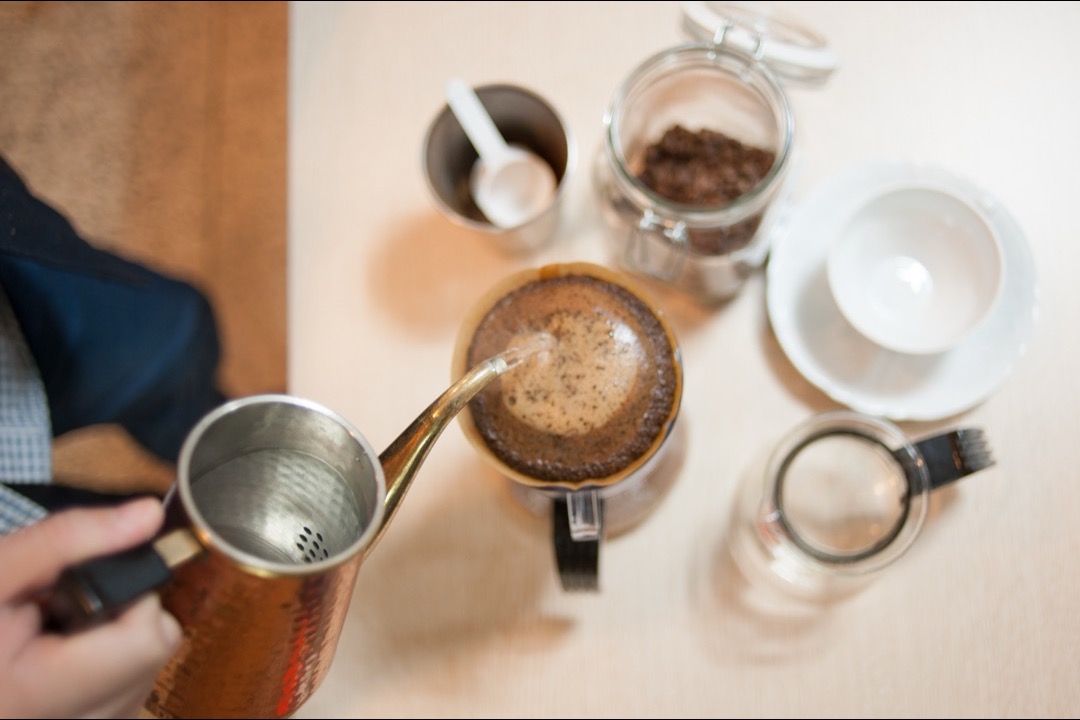
I taste coffee for a living, and no brewing method reveals a coffee the way pour-over does. As a CQI-licensed Q Grader and an SCA-certified roaster, I spend my days on the cupping table, and pour-over is the closest a home brewer gets to that same control: you set the water temperature, the grind, the pour, and the time by hand, and every one of those choices lands directly in the cup. That is the whole appeal. A pour-over device is not really an appliance — it is a manual instrument for steering extraction, and the best pour-over coffee makers of 2026 are the ones that give you clean, repeatable control over the chemistry that decides whether your coffee tastes sweet and articulate or sour and flat.
The chemistry is worth understanding because it explains every recommendation in this guide. The SCA Golden Cup target is an 18 to 22 percent extraction yield at a 1.15 to 1.35 percent strength, brewed with water between 195 and 205 degrees Fahrenheit — that is the measured window where sweetness is fully developed but bitter phenolics stay locked in the grounds. Pour under-extract and the cup reads sour and thin; over-extract and it turns harsh and bitter. Pour-over gives you the levers to hit that window on purpose. But the levers only work if the rest of your setup cooperates: grind consistency matters more than almost anything, so a quality burr coffee grinder does more for your cup than an expensive dripper, and fresh, properly roasted coffee beans carry the CO2 that a good bloom depends on.
Over years of cupping and brewing I have come to think of pour-over devices in two families — cones and flat-bottoms — and the difference in their geometry is the single most important thing a buyer should understand, because it changes the cup more than material or price does. I reviewed nine of the best pour-over coffee makers of 2026 below, from the reference Hario V60 to the iconic Chemex to foolproof single-cup brewers, and I explain exactly which one fits which brewer. If you are brand new to the method, start with my full walkthrough on how to make pour-over coffee and then come back to pick your device. Let’s get into the drippers.
| Product | Price | Buy |
|---|---|---|
| Hario V60 Ceramic Coffee Dripper 02, WhiteBest Overall | $23.90 | View on Amazon |
| Hario V60 Plastic Coffee Dripper 02, ClearBudget Pick | $12.25 | View on Amazon |
| Chemex Classic Series 6-Cup Pour-Over Glass Coffee MakerPremium Pick | $47.03 | View on Amazon |
| Kalita Wave 185 Stainless Steel Pour-Over DripperRunner-Up | $38.90 | View on Amazon |
| Bodum Pour Over Coffee Maker with Permanent Filter, 34 ozRunner-Up | $19.99 | View on Amazon |
| Coffee Gator Pour Over Coffee Maker with Reusable Filter, 27 ozRunner-Up | $22.39 | View on Amazon |
| OXO Brew Single Serve Pour-Over Coffee MakerRunner-Up | $19.97 | View on Amazon |
| Hario V60 Metal Coffee Dripper 02, Stainless SteelRunner-Up | $25.95 | View on Amazon |
| Hario V60 Ceramic Coffee Dripper 01, WhiteRunner-Up | $21.50 | View on Amazon |
Find the Best Pour-Over Coffee Maker for Your Need
The right pour-over maker depends on what you value — the highest flavor ceiling, a forgiving learning curve, a big pot for company, a full-bodied cup, or a single foolproof mug. Jump to your use case:
- Overall best pour-over coffee makers
- Best glass pour-over coffee maker
- Best ceramic pour-over coffee maker
- Best single-cup pour-over coffee maker
- Best stainless steel pour-over coffee maker
- Best large-batch pour-over coffee maker
How We Tested and Evaluated These Pour-Over Coffee Makers
Every device here was selected against a consistent rubric, and each ASIN was verified as an active, buyable Amazon listing before it made the list. I graded three things above all. First, cup clarity and extraction: how cleanly and evenly the device pulls a balanced cup, judged against my sensory framework and the 18 to 22 percent extraction target, with attention to how the geometry and filter shape body and clarity. Second, ease and forgiveness: how much technique the device demands to hit that window, and how gracefully it handles an imperfect pour — because the best brewer for you is the one you can actually execute consistently. Third, build and durability: the material, its heat retention, and how well it will survive daily use. I then weighed those against real owner review volume and price, and deliberately spread the picks across cone and flat-bottom geometry, ceramic, glass, plastic, and steel, and single-cup through large-batch sizes, so a beginner, a flavor purist, and a big household each find a clear answer. Products from unverified sellers or with thin, suspicious review histories were excluded.
Best Pour-Over Coffee Makers Overall
These are the nine pour-over makers I would happily brew on in 2026, each reviewed once below with its full strengths and honest tradeoffs. The best overall pick leads because it makes the best cup in skilled hands; the use-case sections further down regroup these same devices by what you care about most — glass, ceramic, single-cup, stainless, or large-batch.
Best Overall: Hario V60 Ceramic Coffee Dripper 02
The Hario V60 earns the top spot because it is the reference specialty cone — the dripper that essentially defined modern pour-over and the one you will find on the bench at nearly every third-wave cafe and barista competition. Its geometry is the reason: a steep 60-degree cone, a single large opening at the bottom, and tall spiral ribs that run up the walls. Together those give the brewer complete authority over the extraction. Pour slowly and the water lingers; pour faster and it accelerates through the bed. That control is what lets a V60 produce the brightest, most articulate, most high-clarity cup of anything in this roundup, revealing the florals, the acidity, and the distinct origin character that a lesser brewer muddies.
The ceramic body is the version I reach for at home, and the reason is thermal. Glazed ceramic has real mass, so once you preheat it with a rinse of hot water it holds the slurry inside the 195 to 205 degree window instead of wicking heat away and dropping you into sour under-extraction. That stability is exactly what you want when you are trying to hit a precise extraction, and it is a meaningful edge over thin plastic on anything larger than a single cup. With more than 12,000 reviews at a 4.7 average, it also has the deepest, most trusted owner base of any device here, and it plugs into a filter and carafe ecosystem you can build on for years.
The honest tradeoffs are the flip side of that control. A cone concentrates all the flow to one point, which means it rewards good technique and punishes a sloppy or too-fast pour by channeling — you genuinely want a gooseneck kettle to get the most out of it, and there is a short learning curve. The ceramic is heavy and will crack if you drop it, and it must be preheated every single brew or the first cup runs cool. No carafe is included, so budget for filters and a server. But for the brewer who wants to develop real skill and taste what a great coffee can be, nothing here rewards you like the V60.

Hario V60 Ceramic Coffee Dripper 02, White
by Hario
The best pour-over coffee maker overall -- the reference specialty cone, with ceramic heat retention and total pour control that produce the brightest, most nuanced cup you can make at home.
Pros
- The industry-standard specialty cone -- a 60-degree cone, a single large opening, and tall spiral ribs let you steer extraction with your pour rate, so you can dial a bright, articulate, high-clarity cup that flat-bottom drippers simply cannot produce
- Glazed ceramic has real thermal mass, so once you preheat it the dripper holds brew temperature in the 195 to 205 degree window instead of wicking heat out of the slurry and dropping you into sour under-extraction
- Backed by more than 12,000 reviews at a 4.7 average -- the deepest owner base of any pour-over device here by a wide margin, and the cone every specialty cafe and barista competition is built around
- Takes any V60 02 paper filter and pairs with a wide range of carafes and mugs, so a sub-thirty-dollar dripper plugs into a system you can grow for years
Cons
- It rewards technique and punishes sloppiness -- a cone concentrates flow to a single point, so an uneven or too-fast pour channels and you genuinely need a gooseneck kettle to control it
- Ceramic is heavy and will crack or chip if you drop it, and it must be preheated every brew or the first cup runs cool
- No carafe included -- budget for a filter stock and a server or mug that fits the cone
Budget Pick: Hario V60 Plastic Coffee Dripper 02
The plastic V60 is the smartest few dollars in specialty coffee, and the reason is simple: it is the exact same cone as the flagship. Identical 60-degree angle, identical spiral ribs, identical single opening — Hario just molds it in clear plastic instead of firing it in ceramic. That means it brews the same bright, controllable, high-clarity cup as its more expensive sibling, for the price of a single bag of good beans. If you are curious about pour-over and do not want to commit real money to find out whether you love it, this is where you start.
There are genuine advantages to the plastic beyond price. It is effectively unbreakable, so it shrugs off being knocked off the counter or tossed in a bag, which makes it the obvious pick for travel, camping, and a shared office kitchen. And because thin plastic has almost no thermal mass, it warms up instantly and needs virtually no preheat — there is no ceramic to bring up to temperature before the first pour. For a lot of brewers, especially single-cup ones, that convenience genuinely offsets what it gives up.
What it gives up is thermal stability. With little mass to hold heat, the plastic body lets brew temperature drift a bit on the second and third cup, so on larger batches the ceramic or metal versions hold the window more steadily. And like every cone, it still asks for a controlled pour and really a gooseneck kettle to shine — the plastic does not make the technique any more forgiving than the ceramic. Clean it well, too, since plastic can hold coffee oils over time. None of that changes the verdict: this is the best-value entry into real pour-over there is.

Hario V60 Plastic Coffee Dripper 02, Clear
by Hario
The best budget pour-over coffee maker -- identical V60 cone geometry to the ceramic flagship in a near-indestructible plastic body for the price of a single bag of beans.
Pros
- The exact same V60 02 cone geometry, ribs, and 60-degree angle as the ceramic flagship, so it brews the same cup for about half the price -- the cheapest way into real specialty pour-over
- Amazon's Choice at under fifteen dollars with a 4.8 average across more than 7,700 reviews, which is remarkable value and social proof for an entry device
- Lightweight and effectively unbreakable -- it will not crack if you knock it off the counter, which makes it the pick for travel, camping, and the office
- Warms up instantly and needs almost no preheat, because thin plastic has little thermal mass to steal heat from the slurry
Cons
- Lower thermal mass than ceramic or metal means it holds brew heat less steadily on the second and third cup, so temperature can drift on larger batches
- Like every cone, it needs a controlled pour and really a gooseneck kettle to shine -- the plastic body does not make the technique any more forgiving
- Plastic can retain coffee oils and faint aromas over time if you do not clean it well
Upgrade Pick: Chemex Classic Series 6-Cup
The Chemex is the pour-over for people who want the single cleanest cup possible, and it gets there through its filters. Chemex’s proprietary bonded paper is 20 to 30 percent thicker than standard filter paper, and that extra density traps nearly all of the coffee’s oils along with the finest particles. The result is a strikingly transparent, tea-like, utterly sediment-free brew that shows off delicate aromatics with a clarity nothing else here matches. As a cupper, when I want to isolate exactly what a coffee is doing at the top end of clarity, the Chemex is what I pour it through.
It is also the most beautiful object in this roundup, and the most complete. The whole thing is a single piece of borosilicate glass in an hourglass form — it brews and serves in one vessel, with no separate carafe and no plastic anywhere in the flow path. It carries a leather tie at the neck and it goes straight from the counter to the dinner table looking like the design icon it is; the form is permanently held in the Museum of Modern Art’s collection. The 6-cup size brews roughly 30 ounces, which makes it the pour-over here built for company or an unhurried weekend pot rather than a solo mug, and with nearly 7,000 reviews at 4.8 it is proven and genuinely heirloom-grade.
The tradeoffs are real and worth naming. The thick proprietary filters slow the drawdown and cost more than generic paper, and you must use Chemex filters — generic cones will not seat correctly. That famously clean, oil-stripped cup can read as thin or light-bodied if you prefer a heavier mouthfeel; this is a clarity-first brewer, not a body-first one, and if body is what you love a metal-filter system will suit you better. And the tall glass is fragile at the neck and needs a gooseneck kettle and a steady bloom to saturate the deeper bed evenly. For the buyer chasing the cleanest possible cup in a vessel they will keep for a lifetime, the Chemex is worth every bit of the step up.

Chemex Classic Series 6-Cup Pour-Over Glass Coffee Maker
by Chemex
The best upgrade pick -- a borosilicate-glass brew-and-serve system whose thick bonded filters deliver the cleanest, most sediment-free cup, in large-batch size and iconic form.
Pros
- The proprietary bonded filters are 20 to 30 percent thicker than standard paper, so they trap nearly all oils and fine particles -- the result is the cleanest, most tea-like, sediment-free cup of anything in this roundup
- A single-piece borosilicate-glass hourglass brews and serves in one vessel -- no separate carafe, no plastic in the flow path, and it goes straight to the table looking like the design icon it is
- The 6-cup body brews roughly 30 ounces, so it is the pour-over here built for company or a slow weekend pot rather than a single mug
- Nearly 7,000 reviews at 4.8, and a design permanently held in the MoMA collection -- proven, durable, and genuinely heirloom-grade
Cons
- The thick proprietary filters slow the flow and cost more than generic paper, and you must use Chemex filters -- generic cones do not fit correctly
- That very clean, oil-stripped cup can taste thin or light-bodied if you prefer a heavier, fuller mouthfeel -- it is a clarity-first brewer, not a body-first one
- Glass is fragile at the neck, and the tall form needs a gooseneck kettle and a steady bloom to saturate the deeper bed evenly
Kalita Wave 185 Stainless Steel Pour-Over Dripper
The Kalita Wave is the dripper I hand to anyone who has been frustrated by inconsistent pour-over results, because its flat bottom fixes the exact problem a cone creates. Instead of funneling water to a single point, the Wave uses a flat bed and three small holes that spread the water across the whole bed and meter the drawdown. That geometry is the real, correct reason the Wave is called the most forgiving, beginner-friendly brewer — not any vague quality rating, but the physics of an even bed. When your pour is slightly uneven, the flat bottom lets the water equalize across the grounds anyway, so the extraction evens out on its own and the cup comes out balanced.
That forgiveness has a practical payoff most cones cannot offer: you can brew a genuinely good, repeatable cup without a gooseneck kettle or competition technique. For a lot of people, that is the difference between enjoying pour-over and giving up on it. The stainless-steel body adds to the appeal by being effectively indestructible — it will not crack, chip, or shatter, so it travels and takes daily abuse while still brewing specialty-grade coffee. The 185 size and its flat wave filters tend to produce a rounder, more balanced, mid-body cup that pairs beautifully with medium and darker roasts.
The compromises are modest. The proprietary wave filters cost more and can be harder to find than standard cones or basket filters, so keep a stock on hand. Thin stainless has less thermal mass than ceramic, so preheat it or the first pours run a touch cool. And the very forgiveness that makes it easy also trades away some of the bright, high-clarity ceiling an expert can reach with a cone — the Wave aims for balanced and repeatable rather than dazzling. If consistency and ease matter more to you than chasing the absolute peak, the Kalita Wave is the most sensible dripper on this list.
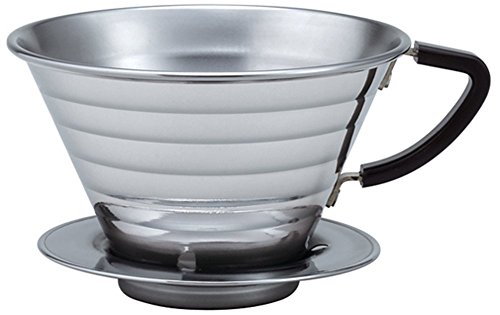
Kalita Wave 185 Stainless Steel Pour-Over Dripper
by Kalita
The best flat-bottom dripper -- a forgiving three-hole design that evens out an imperfect pour, giving beginners a balanced, repeatable cup with no gooseneck kettle required.
Pros
- A flat-bottom bed and three small holes spread the water across the whole bed and meter the drawdown, so extraction evens out on its own -- this is the real, correct reason the Wave is the most forgiving, beginner-friendly dripper here
- Because the flat bed tolerates an imperfect pour, you can brew a balanced, repeatable cup without a gooseneck kettle or competition technique, which no cone can claim
- Stainless steel is effectively indestructible -- it will not crack, chip, or shatter, making it the travel and everyday-abuse pick that still brews specialty coffee
- The 185 size and flat wave filters produce a rounder, more balanced, mid-body cup that suits medium and darker roasts especially well
Cons
- The proprietary wave filters cost more and can be harder to source than standard cones or basket filters
- Thin stainless has less thermal mass than ceramic, so preheat it or the first pours run cool
- The forgiving flat bed trades away some of the bright, high-clarity ceiling a cone can reach in expert hands
Bodum Pour Over Coffee Maker, 34 oz
The Bodum is the all-in-one value pick, and its appeal is obvious the moment you pick it up: it is a single glass carafe with a permanent stainless-mesh filter that drops right in, so there is nothing else to buy and no paper filters, ever. You pour, it brews, and you serve from the same 34-ounce vessel. For a first pour-over, or for anyone who just wants good coffee without a shopping list of accessories, that simplicity is the whole point — and with more than 11,600 reviews as the #1 Amazon Best Seller in its category, it is the mass-adopted, proven version of that idea.
The metal mesh does more than save money and waste — it changes the cup. Because the mesh lets the coffee’s natural oils pass straight through, the Bodum produces a fuller, heavier, more textured body than any paper-filtered brewer here, noticeably closer to a French press in mouthfeel. If you find paper-filtered pour-over too clean or too light, this is the brewer that gives you weight and richness. The borosilicate carafe with its cork band is also genuinely handsome on a table and dishwasher-safe, so cleanup is easy.
The tradeoffs follow directly from the metal filter. That same mesh that passes the oils also lets fine sediment through, so the cup is less clean than a cone’s and can leave a little silt at the bottom — it sits at the opposite end of the clarity scale from the Chemex. The permanent filter needs a thorough rinse after every brew or trapped oils go rancid and taint later cups. And you get less pour precision than a dedicated cone, so this is a convenience-and-body brewer rather than a flavor-ceiling one. For the buyer who wants a full-bodied, paper-free pot at a bargain price, it is hard to beat.

Bodum Pour Over Coffee Maker with Permanent Filter, 34 oz
by Bodum
The best all-in-one value -- a glass carafe with a permanent stainless-mesh filter that skips paper entirely and pours a full-bodied 34-ounce pot at a bargain price.
Pros
- An all-in-one glass carafe plus a permanent stainless-mesh filter means no paper filters to buy, ever -- pour, brew, and serve from one 34-ounce vessel
- The #1 Amazon Best Seller in its category with more than 11,600 reviews, so it is the proven, mass-adopted value pick for a first pour-over
- The metal mesh lets the coffee's natural oils through, producing a fuller, heavier body than any paper-filtered brewer here -- closer to a French press in mouthfeel
- A cork band and borosilicate carafe make it attractive on the table and dishwasher-safe for easy cleanup
Cons
- The metal mesh also lets fine sediment through, so the cup is less clean and can leave silt at the bottom -- the opposite end of the clarity scale from the Chemex
- The permanent filter needs thorough rinsing or trapped oils go rancid and taint later brews
- It offers less pour control and precision than a dedicated cone, so it is a convenience-first rather than a flavor-ceiling brewer
Coffee Gator Pour Over Coffee Maker, 27 oz
The Coffee Gator is the best complete reusable-filter kit here, and it earns that by giving you everything you need in one box for less than assembling the pieces separately. You get a borosilicate glass carafe and a reusable stainless paperless filter set together, so from the moment it arrives you can brew without buying anything else and without any ongoing filter cost. With more than 8,400 reviews at 4.5, it is a broadly trusted mid-value system that neatly undercuts the price of a standalone dripper plus a matching server.
Like the Bodum, its reusable stainless mesh passes the coffee’s oils, so it pours a fuller, richer body while eliminating both paper waste and recurring spend — a genuinely sustainable setup that many owners specifically buy it for. The 27-ounce carafe brews two to three mugs at a time, which is a practical size for a couple or a small household, and the whole thing is straightforward to clean and store. If you want the paperless, full-bodied experience but would rather buy a bundled kit than piece one together, this is the value route to it.
The limits are the ones any metal-mesh brewer shares. It lets some fines through, so the cup carries more sediment and less clarity than a paper-filtered cone. The build quality is good for the price but not heirloom-grade — the carafe glass and lid are a step below a Chemex or a Hario server in refinement. And the mesh filter has to be rinsed after each use and deep-cleaned periodically to keep oils from turning rancid. Accept those and the Coffee Gator is a lot of capable, zero-waste pour-over for the money.

Coffee Gator Pour Over Coffee Maker with Reusable Filter, 27 oz
by Coffee Gator
The best reusable-filter set -- a glass carafe and paperless stainless filter bundled together for a full-bodied, zero-waste pour-over at a genuine value price.
Pros
- A complete kit -- borosilicate glass carafe plus a reusable stainless paperless filter set -- so you get everything you need to start brewing in one box with no ongoing filter cost
- More than 8,400 reviews at 4.5, a broadly trusted mid-value system that undercuts buying a dripper and carafe separately
- The reusable stainless mesh passes the coffee oils for a fuller, richer body while eliminating paper waste and recurring spend
- A 27-ounce carafe brews two to three mugs at once, and the whole thing is straightforward to clean and store
Cons
- Like all metal-mesh brewers it lets some fines through, so the cup carries more sediment and less clarity than a paper-filtered cone
- Build quality is good for the price but not heirloom-grade -- the carafe glass and lid are less refined than a Chemex or Hario server
- The mesh filter must be rinsed and periodically deep-cleaned to keep oils from turning rancid
OXO Brew Single Serve Pour-Over Coffee Maker
The OXO Brew Single Serve is the most foolproof pour-over device in this roundup, and it earns that title by taking the hardest part of the method out of your hands entirely. It has an auto-drip water tank that sits on top of the brewing basket: you fill it with hot water, walk away, and it releases that water over the grounds at a controlled, metered rate. That means you get the even, steady saturation an experienced brewer works to achieve with a gooseneck kettle — but with zero technique and no special equipment. For anyone intimidated by the pour, this is the device that makes great single-cup pour-over genuinely effortless.
Underneath the tank is a flat-bottom brewing basket, and that geometry does the same thing it does on the Kalita Wave — it spreads the water across the whole bed for a balanced, forgiving extraction. The whole unit sits directly on top of your mug, so it is true single-serve with no carafe to wash, and it is small and light enough to be the pour-over you keep at the office, in a dorm, or in a suitcase. With more than 10,000 reviews at 4.7 and inexpensive standard cone paper, it is both proven and cheap to run.
The tradeoffs are exactly what you would expect from a device built around convenience. It brews one mug at a time only — there is no carafe and no way to make a pot for company, so it is strictly a solo brewer. Automating the pour also removes the manual control an experienced brewer uses to chase clarity, so you trade the flavor ceiling of a hand-poured cone for foolproof ease. And the plastic tank and basket can hold faint coffee aromas if you do not clean them regularly. If you want excellent single-cup pour-over without ever learning to pour, the OXO is the answer.

OXO Brew Single Serve Pour-Over Coffee Maker
by OXO
The best single-cup pour-over -- an auto-flow water tank meters the pour for you, delivering an even, foolproof mug with no gooseneck kettle and no technique required.
Pros
- An auto-drip water tank meters the pour for you -- you fill it, walk away, and it releases water over the bed at a controlled rate, so you get an even extraction with zero technique and no gooseneck kettle
- A flat-bottom brewing basket spreads the water across the whole bed for a balanced, forgiving cup, and it sits directly on top of your mug for genuine single-serve convenience
- More than 10,000 reviews at 4.7, and small and light enough to be the office, dorm, and travel pour-over that still respects the coffee
- Uses inexpensive standard cone paper, so ongoing filter cost is minimal and easy to source anywhere
Cons
- It brews one mug at a time only -- there is no carafe and no way to make a pot for company
- Automating the pour removes the manual control an experienced brewer uses to chase clarity, so it trades the flavor ceiling for foolproof ease
- The plastic tank and basket can hold faint coffee aromas if not cleaned regularly
Hario V60 Metal Coffee Dripper 02, Stainless Steel
The metal V60 is the version to buy if you love the cone but need it to survive a hard life. It is a pure stainless-steel V60 02 — the same 60-degree cone, the same spiral ribs, the same single opening as the ceramic flagship — so it brews the same bright, controllable, high-clarity cup. What changes is the durability: stainless will not crack, chip, or shatter, which makes this the cone I would pack for a backpacking trip, a camp kitchen, or any setting where a ceramic dripper would not last a weekend.
Its open metal frame has practical virtues beyond toughness. It cools and dries quickly, stores flat, and takes any standard V60 02 paper filter, so it slots straight into the same filter ecosystem as the rest of the Hario line. A double-wall stainless construction also retains more brew heat than thin plastic, which helps it hold the temperature window more steadily across a multi-cup batch than the budget plastic model does. As a rugged everyday dripper that still delivers real specialty extraction, it is a genuinely appealing middle path between the fragile ceramic and the flimsier plastic.
The honest caveats are two. First, the review base is thin — only about 400 reviews so far, a much shorter track record than the flagship ceramic and plastic V60s with their many thousands, so it is a newer, less-proven listing even though the design is well understood. Second, a bare single-wall metal cone can wick heat if you skip the preheat, so warm it with a hot rinse first for the steadiest extraction. And of course, being a cone, it still wants a gooseneck kettle and a controlled pour to reach its ceiling. For the brewer who wants a V60 that can take a beating, this is the one.

Hario V60 Metal Coffee Dripper 02, Stainless Steel
by Hario
The most durable pour-over -- a stainless-steel V60 with the same specialty cone geometry as the flagship, built to be dropped, packed, and brewed on for a lifetime.
Pros
- Pure stainless steel construction makes this the most durable, most packable V60 -- it will not crack, chip, or shatter, so it is the cone built for backpacks, camp kitchens, and hard daily use
- The same 60-degree V60 02 cone geometry and spiral ribs as the ceramic flagship, so it brews the same bright, controllable specialty cup
- The open metal frame cools and dries fast and takes any V60 02 paper filter, and it doubles as a rugged everyday dripper that shrugs off abuse
- A double-wall stainless design retains more brew heat than plastic, holding temperature better across a multi-cup batch
Cons
- Only 381 reviews so far -- a much thinner track record than the flagship ceramic and plastic V60s
- Bare single-wall metal versions can wick heat if not preheated, so warm it first for the steadiest extraction
- Like every cone it still needs a gooseneck kettle and controlled pour to reach its potential
Hario V60 Ceramic Coffee Dripper 01, White
The V60 01 is the flagship experience sized for one, and that sizing genuinely matters. A pour-over device needs the right bed depth to extract evenly — run a single cup’s worth of coffee through a large 02 cone and the bed sits too shallow, the water races through, and you under-extract. The compact 01 size fixes that by matching the cone to a one-to-two-cup dose, giving a solo brewer the proper bed depth and flow rather than fighting a half-empty larger dripper. If you almost always brew just for yourself, this is the more correct tool than the bigger V60.
Because it is ceramic, it brings the same real thermal mass as the flagship — preheat it and it holds the 195 to 205 degree window steadily through a single cup, for the same sweet, complete extraction that makes ceramic my home choice. The geometry is identical too: the same 60-degree cone and spiral ribs mean the extraction character and clarity carry straight over, just in a smaller footprint that tucks neatly into a cupboard. With a 4.6 average, it is the tidy, high-quality pick for one-cup mornings that do not need a big brewer.
The tradeoffs are the ones that come with committing to a single-cup size. The smaller cone caps out around two cups, so it is not the device to buy if you regularly brew for more than one — for that, step up to the 02. It uses the narrower V60 01 filters, which are a different, less common size than the ubiquitous 02 filters, so keep the right stock on hand. And like all ceramic it is heavier, breakable, and must be preheated every brew. For the dedicated solo drinker who wants ceramic quality in the right size, it is the ideal compact cone.
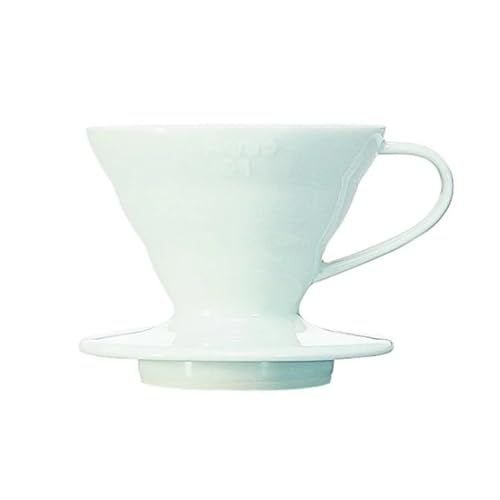
Hario V60 Ceramic Coffee Dripper 01, White
by Hario
The best compact ceramic single-cup -- the flagship V60's ceramic heat retention and cone geometry sized for one to two cups, ideal for the solo specialty brewer.
Pros
- The compact 01 size is purpose-built for one to two cups, so a solo brewer gets the right bed depth and flow rather than fighting an oversized 02 cone half-empty
- Glazed ceramic gives the same real thermal mass as the flagship -- preheat it and it holds the 195 to 205 degree window steadily for a sweet, complete single cup
- Identical 60-degree cone geometry and spiral ribs to the larger V60, so the extraction character and clarity carry straight over in a smaller footprint
- A 4.7 average and a footprint small enough to store in a cupboard make it the tidy, high-quality choice for one-cup mornings
Cons
- The smaller cone caps out around two cups, so it is not the pick if you regularly brew for more than one
- Uses the narrower V60 01 filters, which are a different size from the far more common 02 filters -- keep the right stock on hand
- Ceramic is heavier and breakable, and must be preheated every brew like its larger sibling
Best Glass Pour-Over Coffee Maker
Glass pour-over makers brew and serve in one attractive vessel and never leach any flavor into the coffee, which is why they are the choice for the table as much as the counter. These three are the best glass-bodied brewers here, from the cleanest cup to the best all-in-one value.
| Product | Price | Buy |
|---|---|---|
| Chemex Classic Series 6-Cup Pour-Over Glass Coffee MakerBest glass for clarity A borosilicate hourglass with thick bonded paper for the cleanest, most sediment-free cup, in large-batch size | $47.03 | View on Amazon |
| Bodum Pour Over Coffee Maker with Permanent Filter, 34 ozBest glass all-in-one value A glass carafe with a permanent metal filter -- full-bodied, paper-free, and the lowest-priced glass system here | $19.99 | View on Amazon |
| Coffee Gator Pour Over Coffee Maker with Reusable Filter, 27 ozBest glass reusable-filter kit A glass carafe bundled with a reusable stainless filter for a zero-waste, full-bodied brew at a value price | $22.39 | View on Amazon |
Best Ceramic Pour-Over Coffee Maker
Ceramic is the material I brew on at home, because its thermal mass holds the slurry in the 195 to 205 degree window once preheated — the steadiest heat retention of any dripper material. These two Hario cones deliver that ceramic advantage in different sizes.
| Product | Price | Buy |
|---|---|---|
| Hario V60 Ceramic Coffee Dripper 02, WhiteBest ceramic overall The reference ceramic V60 02 -- deepest owner base, best heat retention, and the brightest cup for one to four cups | $23.90 | View on Amazon |
| Hario V60 Ceramic Coffee Dripper 01, WhiteBest compact ceramic single-cup The same ceramic cone geometry sized for one to two cups, so a solo brewer gets the right bed depth | $21.50 | View on Amazon |
Best Single-Cup Pour-Over Coffee Maker
For a solo brewer, a single-cup device brews directly onto your mug with the right bed depth and no carafe to wash. One takes all the technique out of your hands; the other gives you full manual control in a compact ceramic cone.
| Product | Price | Buy |
|---|---|---|
| OXO Brew Single Serve Pour-Over Coffee MakerBest foolproof single-cup An auto-flow water tank meters the pour for you -- an even, balanced mug with zero technique and no gooseneck kettle | $19.97 | View on Amazon |
| Hario V60 Ceramic Coffee Dripper 01, WhiteBest single-cup for control A compact ceramic V60 cone with the right bed depth for one cup, for the brewer who wants to pour by hand | $21.50 | View on Amazon |
Best Stainless Steel Pour-Over Coffee Maker
Stainless steel is the material for durability — it will not crack, chip, or shatter, so these are the brewers built to travel and take daily abuse while still making specialty coffee. From most forgiving to most packable to best paperless kit.
| Product | Price | Buy |
|---|---|---|
| Kalita Wave 185 Stainless Steel Pour-Over DripperBest stainless for beginners A flat-bottom stainless dripper that forgives an imperfect pour -- the most beginner-friendly steel brewer | $38.90 | View on Amazon |
| Hario V60 Metal Coffee Dripper 02, Stainless SteelBest stainless cone for travel An indestructible stainless V60 cone with the same specialty geometry, built for backpacks and camp kitchens | $25.95 | View on Amazon |
| Coffee Gator Pour Over Coffee Maker with Reusable Filter, 27 ozBest stainless reusable-filter kit A stainless reusable mesh in a bundled glass-carafe kit for a full-bodied, zero-waste, paper-free brew | $22.39 | View on Amazon |
Best Large-Batch Pour-Over Coffee Maker
When you brew for company or want a slow weekend pot, capacity matters — and pour-over does scale, as long as the device is built for the bigger bed. These two are the highest-capacity brewers here, from cleanest cup to best value.
| Product | Price | Buy |
|---|---|---|
| Chemex Classic Series 6-Cup Pour-Over Glass Coffee MakerBest large-batch for clarity A 30-ounce borosilicate hourglass with thick bonded filters -- the cleanest large pot, and a showpiece on the table | $47.03 | View on Amazon |
| Bodum Pour Over Coffee Maker with Permanent Filter, 34 ozBest large-batch value A 34-ounce glass carafe with a permanent metal filter -- the largest capacity here, paper-free and inexpensive | $19.99 | View on Amazon |
How to Choose the Best Pour-Over Coffee Maker
Choosing a pour-over maker is really about deciding how much control you want and how much technique you are willing to manage to get it. Below are the six factors I weigh when I recommend a device, each one a lens that narrows the field toward the right brewer for you.
Dripper Geometry: Cone vs Flat-Bottom
This is the single most important decision, because the shape of the bed changes how water moves through the coffee and therefore how it tastes. A cone — the Hario V60, the Chemex — funnels all the flow to a single point at the bottom, which concentrates and speeds the drawdown. That makes the extraction faster, far more sensitive to your pour rate, and capable of a brighter, more nuanced, high-clarity cup that shows off origin character. The cost is that a cone punishes an uneven pour by channeling and genuinely demands technique. A flat-bottom — the Kalita Wave, the OXO basket — spreads water across the whole bed and meters the flow through several small holes, so extraction evens out on its own and the cup comes out balanced and forgiving even when your pour is imperfect. Cone for control and clarity, flat-bottom for consistency and ease: that geometry, not any vague quality score, is the real reason flat-bottoms are the beginner-friendly choice.
Material & Heat Retention
The dripper’s material governs how well it holds brew temperature, and temperature is chemistry, not preference. You want the slurry to stay in the 195 to 205 degree window, because below it the coffee under-extracts and tastes sour, and above it over-extracts and turns bitter. Ceramic has real thermal mass and, once preheated with a hot rinse, holds heat beautifully — but it is heavy, breakable, and must be preheated every brew. Stainless steel is nearly indestructible and packable with moderate heat retention, the durability choice. Plastic warms instantly and never cracks, making it the travel and budget champion, but its low thermal mass lets temperature drift on bigger batches. Glass systems like the Chemex both brew and serve and never impart flavor, but they also need preheating. Match the material to whether you value flavor stability, toughness, or portability most.
Filter Type: Paper vs Metal Reusable
The filter shapes the body and clarity of the cup more than almost anything else you choose. Paper traps the coffee’s oils and the finest fines, giving a cleaner, brighter, sediment-free brew — and the Chemex’s extra-thick bonded paper takes that clarity to its extreme. A reusable metal mesh, as on the Bodum and Coffee Gator, lets those oils and some fine particles through, producing a fuller, heavier, more textured body closer to a French press, with the bonus of zero paper waste and no recurring cost. There is also a proprietary-versus-generic question worth weighing: the V60, Chemex, and Kalita each use their own filter shapes you must keep in stock, while some cone and basket brewers take cheap generic paper. Decide whether you want clarity or body, and whether you would rather buy paper forever or rinse a mesh after every brew.
Capacity & Batch Size
Buy for how you actually brew, because bed depth affects extraction. A V60 01 or the OXO Single Serve is sized for one to two cups and gives a solo drinker the right bed depth instead of a shallow, fast-draining half-empty cone. A V60 02 or a Kalita Wave 185 handles one to four cups for a small household. A Chemex 6-Cup or a 34-ounce Bodum is the pour-over for company or an unhurried weekend pot. Brewing a large batch on a tiny dripper means constant refills and a stop-start extraction, while running a single cup through a big cone leaves the bed too shallow to extract evenly. Size the device to your typical morning, and only step up to a larger brewer if you regularly make coffee for others.
Ease of Use & Forgiveness
Be honest with yourself about how much fuss you actually want, because the most capable brewer is worthless if you will not use it. A cone rewards and requires technique — a controlled spiral pour, a proper bloom, a gooseneck kettle — and in exchange offers the highest flavor ceiling. A flat-bottom Kalita Wave is far more forgiving and lands a balanced cup even with an imperfect pour. The OXO Single Serve removes technique entirely by metering the pour for you with its auto-flow tank, and an all-in-one Bodum or Coffee Gator just asks you to pour and wait. If you enjoy the ritual and want to chase clarity, choose a cone; if you want great coffee with a minimal learning curve, choose a flat-bottom or an automated brewer. Neither choice is wrong — they are different relationships with your morning.
Required Accessories
The dripper is only one part of the kit, and skipping the supporting gear is the most common reason a new pour-over disappoints. A gooseneck kettle is close to mandatory for cones, because it gives the slow, steerable stream that prevents channeling and lets you pour in even spirals; flat-bottoms and the OXO tolerate any kettle. A digital scale turns brewing from guesswork into a repeatable 1:16 ratio and is the single fastest upgrade to consistency. And a quality burr grinder matters more than the dripper itself, because grind consistency is what drives even extraction — a blade grinder’s dust and boulders will sabotage even the best cone. Budget for the kettle, the scale, and the grinder alongside the brewer, not as afterthoughts, and pair your device with the right beans and a solid method for the best results.
Buyer's Guide
I taste coffee for a living, and pour-over is the method that gives you the most control over the cup -- which means the device you choose is really a choice about how much control you want and how much you are willing to manage to get it. These are the six things I weigh when I recommend a pour-over maker.
Dripper Geometry: Cone vs Flat-Bottom
This is the single most important decision, because the shape of the bed changes how water moves through the coffee. A cone (the Hario V60, the Chemex) funnels all the flow to a single point at the bottom, which concentrates and speeds the drawdown; that makes the extraction faster, more sensitive to your pour, and capable of a brighter, more nuanced, high-clarity cup -- but it punishes an uneven pour and demands technique. A flat-bottom (the Kalita Wave) spreads water across the whole bed and meters the flow through several small holes, so extraction evens out on its own and the cup comes out balanced and forgiving even when your pour is imperfect. Cone for control and clarity, flat-bottom for consistency and ease -- that is the real, correct reason flat-bottoms are called beginner-friendly, not any vague quality score.
Material & Heat Retention
The dripper's material governs how well it holds brew temperature, and temperature is chemistry: you want the slurry to stay in the 195 to 205 degree window, because below it the coffee under-extracts and tastes sour, and above it over-extracts and turns bitter. Ceramic has real thermal mass and, once preheated, holds heat beautifully -- but it is heavy and breakable and must be preheated every brew. Stainless steel is nearly indestructible and packable, with moderate heat retention. Plastic warms up instantly and never cracks, making it the travel and budget champion, but its low thermal mass lets temperature drift on bigger batches. Glass systems like the Chemex both brew and serve, but need preheating too. Match the material to whether you value flavor stability, durability, or portability most.
Filter Type: Paper vs Metal Reusable
The filter shapes the body and clarity of the cup more than almost anything else. Paper traps oils and the finest fines, giving a cleaner, brighter, sediment-free brew -- and the Chemex's extra-thick bonded paper takes that to its cleanest extreme. A reusable metal mesh (Bodum, Coffee Gator) lets the oils and some fine particles through, producing a fuller, heavier, more textured body closer to a French press, with the bonus of zero paper waste and no recurring cost. There is also the proprietary-versus-generic question: V60, Chemex, and Kalita all use their own filter shapes you must keep in stock, while cone and basket brewers take cheap generic paper. Decide whether you want clarity or body, and whether you would rather buy paper forever or rinse a mesh.
Capacity & Batch Size
Buy for how you actually brew. A V60 01 or the OXO Single Serve is sized for one to two cups and gives a solo drinker the right bed depth instead of a half-empty cone; a V60 02 or Kalita Wave 185 handles one to four cups for a small household; and a Chemex 6-Cup or a 34-ounce Bodum is the pour-over for company or a slow weekend pot. Brewing a large batch on a tiny dripper means constant refills, while running a single cup through a big cone leaves the bed too shallow to extract evenly. Size the device to your typical morning, and step up only if you regularly brew for others.
Ease of Use & Forgiveness
Be honest about how much fuss you want. A cone rewards and requires technique -- a controlled spiral pour, a proper bloom, a gooseneck kettle -- and in exchange offers the highest flavor ceiling. A flat-bottom Kalita Wave is far more forgiving and lands a balanced cup with an imperfect pour. The OXO Single Serve removes technique entirely by metering the pour for you with an auto-flow tank, and an all-in-one Bodum or Coffee Gator just needs you to pour and wait. If you enjoy the ritual and want to chase clarity, choose a cone; if you want great coffee with minimal learning curve, choose a flat-bottom or an automated brewer.
Required Accessories
The dripper is only part of the kit, and skipping the supporting gear is the most common reason a new pour-over disappoints. A gooseneck kettle is close to mandatory for cones, because it gives the slow, steerable stream that prevents channeling; flat-bottoms and the OXO tolerate any kettle. A digital scale turns brewing from guesswork into a repeatable 1:16 ratio and is the fastest upgrade to consistency. And a quality burr grinder matters more than the dripper itself, because grind consistency drives even extraction -- a blade grinder's dust and boulders will sabotage even the best cone. Budget for the kettle, scale, and grinder alongside the brewer, not as afterthoughts.
The Verdict: Which Pour-Over Coffee Maker Should You Buy?
After brewing on all nine and grading them the way I grade coffee on the cupping table, the Hario V60 Ceramic 02 is my best overall pick for 2026. It is the reference specialty cone, its geometry gives you total control over the extraction, and the ceramic body holds brew temperature in the window that makes the cup taste sweet and complete rather than sour and thin. In skilled hands, nothing here makes a brighter, more articulate cup, and its enormous, high-rated owner base confirms it. If your budget is tight or you want something unbreakable to travel with, the Hario V60 Plastic 02 is my budget pick — the exact same cone geometry and the exact same cup for the price of a bag of beans. And if you want the cleanest possible cup in a vessel you will keep for a lifetime, the Chemex 6-Cup is the upgrade, with its thick bonded filters delivering a clarity nothing else matches and a design worthy of the table.
Whichever you choose, remember that the device is only one link in the chain. Feed it a clean, even grind from a quality burr coffee grinder, pour freshly roasted coffee beans through it, and follow a repeatable method — my full walkthrough on how to make pour-over coffee covers the bloom, the pour pattern, and the timing step by step. Dial in exactly how much coffee and water your cup needs with our free coffee-to-water ratio calculator, and set the other half of the chemistry with our coffee water temperature calculator, which gives you a target for your roast and tells you what your kettle can actually reach at your elevation. Once you know the dose, our free pour over coffee calculator turns it into a pour-by-pour schedule for whichever of these cones you end up buying — what the scale should read at every point on the clock, including James Hoffmann’s Ultimate V60 and Tetsu Kasuya’s 4:6 worked out at your dose rather than his. If you also want a hands-off pot for busy mornings, compare these against the best automatic machines in our drip coffee maker guide. The best pour-over coffee maker is the one that fits how you actually want to brew — and any of these nine, matched to the right buyer, will earn its place on your counter.
Frequently Asked Questions
What grind size should I use for pour-over coffee?
Is pour-over really better than drip coffee?
Cone vs. flat-bottom -- should I get a Hario V60 or a Kalita Wave?
Do I really need a gooseneck kettle for pour-over?
Paper vs. metal reusable filter -- which makes a better cup?
What's the right coffee-to-water ratio for pour-over?
Why does my pour-over taste sour (or bitter)?
Related Articles
About the Reviewer

Clara Bennett, CQI Q Grader, SCA Roaster
B.S. Food Science, UC Davis
Clara Bennett is a Coffee Quality Institute (CQI) licensed Q Grader and SCA-certified roaster with over a decade in specialty coffee — from competition barista to production roaster and green-coffee buyer. She has cupped thousands of coffees to CQI protocol and dialed in espresso on everything from $90 entry machines to commercial three-group setups. She founded Brew Gazette in 2026 to turn cupping-table standards into plain-English buying advice.