Best Coffee Beans for Espresso in 2026 (Q Grader Tested)
CQI Q Grader Clara Bennett ranks the best coffee beans for espresso in 2026 — crema-forward blends and single origins cupped shot by shot, sorted by roast level, machine type, espresso martinis, decaf, and low-acid.
Updated
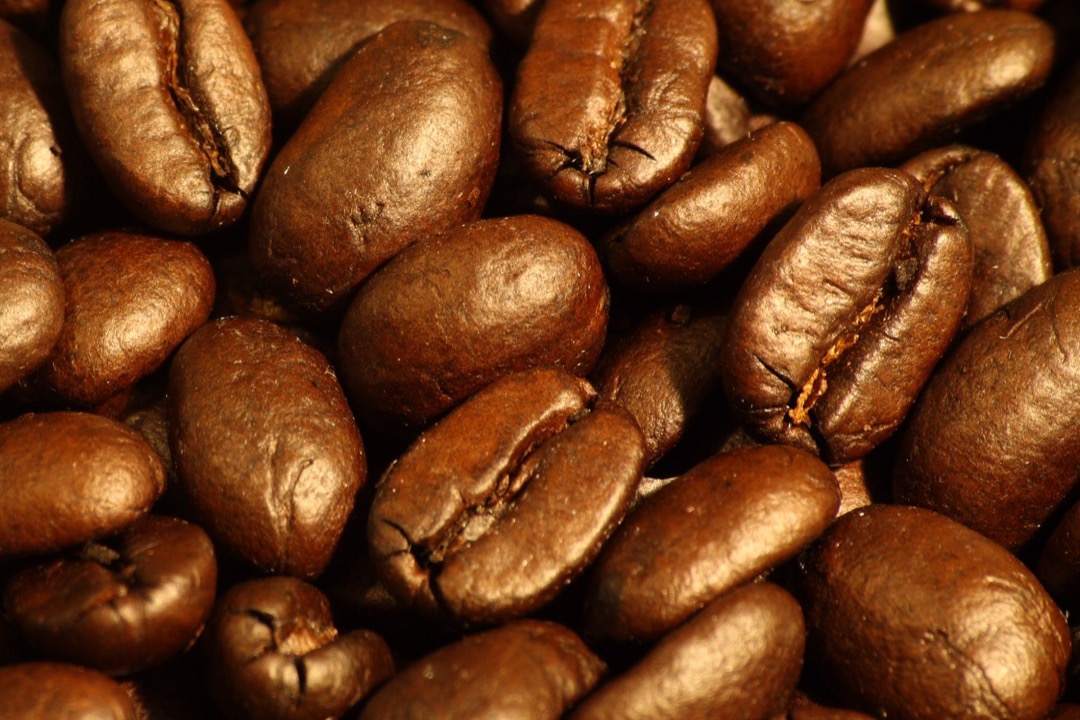
I taste coffee for a living, and no brew method exposes a bean the way espresso does. Nine bars of pressure force hot water through a tightly packed puck in about half a minute, concentrating everything the bean has to give — sweetness, body, acidity, and every flaw — into an ounce of intense liquid crowned with crema. As a CQI-licensed Q Grader and SCA-certified roaster, I pulled every bean in this roundup as espresso and cupped it the way I judge anything else: for aroma, body, acidity, sweetness, balance, and how cleanly it extracts. The picks below are sorted so you can find the right bag for how you actually pull shots — a crema-rich everyday blend, a bold base for an espresso martini, a machine-friendly bean for a super-automatic, or a gentle low-acid roast that will not upset your stomach.
Here is the honest truth most espresso guides bury: there is technically no such thing as an “espresso bean.” Espresso is a brewing method, not a variety of coffee, so any whole-bean coffee can be pulled as a shot. A bag is labeled “espresso” only because the roaster picked a roast level and blend — usually medium to dark, often with a little Robusta — that tastes good under pressure and throws a thick crema. That means the label is a useful shortcut, not a rule, and what matters far more is that the beans are fresh, whole, and ground right before you pull. Get that right, pair these beans with a proper burr grinder and a capable espresso machine, and even a modest setup pulls a shot that tastes like a barista made it.
A quick note on how I chose. I spread these eleven picks across every roast level, every price tier, both species approaches, and every machine type, so an Italian-espresso traditionalist, a super-automatic owner, a cocktail maker, and a reflux-sensitive drinker each find a clear answer below. If you want the full picture on roast levels and origins beyond espresso, our guide to the best coffee beans covers the wider field. Let’s get into the shots.
| Product | Price | Buy |
|---|---|---|
| Lavazza Super Crema Whole Bean CoffeeBest Overall | $26.99 | View on Amazon |
| Starbucks Espresso Roast Whole Bean CoffeeBudget Pick | $16.99 | View on Amazon |
| Stumptown Hair Bender Whole Bean CoffeePremium Pick | $14.95 | View on Amazon |
| Illy Classico Whole Bean CoffeeRunner-Up | $14.99 | View on Amazon |
| Illy Intenso Whole Bean CoffeeRunner-Up | $14.78 | View on Amazon |
| Peet's Espresso Forte Dark Roast Whole BeanRunner-Up | $24.38 | View on Amazon |
| Death Wish Espresso Roast Whole BeanRunner-Up | $17.48 | View on Amazon |
| Lavazza Espresso 100% Arabica Medium Roast Whole BeanRunner-Up | $22.99 | View on Amazon |
| Gaviña Old Havana Espresso Whole Bean CoffeeRunner-Up | $28.99 | View on Amazon |
| Lavazza Dek Decaffeinated Espresso Whole BeanRunner-Up | $28.62 | View on Amazon |
| Lifeboost Organic Espresso Whole Bean CoffeeRunner-Up | $28.99 | View on Amazon |
Find the Best Espresso Beans for Your Setup
Every machine, roast level, and drink wants a different bean. Jump to what fits you:
- Best espresso beans overall
- Best medium roast beans for espresso
- Best dark roast beans for espresso
- Best beans for espresso martini
- Best beans for Breville & semi-automatic machines
- Best beans for super-automatic machines
- Best grocery-store espresso beans
- More use cases: decaf, low-acid & lattes
How I Cupped and Chose These Espresso Beans
Every bean here earned its place against a consistent bar: a verified, in-stock Amazon listing with a real owner-review base; whole beans, never pre-ground, so freshness is in your control; and a roaster with a genuine reputation rather than a white-label commodity fill. I pulled each as espresso and evaluated it the way I evaluate any coffee professionally — on fragrance and aroma, flavor and aftertaste, acidity, body, sweetness, and crema, naming every note against the same coffee flavor wheel I use at the cupping table — and weighed that sensory read against roast consistency, machine compatibility, sourcing transparency, and value per shot. I have no financial relationship with any roaster reviewed here. I deliberately spread the picks across medium and dark roasts, blends and single origins, and every machine type, so this list answers a real range of espresso setups instead of naming eleven versions of the same dark blend.
Best Espresso Beans Overall
These are the eleven bags I would put next to almost any machine in 2026, each pulled and reviewed once below with its full strengths and tradeoffs. The best overall pick leads, because it is the bean that makes the most people a good shot across the most machines.
Best Overall: Lavazza Super Crema
The Lavazza Super Crema earns the top spot because it solves the problem most home baristas actually have: they want one bag that pulls a genuinely good, crema-rich shot without babysitting the grind or owning a shelf of single origins. It is the most-reviewed whole-bean coffee on Amazon by an enormous margin, and that scale is no accident — this medium-roast Italian blend is engineered for espresso. The measured dose of Robusta is the secret weapon: it throws the thick, golden, persistent crema that pure-Arabica beans struggle to produce, which is the single thing most people are chasing when they pull a shot at home.
On the cupping table it reads as hazelnut, brown sugar, and a mild honeyed sweetness, with very low acidity and almost none of the bitterness that trips up cheaper blends — a forgiving, crowd-pleasing shot that survives a slightly-off grind or dose. And it is the rare bean that behaves in every machine, from a proper semi-auto to a super-automatic hopper to a stovetop moka pot. The honest tradeoffs are the flip side of that consistency: a specialty purist chasing bright origin character will find it one-dimensional, it ships from bulk warehouses so the roast date is rarely the freshest, and the big 2.2-pound bag is a lot to finish at peak freshness if you only pull a shot a day. For almost everyone else, it is the one bag that just works.
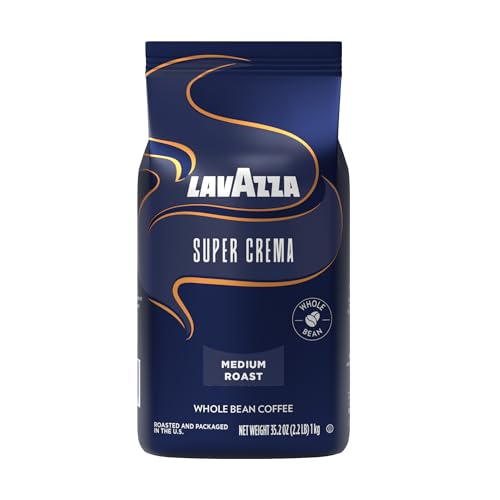
Lavazza Super Crema Whole Bean Coffee
by Lavazza
The default crema-forward espresso blend that pulls a reliable, sweet, low-acid shot in almost any machine, backed by the deepest review base in the entire category.
Pros
- The most-reviewed whole-bean coffee on Amazon by a huge margin -- tens of thousands of buyers behind a solid average is the deepest track record of any espresso bean here, so you know exactly what you are pulling before you open the bag
- The touch of Robusta in the blend is the secret to its signature: it throws a thick, golden, long-lasting crema that pure-Arabica beans genuinely struggle to match, which is the single thing most home baristas are chasing
- On the cupping table it reads as hazelnut, brown sugar, and a mild honeyed sweetness with very low acidity and almost no bitterness -- a forgiving, crowd-pleasing shot that survives a slightly-off grind or dose
- It is the rare bean that behaves in every machine: a proper semi-auto, a super-automatic hopper, or a stovetop moka pot all pull a good shot from it, so one bag serves a whole household
Cons
- Specialty purists find it one-dimensional -- it is engineered for consistency and crema, not for the bright, distinctive origin character a single-origin light roast delivers, and a few tasters read the Robusta as a faint rubbery note
- It ships from high-volume warehouses, so the roast date is rarely as fresh as buying direct from a roaster -- grind it and drink it faster to compensate
- The big 2.2-pound bag is a lot of coffee to finish at peak freshness if you only pull a shot or two a day
Best Budget: Starbucks Espresso Roast
The Starbucks Espresso Roast is the bag I point people to when the goal is a genuinely good daily shot at the lowest sensible cost, and its case is simple: it delivers the lowest cost-per-ounce here from a name every grocery shopper already knows and can restock anywhere. When you are pulling shots every morning, that math and that convenience matter more than a few extra tasting notes.
It also carries the single highest owner rating in this roundup, which for a mass-market bean is a real signal that the shot lands with most people. The dark roast is built for milk — caramelized, smoky-sweet, and heavy-bodied — so it holds its own in a latte or cappuccino instead of vanishing under steamed milk, and Starbucks roasts to such a tightly controlled profile that every bag tastes the same. Be clear-eyed about the tradeoffs: as a 100% Arabica dark roast it throws less crema than a Robusta blend, the deep roast reads as ashy to third-wave drinkers, and warehouse roast dates can run older. None of that disqualifies it — for a cheap, reliable, milk-friendly espresso from a name you trust, nothing else here matches the value.
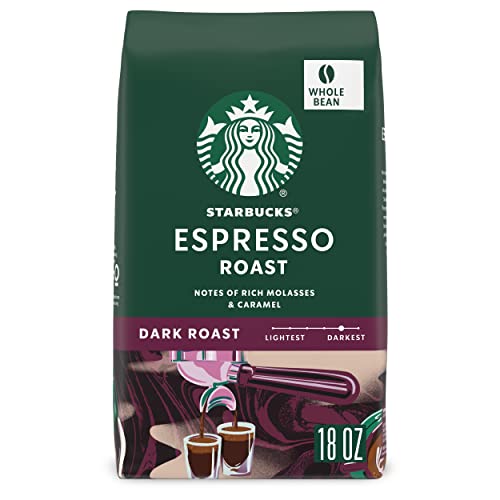
Starbucks Espresso Roast Whole Bean Coffee
by Starbucks
The cheapest reliable whole-bean espresso from a name you already trust -- a milk-friendly dark roast with the highest owner rating in this roundup.
Pros
- The lowest cost-per-ounce of any bean in this roundup, from a name every grocery shopper already knows and can restock anywhere -- the practical answer for anyone pulling shots daily on a budget
- It carries the single highest owner rating here, which for a mass-market bean is a real signal that the shot it makes lands with most people
- The dark roast is built for milk: it cups as caramelized, smoky-sweet, and heavy-bodied, so it holds its own in a latte or cappuccino instead of vanishing under steamed milk
- Starbucks roasts to a tightly controlled profile at enormous scale, so the bag you buy in July tastes like the one you bought in March -- consistency most small roasters cannot promise
Cons
- As a 100% Arabica dark roast it throws less crema than a Robusta-blend bean, so straight shots look a little thinner on top
- The deep roast reads as over-roasted or ashy to third-wave drinkers who want origin clarity in the cup
- Warehouse fulfillment means roast dates can run older than a bag bought direct from a roaster
Best Upgrade: Stumptown Hair Bender
The Stumptown Hair Bender is the bag I reach for when someone has pulled enough shots to want the next tier and is ready to pay a little more for a genuinely more interesting espresso. Hair Bender is Stumptown’s flagship blend and one of the coffees that built American third-wave espresso — this is real cafe-counter coffee in a grocery-accessible bag.
The difference shows immediately in the cup: it is layered in a way commodity blends rarely are, with citrus-zest brightness up front, a deep dark-chocolate finish, and a syrupy body that holds together under the pressure of a shot. It is blended across Latin America, Indonesia, and East Africa specifically to taste of its origins rather than of the roast, and it is versatile enough to also brew as pour-over, so one specialty bag serves a household that pulls shots and brews filter. The tradeoffs are the price of that quality: its 4.2-star average is the lowest here — less a quality failure than a sign that a bright, origin-forward espresso divides drinkers expecting a classic dark shot — the 12-ounce bag costs more per ounce, and a bean this nuanced punishes staleness and a sloppy grind. For anyone whose palate has outgrown commodity blends and who owns a good grinder, it is the upgrade that earns its keep.
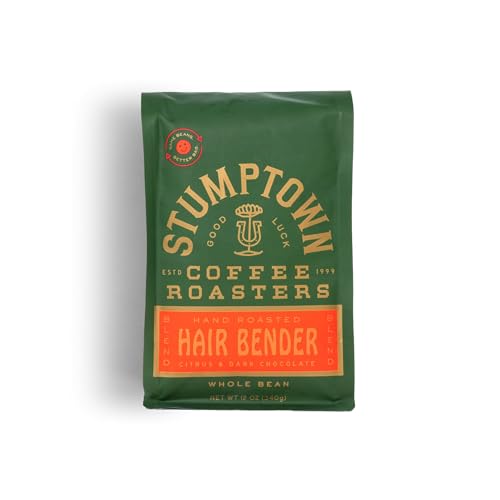
Stumptown Hair Bender Whole Bean Coffee
by Stumptown Coffee Roasters
The specialty-roaster pick for drinkers who want café-grade, origin-forward espresso at home and own a grinder good enough to do it justice.
Pros
- Stumptown's flagship blend and one of the beans that built American third-wave espresso -- this is genuine cafe-counter coffee in a grocery-accessible bag, the upgrade for anyone whose palate has outgrown commodity blends
- The cup is layered in a way blends rarely are: citrus-zest brightness up front, a deep dark-chocolate finish, and a syrupy body that holds together under the pressure of a shot
- It is blended across Latin America, Indonesia, and East Africa specifically to taste of its origins rather than of the roast, which is exactly the complexity a Q Grader scores highest
- Roasted for espresso but versatile enough for pour-over, so a household that pulls shots and also brews filter gets one specialty bag that does both
Cons
- Its 4.2-star average is the lowest here -- not a quality failure so much as a sign that a bright, origin-forward espresso divides drinkers who expected a classic dark shot
- The 12-ounce bag costs more per ounce than the grocery brands, the price of specialty sourcing and fresher roasting
- A bean this nuanced punishes staleness and a sloppy grind -- it rewards a good burr grinder and prompt use more than a forgiving blend would
Best Italian Medium: Illy Classico
The illy Classico is the pick for a refined, unmistakably Italian shot and the safest single bean I can name for a super-automatic machine. illy’s signature nine-bean Arabica blend is slow-roasted to a low-oil surface that is unusually kind to a machine’s integrated grinder — the detail that quietly saves super-automatic owners from clogs and stale residue down the line.
The cup is elegant rather than heavy: caramel, orange blossom, and jasmine, clean and balanced, a genuinely authentic Italian espresso profile without any Robusta bite. It ships in a pressurized, sealed can rather than a bag, which protects the beans from oxygen and keeps them fresher on the shelf than most packaging. The tradeoffs are size and intensity: the 8.8-ounce can is small, so you reorder more often and pay more per ounce, and its refined mildness is not for a drinker who wants smoky, punchy darkness — there is less crema here than a Robusta blend throws. For an authentic Italian medium, especially in a bean-to-cup machine, it is my first recommendation.

Illy Classico Whole Bean Coffee
by illy
A refined, authentically Italian medium whose low-oil roast makes it the safest choice for super-automatic machines that grind their own beans.
Pros
- illy's signature nine-bean Arabica blend, slow-roasted to a low-oil surface that is unusually kind to a machine's grinder -- it is the safest single bean I can name for a super-automatic bean-to-cup hopper
- The cup is elegant and unmistakably Italian: caramel, orange blossom, and jasmine, clean and balanced rather than heavy or bitter
- It ships in a pressurized, sealed can rather than a bag, which protects the beans from oxygen and keeps them fresher on the shelf than most packaging
- A genuinely authentic Italian espresso profile without the Robusta bite, so straight shots stay smooth and sweet
Cons
- The 8.8-ounce can is small, so you reorder more often and pay more per ounce than a 2.2-pound bag
- It is milder and more refined than bold-roast drinkers want -- there is no smoky, punchy intensity here by design
- That low-oil elegance means slightly less crema than a Robusta blend throws
Best Italian Dark: Illy Intenso
The illy Intenso is the pick for a drinker who wants dark-roast depth but not harshness, and it pulls off a rare trick: it is a genuinely dark Italian espresso that still stays gentle on a machine. The cup is deep cocoa and roasted nut with a fuller body than the Classico, and because it is 100% Arabica it delivers that intensity without the earthy Robusta note some dark blends carry.
What makes it special is the surface: it stays noticeably less oily than a typical dark Italian roast, which makes it one of the very few genuinely dark beans I would trust in a super-automatic hopper. That heavier body also makes it my quiet favorite for lattes and cappuccinos among the darker picks — it carries through steamed milk beautifully. The tradeoffs are familiar for illy: the 8.8-ounce can means frequent reorders and a higher per-ounce cost, it is not as aggressively bold as Death Wish or Peet’s for maximum-intensity seekers, and like any dark roast it fades faster once the can is opened. For dark Italian espresso done with restraint, it is excellent.
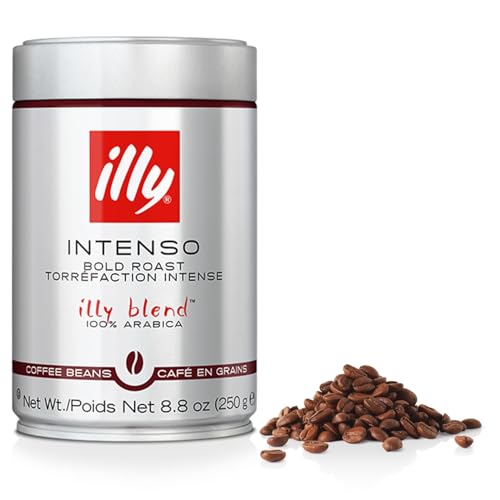
Illy Intenso Whole Bean Coffee
by illy
A dark-roast Italian espresso with deep cocoa depth that stays gentler on grinders than most bold beans and shines under steamed milk.
Pros
- A dark-roast Italian espresso with real depth -- deep cocoa and a roasted-nut backbone with a fuller body than the Classico, for drinkers who want intensity but not harshness
- It is 100% Arabica, so it delivers dark-roast boldness without the earthy Robusta note some blends carry
- Crucially, it stays noticeably less oily than a typical dark Italian roast, which means it is one of the few genuinely dark beans I would trust in a super-automatic hopper
- That heavier body makes it excellent under milk -- it is my quiet pick for lattes and cappuccinos among the darker beans here
Cons
- The 8.8-ounce can size again means frequent reorders and a higher per-ounce cost
- It is not as aggressively bold as Death Wish or Peet's for anyone chasing maximum intensity
- Dark-roasted beans lose their edge faster once the can is opened, so seal it and use it promptly
Best for Bold Shots & Cocktails: Peet’s Espresso Forte
The Peet’s Espresso Forte is the pick when you want maximum intensity in the cup, and it is my top choice for espresso martinis specifically. This is one of the boldest 100%-Arabica dark roasts you can buy — smoky, bittersweet-chocolate depth with a heavy, syrupy body that is unmistakably a serious espresso.
That intensity is exactly what a cocktail needs: it cuts cleanly through vodka and coffee liqueur where a milder bean would simply disappear into the drink. The generous 32-ounce bag brings the per-ounce cost down despite the specialty roaster name, and Peet’s roasts in smaller, fresher batches than the supermarket giants, so the depth is lively rather than flat. The tradeoffs are exactly what you would expect from a bean this dark: the surface is visibly oily, so keep it out of super-automatic hoppers where oily beans gum up the grinder, and it is unapologetically bold, so it is wrong for anyone who wants a bright or delicate straight shot. For espresso martinis and drinkers who want the biggest, boldest shot, it is superb.

Peet's Espresso Forte Dark Roast Whole Bean
by Peet's Coffee
A bold, oily, smoky dark roast built for espresso martinis and anyone who wants maximum intensity in the cup.
Pros
- One of the boldest 100%-Arabica dark roasts you can buy -- smoky, bittersweet-chocolate intensity with a heavy, syrupy body that is unmistakably a serious espresso
- That intensity is exactly why it is my top pick for espresso martinis: it cuts cleanly through vodka and coffee liqueur where a milder bean would disappear
- The generous 32-ounce bag brings the per-ounce cost down despite the specialty roaster name
- Peet's roasts in smaller, fresher batches than the supermarket giants, so the depth in the cup is lively rather than flat
Cons
- The bean surface is visibly oily -- keep it out of super-automatic hoppers, where oily beans gum up integrated grinders over time
- It is unapologetically dark, so it is wrong for anyone who wants a bright, balanced, or delicate shot
- The heavy roast flattens origin nuance the way any dark roast does
Strongest Shot: Death Wish Espresso Roast
The Death Wish Espresso Roast is the honest answer for anyone whose real question is “which espresso will actually wake me up?” It is built on an Arabica-Robusta blend engineered for a high caffeine load — roughly 170 mg per cup — so the shot does real work, and its whole positioning is that intensity.
What surprises skeptics is that it is a legitimately well-made roast, not a novelty: it cups as baker’s chocolate, caramelized sugar, and black cherry, heavy-bodied and low-acid without a burnt edge, and it is USDA Organic and Fair Trade certified, which is genuinely rare in the high-caffeine corner of the market. The Robusta that drives the caffeine also throws a thick crema and a bold bite that make it a punchy, excellent base for an espresso martini. The caveats are inherent: it is genuinely strong, so it is the wrong bean for a caffeine-sensitive drinker or a late-afternoon shot; its oily, bold surface is not friendly to super-automatic grinders; and as a bold blend it flattens delicate origin notes. For the strongest, boldest shot on this list, it is the pick. (Curious how espresso caffeine actually compares? See our breakdown of how much caffeine is in espresso.)

Death Wish Espresso Roast Whole Bean
by Death Wish Coffee
The strongest, boldest whole-bean espresso here -- an organic high-caffeine blend that throws thick crema and makes a serious espresso martini.
Pros
- The honest answer to 'which espresso will actually wake me up' -- an Arabica-Robusta blend built for a high caffeine load, roughly 170 mg per cup, so the shot does real work
- The Robusta content also throws a thick crema and a bold bite that make it a superb, punchy base for an espresso martini
- Despite the intensity it is a well-made roast: baker's chocolate, caramelized sugar, and black cherry, heavy-bodied and low-acid without a burnt edge
- USDA Organic and Fair Trade certified, which is genuinely rare in the high-caffeine corner of the market
Cons
- It is genuinely strong -- the wrong bean for a caffeine-sensitive drinker or a late-afternoon shot
- The oily, bold surface means it is not friendly to super-automatic grinders
- As a bold blend it flattens the delicate origin notes a lighter bean would show
Best Value 100% Arabica: Lavazza Espresso 100% Arabica
The Lavazza 100% Arabica is the pick for an authentic Italian shot without the Robusta, in a big value bag that makes it easy to pull shots daily. It is cleaner and less bitter than its stablemate the Super Crema, and because it is pure Arabica and a medium roast, the bean surface stays low in oil — which makes it a genuinely machine-friendly choice for a super-automatic without giving up Italian character.
With tens of thousands of reviews at a strong 4.6-star average, it is one of the most trusted espresso beans on Amazon, and the 2.2-pound bag keeps the per-cup cost sensible. The tradeoffs follow from dropping the Robusta: it throws a thinner crema than the Super Crema, so straight shots look a touch less rich on top, and its clean, balanced profile lacks the bold punch a dark-roast drinker wants. As a versatile, low-oil, authentically Italian medium at a fair price — especially for a bean-to-cup machine — it is a quiet standout.
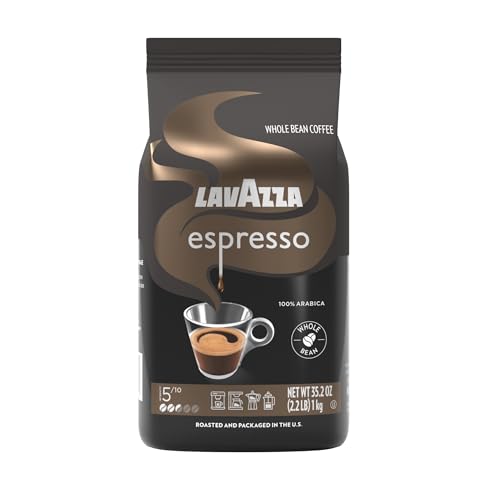
Lavazza Espresso 100% Arabica Medium Roast Whole Bean
by Lavazza
A clean, low-oil, 100%-Arabica Italian medium in a big value bag -- authentic espresso character that is safe for super-automatic machines.
Pros
- An authentic Italian espresso bean with none of the Robusta, so it is cleaner and less bitter than the Super Crema while still pulling a proper, sweet shot
- Because it is pure Arabica and a medium roast, the bean surface stays low in oil -- a genuinely machine-friendly choice for a super-automatic without giving up Italian character
- Tens of thousands of reviews at a strong 4.6-star average make it one of the most trusted espresso beans on Amazon
- The 2.2-pound bag keeps the per-cup cost sensible for daily pulling
Cons
- Without the Robusta it throws a thinner crema than the Super Crema, so straight shots look a touch less rich on top
- Its clean, balanced profile lacks the bold punch a dark-roast drinker wants
- Like any high-volume bag, roast-date freshness varies with the ship date
Best Cuban-Style: Gaviña Old Havana Espresso
The Gaviña Old Havana is the pick for a bold, Cuban-style shot with real heritage behind it — a family roaster with 140 years of espresso history, in a blend explicitly built for espresso machines and moka pots. It is the bean for anyone who grew up on café Cubano or wants that specific sweet, robust profile.
It cups as nutty and sweet with a hint of citrus and a smooth finish, robust without the harsh bitterness of a heavier dark roast — which also makes it a gentler alternative for an espresso martini, with enough body to carry the cocktail but less of the ashy edge the darkest beans bring. The 32-ounce bag and a frequent on-listing coupon keep the per-ounce price competitive. The tradeoffs: the Cuban style is a specific flavor preference rather than a classic Northern-Italian espresso taste, at full price it runs higher per ounce than the Lavazza bags, and as a medium-dark it carries some surface oil, so it suits a semi-auto better than a super-automatic hopper. For bold Cuban-style espresso, it is a delicious, distinctive choice.

Gaviña Old Havana Espresso Whole Bean Coffee
by Gaviña
A bold, low-bitterness Cuban-style espresso bean -- a smoother alternative to the heaviest dark roasts and a natural for café Cubano.
Pros
- A bold, Cuban-style medium-dark from a family roaster with 140 years of espresso heritage -- explicitly built for espresso machines and moka pots
- It cups as nutty and sweet with a hint of citrus and a smooth finish, robust without the harsh bitterness of a heavier dark roast
- That balance makes it a gentler alternative for an espresso martini: enough body to carry the cocktail, less of the ashy edge Death Wish or Peet's bring
- The 32-ounce bag and a frequent on-listing coupon make the per-ounce price competitive
Cons
- The Cuban-style profile is a specific flavor preference, not a classic Northern-Italian espresso taste
- At full price it runs higher per ounce than the Lavazza bags
- As a medium-dark it carries some surface oil, so it is a better fit for a semi-auto than a super-automatic hopper
Best Decaf: Lavazza Dek Decaf Espresso
The Lavazza Dek is the pick for an evening shot without the caffeine, and it clears the bar most decaf espresso fails: it keeps real body and crema. Most decaf pulls thin and flat, stripped of character along with the caffeine, but this one stays rounded, sweet, and full-bodied — which is exactly why it is Italy’s top-selling decaf.
That means a nighttime espresso actually tastes like espresso rather than a compromise, and it works across espresso, moka pot, and drip, so a single bag covers every decaf need in the house. There is a trusted Lavazza roast profile behind it and a solid four-figure review base. The honest caveats: the listing does not disclose the decaffeination method, which matters if you specifically want a water-process decaf; it costs more per pound than the caffeinated line; and the 1.1-pound bag is smaller than the flagship bags. For anyone who wants a genuine evening shot, it is the clear standout.

Lavazza Dek Decaffeinated Espresso Whole Bean
by Lavazza
A decaf espresso bean that keeps genuine body and crema -- the standout for anyone who wants a real evening shot without the caffeine.
Pros
- The rare decaf that keeps real body and crema -- most decaf espresso pulls thin and flat, and this one does not, which is why it is Italy's top-selling decaf
- The rounded, sweet profile means an evening shot tastes like espresso rather than a compromise
- It works across espresso, moka pot, and drip, so a single bag covers every decaf need in the house
- A trusted Lavazza roast profile behind it, with a solid four-figure review base
Cons
- The listing does not disclose the decaffeination method, which matters to buyers who specifically want a water-process decaf
- It costs more per pound than Lavazza's caffeinated line
- The 1.1-pound bag is smaller than the flagship 2.2-pound bags
Best Low-Acid: Lifeboost Organic Espresso
The Lifeboost Organic Espresso is the bag I recommend to anyone whose stomach or reflux has made espresso uncomfortable, because it is genuinely gentle without tasting like a compromise. It is a single-origin Nicaraguan bean grown at high altitude and third-party tested for mold, mycotoxins, and pesticides — the cleanest, most transparent espresso bean in this roundup, with a listed pH of 6 or higher versus most coffee’s 4.85 or below.
The pleasant surprise is that it still tastes like espresso: bold and rich with chocolate-and-caramel undertones and a smooth crema, not the thin, sour cup low-acid beans are stereotyped for. It is USDA Organic, Non-GMO, and shade-grown, carries an Amazon’s Choice badge, and comes with a 30-day guarantee. The honest tradeoffs: the 12-ounce bag at a premium price is the highest per-ounce cost here (an on-listing coupon softens it), the lighter-medium roast can feel underpowered to a committed dark-roast drinker, and the review base is smaller than the category giants. For a smooth, stomach-friendly shot, it is the standout.

Lifeboost Organic Espresso Whole Bean Coffee
by Lifeboost
The cleanest, gentlest espresso bean here -- a lab-tested, low-acid single origin that still pulls a rich, chocolatey shot for sensitive stomachs.
Pros
- A single-origin Nicaraguan bean grown at high altitude and third-party tested for mold, mycotoxins, and pesticides -- the cleanest, most transparent espresso bean in this roundup
- Its low acidity (a listed pH of 6 or higher, versus most coffee at 4.85 or below) makes it genuinely gentler for drinkers with reflux or a sensitive stomach
- It still tastes like espresso: bold and rich with chocolate-and-caramel undertones and a smooth crema, not the thin cup low-acid beans are stereotyped for
- USDA Organic, Non-GMO, and shade-grown, with an Amazon's Choice badge and a 30-day guarantee behind it
Cons
- The 12-ounce bag at a premium price is the highest per-ounce cost here, though an on-listing coupon softens it
- The lighter-medium roast can feel underpowered to a committed dark-roast drinker
- A smaller review base than the category giants, though the rating is solid
Best Medium Roast Beans for Espresso
Medium roast is the most versatile, crema-friendly zone for espresso — it balances the bean’s origin sweetness against the body the roast develops, so it pulls a shot that is sweet and rounded without tipping into smoky bitterness. These three are the mediums I trust most, from a crema-rich blend to a refined Italian to a bright specialty pick.
| Product | Price | Buy |
|---|---|---|
| Lavazza Super Crema Whole Bean CoffeeBest overall medium The crema-forward Arabica-Robusta blend that pulls a sweet, forgiving shot in any machine | $26.99 | View on Amazon |
| Illy Classico Whole Bean CoffeeBest Italian medium A refined, low-oil nine-bean Italian blend that is elegant straight and safe for super-autos | $14.99 | View on Amazon |
| Stumptown Hair Bender Whole Bean CoffeeBest specialty medium Third-wave complexity with citrus-and-chocolate clarity for a palate that has outgrown blends | $14.95 | View on Amazon |
Best Dark Roast Beans for Espresso
Dark roast trades delicate origin notes for bold, low-acid, chocolatey depth and a heavier body — the zone for milk drinks and anyone who wants a classic, intense shot. The key is a dark roast with richness but not the flat, burnt bitterness of cheap beans. These three nail it, from a machine-friendly Italian to a bold cocktail base.
| Product | Price | Buy |
|---|---|---|
| Illy Intenso Whole Bean CoffeeBest dark for machines Deep cocoa depth that stays low-oil enough to trust in a super-automatic and shines under milk | $14.78 | View on Amazon |
| Peet's Espresso Forte Dark Roast Whole BeanBoldest dark roast Smoky, syrupy intensity that cuts through milk and cocktails alike (oily -- semi-autos only) | $24.38 | View on Amazon |
| Starbucks Espresso Roast Whole Bean CoffeeBest value dark A caramelized, milk-friendly dark from a name you can restock anywhere, for the lowest cost here | $16.99 | View on Amazon |
Best Beans for Espresso Martini
An espresso martini lives or dies on the coffee cutting through vodka and coffee liqueur, so this is the one drink where you want the boldest, most intense shot you can pull — and, if you like a thicker head on the cocktail, a Robusta blend for extra crema. These three carry a martini without disappearing into it.
| Product | Price | Buy |
|---|---|---|
| Peet's Espresso Forte Dark Roast Whole BeanBest overall for martinis Smoky, bittersweet-chocolate intensity that stands up cleanly to vodka and liqueur | $24.38 | View on Amazon |
| Death Wish Espresso Roast Whole BeanBoldest & most caffeinated An Arabica-Robusta blend with thick crema and a serious caffeine punch for a bracing cocktail | $17.48 | View on Amazon |
| Gaviña Old Havana Espresso Whole Bean CoffeeBest smooth alternative A sweeter Cuban-style bold with less bitterness for a rounder, smoother martini | $28.99 | View on Amazon |
Best Beans for Breville & Semi-Automatic Machines
A semi-automatic machine like a Breville Barista Express grinds into a portafilter you load by hand, which means two things: oily beans are perfectly fine (the oil never coats the machine’s internals the way it does in a super-auto), and the bean should be forgiving enough to dial in without a fight. These three are crema-friendly and easy to pull.
| Product | Price | Buy |
|---|---|---|
| Lavazza Super Crema Whole Bean CoffeeBest overall for Breville Forgiving, crema-rich, and easy to dial in -- the safest bag for a new semi-auto owner | $26.99 | View on Amazon |
| Stumptown Hair Bender Whole Bean CoffeeBest specialty for Breville Rewards a good semi-auto grinder with bright, layered, café-grade shots | $14.95 | View on Amazon |
| Illy Intenso Whole Bean CoffeeBest dark for Breville Deep cocoa depth that pulls a rich, milk-ready shot; oil is a non-issue in a portafilter machine | $14.78 | View on Amazon |
For the machine to match these beans, see our guide to the best espresso machines.
Best Beans for Super-Automatic Machines
Super-automatic (bean-to-cup) machines grind beans internally, which makes oil sheen the single most important thing to check — oily dark roasts gum up the integrated grinder and hopper over time and cause clogs. The fix is a lower-oil bean, which means a medium roast or one of the rare dry dark roasts. These three are the machine-safest bags here.
| Product | Price | Buy |
|---|---|---|
| Illy Classico Whole Bean CoffeeBest overall for super-autos A slow-roasted, low-oil Italian blend engineered around bean-to-cup machines | $14.99 | View on Amazon |
| Lavazza Espresso 100% Arabica Medium Roast Whole BeanBest value for super-autos A clean, low-oil 100% Arabica medium in a big value bag -- machine-safe and affordable | $22.99 | View on Amazon |
| Illy Intenso Whole Bean CoffeeBest dark for super-autos The rare dark roast dry enough to trust in a hopper, for those who want depth without clogs | $14.78 | View on Amazon |
Best Grocery-Store Espresso Beans
Sometimes the best bean is the one you can grab on a normal shopping run and restock anywhere without waiting on a specialty-roaster shipment. These three are all widely stocked, reliably consistent, and priced for everyday pulling — proof that a good grocery-store shot is entirely achievable.
| Product | Price | Buy |
|---|---|---|
| Starbucks Espresso Roast Whole Bean CoffeeBest budget grocery pick The cheapest per ounce here, from a name in every grocery aisle, with the highest rating in this roundup | $16.99 | View on Amazon |
| Lavazza Espresso 100% Arabica Medium Roast Whole BeanBest value big bag A big, affordable 100% Arabica Italian medium that is easy to find and machine-friendly | $22.99 | View on Amazon |
| Lavazza Super Crema Whole Bean CoffeeBest crema grocery pick The most-trusted espresso blend on Amazon, stocked everywhere, for a reliably crema-rich shot | $26.99 | View on Amazon |
Best Espresso Beans by Use Case
Beyond roast level and machine type, a few specific needs deserve a direct answer. These picks each solve one job — an evening shot without caffeine, a gentle cup for a sensitive stomach, a milk-drink workhorse, maximum strength, or the most authentically Italian bag — and each keeps its live Amazon button so you can grab the right one.
| Product | Price | Buy |
|---|---|---|
| Lavazza Dek Decaffeinated Espresso Whole BeanBest decaf espresso An Italian decaf that keeps real body and crema for a genuine evening shot | $28.62 | View on Amazon |
| Lifeboost Organic Espresso Whole Bean CoffeeBest low-acid espresso A lab-tested, single-origin low-acid bean that is gentle on reflux but still tastes like espresso | $28.99 | View on Amazon |
| Illy Intenso Whole Bean CoffeeBest for lattes & milk drinks Deep-cocoa body that carries through steamed milk without vanishing in a latte or cappuccino | $14.78 | View on Amazon |
| Death Wish Espresso Roast Whole BeanStrongest / high-caffeine An organic Arabica-Robusta blend built for maximum caffeine and a bold, bracing shot | $17.48 | View on Amazon |
| Illy Classico Whole Bean CoffeeBest authentic Italian illy's refined nine-bean Arabica -- the classic clean, sweet, authentically Italian medium | $14.99 | View on Amazon |
Espresso Beans vs. Coffee Beans: What Actually Differs
The most useful thing I can tell a new espresso drinker is that “espresso beans” and “coffee beans” are the same thing grown and roasted a little differently for a purpose. There is no separate espresso plant. A bag earns the espresso label because the roaster chose characteristics that flatter a pressurized shot: usually a medium-to-dark roast for lower acidity and rounder sweetness, often a blend for consistency and body, and sometimes a little Robusta for crema and caffeine. Everything else — growing region, processing, freshness rules — is identical to any other coffee.
That has two practical consequences. First, you are not locked into “espresso” bags; a bright light-roast single origin can make a stunning, if more demanding, shot, and specialty cafes pull them daily. Second, an espresso-labeled bean makes an excellent drip or French press cup — just coarsen the grind to match the brewer, and expect a bolder, lower-acid, more chocolatey result than a bag sold for filter. The label is a shortcut to a crema-friendly roast, not a rule about how you can brew it.
Why Freshness Decides Your Shot
Every espresso guide tells you to “check the roast date” and then stops — so here is the part they leave out, and it matters more for espresso than for any other method. In the first few days after roasting, beans off-gas carbon dioxide; pull a shot from beans that are too fresh (under about four or five days off roast) and the escaping CO2 makes the shot gush and channel unevenly, so it tastes thin and sour no matter how well you grind. From roughly five days to three or four weeks after the roast date is the espresso sweet spot — enough degassing for a stable, even extraction, before the aromatic oils oxidize and the shot goes flat.
That is why the roast date, not the meaningless “best by” stamp, is the number to hunt for, and why a one-way degassing valve on the bag is a good sign the coffee was packaged fresh. Two habits protect it: store beans airtight, opaque, and at room temperature, away from heat, light, and moisture — never in the fridge — and buy the freshest roast date you can, resting it a few days if it arrives very fresh. Get the freshness window right and a modest bean pulls a better shot than a premium bean past its prime.
How to Choose the Best Espresso Beans
Choosing an espresso bean well comes down to matching the bag to your machine and your drink, then buying it fresh. Start with your machine: if you own a super-automatic, read the bean’s oil sheen before anything else and favor a low-oil medium like the illy Classico or Lavazza 100% Arabica; if you have a semi-auto like a Breville, you are free to choose any roast, including the oily bold ones. Then pick your roast for the drink — medium for a sweet, versatile straight shot, dark for milk drinks and bold intensity — and decide whether you want crema and caffeine (an Arabica-Robusta blend) or origin clarity (100% Arabica).
For most people the honest answer is the Lavazza Super Crema — crema-rich, forgiving, machine-agnostic, and the most-trusted espresso bean on Amazon. If your budget is tight, the Starbucks Espresso Roast makes a good milk-drink shot for the least money. If you want to taste what specialty espresso can do, the Stumptown Hair Bender is the upgrade that delivers. If you are making espresso martinis, the Peet’s Espresso Forte cuts through the cocktail; if you own a super-automatic, the illy Classico is the safe, elegant choice; and if your stomach is sensitive, the Lifeboost low-acid single origin is genuinely gentle without tasting thin.
Whatever you choose, remember the bean is one link in a chain. Grind it fresh in a good burr grinder, pull it on a capable espresso machine, dial in to an 18-gram-in, 36-gram-out shot, and keep the beans fresh. Browse our full coffee bean reviews for the wider field, and dial in your ratios with our free brewing calculators.
Frequently Asked Questions
Can you use regular coffee beans for espresso?
Can you use espresso beans for drip or regular coffee?
How many grams of coffee do you use for one espresso shot?
What coffee beans do Italians actually use for espresso?
Do oily dark-roast beans damage espresso machines?
Related Articles
About the Reviewer

Clara Bennett, CQI Q Grader, SCA Roaster
B.S. Food Science, UC Davis
Clara Bennett is a Coffee Quality Institute (CQI) licensed Q Grader and SCA-certified roaster with over a decade in specialty coffee — from competition barista to production roaster and green-coffee buyer. She has cupped thousands of coffees to CQI protocol and dialed in espresso on everything from $90 entry machines to commercial three-group setups. She founded Brew Gazette in 2026 to turn cupping-table standards into plain-English buying advice.