How Much Caffeine Is in Espresso? A Q Grader Settles the Numbers
CQI Q Grader Clara Bennett breaks down exactly how much caffeine is in a single and double espresso, why espresso has less caffeine than a mug of drip despite tasting stronger, and the bean, dose, and roast factors that actually move the number.
Updated
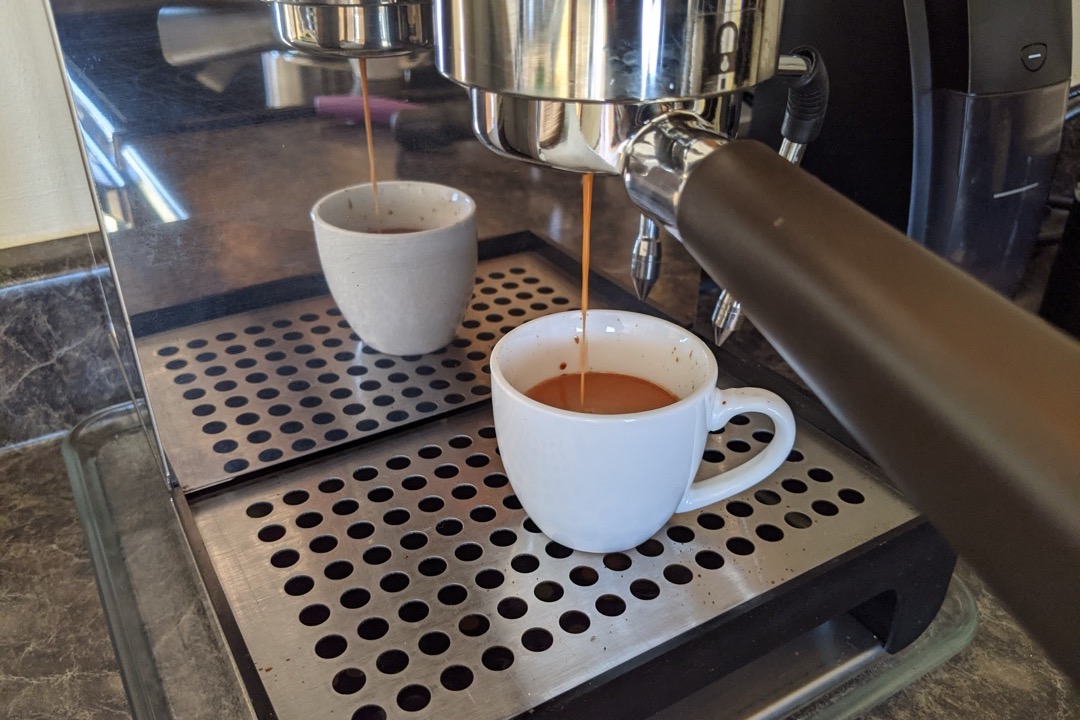
People ask me how much caffeine is in espresso more than almost any other question, and they’re always braced for a big number. Espresso feels like the strongest thing at the café — dark, intense, served in a tiny cup like a shot of something serious. So the answer tends to disappoint at first: a single espresso has about 63 milligrams of caffeine, which is less than the caffeine in a regular mug of drip coffee. Then I explain why, and the disappointment turns into one of those genuinely useful pieces of knowledge that changes how you order coffee for the rest of your life.
As a Q Grader I spend my weeks measuring coffee precisely — dose in grams, yield in grams, extraction by refractometer — so let me give you the real numbers, and then the far more interesting story of why espresso’s reputation for strength is about concentration, not caffeine, and what actually moves the number up or down in your cup.
The Short Answer, By the Numbers
Here are the figures I’d stand behind, drawn from USDA data and the consensus of specialty coffee measurement:
| Drink | Volume | Caffeine (approx.) |
|---|---|---|
| Single espresso | 1 oz (30 mL) | 63 mg |
| Double espresso (doppio) | 2 oz (60 mL) | 125 mg |
| Triple espresso | 3 oz (90 mL) | ~190 mg |
| Ristretto (single, short) | ~0.75 oz | ~60 mg |
| Decaf espresso (single) | 1 oz | 3–16 mg |
| 8 oz brewed drip coffee | 8 oz | ~95 mg |
The single most important thing on that table is the comparison in the last two bold rows. A single shot of espresso (63 mg) has less total caffeine than a standard mug of drip coffee (95 mg). If you want espresso to actually out-caffeinate a mug of filter coffee, you need a double — which, as it happens, is what most cafés and home machines pull by default now.
Why Espresso Feels Stronger Than It Is
The confusion comes from mixing up two different measurements: caffeine per ounce (concentration) and caffeine per serving (total dose). Espresso wins the first contest overwhelmingly and loses the second.
| Espresso | Drip coffee | |
|---|---|---|
| Caffeine per ounce | ~63 mg/oz | ~12 mg/oz |
| Typical serving size | 1 oz (single) | 8 oz |
| Caffeine per serving | ~63 mg | ~95 mg |
Ounce for ounce, espresso carries roughly five times the caffeine of drip coffee. That’s why it tastes and feels so intense — a whole cup’s worth of caffeine and flavor compressed into a single syrupy ounce, hitting your palate all at once. But you don’t drink espresso by the mug. You sip one or two ounces; you gulp eight ounces of drip. The big mug quietly wins on total dose because you’re drinking so much more of it.
Think of it like spirits versus beer. A shot of whiskey is far more concentrated than a pint of lager, but the pint contains more total alcohol because there’s so much more liquid. Espresso is the whiskey shot of coffee: intense, concentrated, and — per serving — not actually the biggest dose in the room.
There’s a second reason espresso feels like a jolt: delivery speed. You knock back an ounce of espresso in a few seconds, so its caffeine arrives as one rapid, concentrated bolus. You nurse a mug of drip over twenty or thirty minutes, spreading the same or greater dose across a long, gentle curve. Your nervous system notices the spike more than the slow drip, even when the slow drip is the larger total dose. So “espresso is stronger” is partly a concentration story and partly a how-fast-you-drink-it story — neither of which is about total caffeine.
What Actually Changes the Caffeine in Your Espresso
The “63 mg” figure is an average, and four variables push your real number above or below it. Understanding them lets you dial your caffeine deliberately instead of guessing.
1. Bean species: Arabica vs. Robusta (the biggest hidden lever)
This is the factor almost nobody thinks about, and it’s the largest. There are two commercially important coffee species, and they carry very different amounts of caffeine:
- Arabica — about 1.2% caffeine by weight. Sweeter, more complex, more acidic. What most specialty coffee is made from.
- Robusta — about 2.2% caffeine by weight, roughly double Arabica. Harsher and more bitter, but it produces thick crema and a bigger caffeine hit.
Traditional Italian espresso blends often include a percentage of Robusta precisely for that heavy crema and punchy body — which also quietly raises the caffeine. A 100% Arabica specialty espresso and a Robusta-heavy Italian blend pulled to the same recipe can differ substantially in caffeine. If you want to manage this, it pays to read the bag: our guide to the best coffee beans explains how to spot the species and blend on the label, and why the good stuff is nearly always Arabica-forward.
2. Dose: how much coffee is in the basket
Caffeine comes from coffee grounds, so more grounds means more caffeine — full stop. This is why single versus double matters so much:
- A single basket holds roughly 7–9 grams of coffee → ~63 mg.
- A double basket holds roughly 14–18 grams → ~125 mg.
Modern espresso culture has largely standardized on the double basket, so unless you specifically pull a single, your “shot” is probably a double. Because caffeine tracks the weight of coffee in the basket almost linearly, you can read your dose straight off the scale:
| Dose in basket | Approx. caffeine |
|---|---|
| 16 g | ~110 mg |
| 18 g (standard double) | ~125 mg |
| 20 g | ~140 mg |
| 22 g | ~155 mg |
Dosing consistently requires weighing your coffee, which is why serious home setups pair the machine with a good grinder and a scale — the best espresso machine in the world can’t give you a repeatable dose if the grind and dose drift every morning.
3. Roast level: the myth, settled
I get asked constantly whether dark roast has more caffeine than light roast. The answer: they’re nearly identical by weight, and the myth survives because of how you measure.
Caffeine is heat-stable — roasting doesn’t burn meaningful amounts of it out of the bean. What roasting changes is density. Light roasts spend less time in the roaster, so they’re denser and heavier. Dark roasts lose more moisture and swell up, so they’re lighter and more porous. The consequence:
- Measure by scoop (volume) → light roast has slightly more caffeine, because you fit more bean mass in the spoon.
- Measure by weight (grams) → light and dark are essentially equal.
Since you should always dose espresso by weight, roast level is effectively a flavor decision, not a caffeine decision. The smoky intensity of a dark roast tricks people into thinking it’s stronger in caffeine; it isn’t. Choose your roast for taste, and see our best coffee beans roundup for how roast level actually changes the cup.
4. Grind and extraction time
Grind size and shot length have a real but modest effect. Caffeine is highly water-soluble and extracts early and easily, so most of it comes out in the first part of the shot regardless. A finer grind and a longer contact time (a lungo, or long pull) will extract somewhat more caffeine — along with more of the bitter compounds that come late in extraction. A ristretto (a short, restricted pull) extracts a touch less total caffeine but tastes sweeter and more concentrated. The differences here are smaller than species or dose, but if your grinder is inconsistent, your extraction — and your caffeine — will wander shot to shot. A quality burr grinder is the fix; our best coffee grinders guide covers why grind consistency is the foundation everything else sits on.
Milk Drinks: Latte, Cappuccino, Americano
Here’s a liberating fact: milk and water contain no caffeine. So every espresso-based drink carries exactly the caffeine of its shots and nothing more.
- Cappuccino, latte, flat white, macchiato — caffeine equals the shots underneath the milk. One shot ≈ 63 mg; two shots ≈ 125 mg.
- Americano — espresso diluted with hot water; same caffeine as the shots, just spread across more liquid.
The cup size is a decoy. A dainty 6-ounce cappuccino built on a double shot has more caffeine than a 16-ounce latte built on a single. When you’re tracking intake, ignore the size and the foam and count the shots. That’s the whole equation for milk drinks.
Decaf Espresso Still Has a Little
Decaf is not caffeine-free — it’s caffeine-reduced. The legal standard in most countries requires removing at least 97% of the caffeine, which leaves a small residual. A decaf espresso shot typically lands between 3 and 16 mg, versus ~63 mg for regular.
For most people that’s negligible. But if you’re highly sensitive, pregnant, or eliminating caffeine for medical reasons, know that “decaf” means “a little,” not “none” — and three or four decaf drinks across a day do add up. Decaf espresso is a wonderful way to enjoy an evening cup without a racing pulse; just don’t treat it as literally zero.
How to Control Your Own Caffeine
Putting it all together, here’s how to actually steer the number in your cup:
- Want more? Pull a double or triple, choose a Robusta-containing blend, and go for a slightly longer extraction. A double Arabica-Robusta shot can push past 150 mg.
- Want less? Stick to single shots, choose 100% Arabica, or switch to decaf for your second and third coffees of the day. A single decaf caps you near a rounding error.
- Want consistency? Weigh your dose every time. Caffeine tracks dose, and dose only stays constant when you work in grams — which means a good grinder and a scale, not a machine alone.
None of this requires a lab. It requires knowing that caffeine follows the coffee, not the theater of the tiny cup. If you’re comparing espresso against your other brewing options on caffeine grounds, it’s worth remembering that a big-batch method like drip or cold brew can quietly out-dose a single shot simply through volume — cold brew especially, since its high coffee-to-water ratio and long steep make it one of the most caffeinated ways to drink coffee by the glass. And a full-immersion mug from a French press lands in the same per-serving neighborhood as drip, well above a single espresso.
The Bottom Line
A single espresso has about 63 mg of caffeine; a double, about 125 mg. Ounce for ounce it’s roughly five times as concentrated as drip coffee, which is why it feels so strong — but per serving, a single shot actually carries less caffeine than an 8-ounce mug of filter coffee (~95 mg). To move the number, the real levers are, in order: how many shots (dose), which species (Robusta nearly doubles Arabica), and, far behind them, extraction length. Roast level barely matters by weight, and milk and water add nothing at all. To add up a whole day’s shots, teas, and energy drinks against a safe limit built around your weight — and see when it clears your system for sleep — run the numbers through our free caffeine intake calculator. And if you just want to know whether an evening shot will keep you up, our caffeine half-life calculator shows the exact clock time that dose falls below the sleep line for your metabolism.
So the next time someone tells you espresso is “the strongest coffee,” you can smile and agree — it’s the most concentrated, and that’s a different thing than the most caffeinated. If you want to start pulling your own shots and dialing your caffeine deliberately, our best espresso machines guide is where I’d point you first, paired with a proper burr grinder and the right beans — the three things that decide what actually ends up in your cup. And if you’d rather compare it against a big morning mug, our best drip coffee makers roundup covers the method that, ounce for ounce loses to espresso but, cup for cup, quietly wins the caffeine race.
Frequently Asked Questions
How much caffeine is in a single shot of espresso?
Does espresso have more caffeine than regular coffee?
Does dark roast have more caffeine than light roast?
How much caffeine is in a latte, cappuccino, or americano?
Does decaf espresso have any caffeine?
Related Articles
About the Reviewer
Clara Bennett, CQI Q Grader, SCA Roaster
B.S. Food Science, UC Davis
Clara Bennett is a Coffee Quality Institute (CQI) licensed Q Grader and SCA-certified roaster with over a decade in specialty coffee — from competition barista to production roaster and green-coffee buyer. She has cupped thousands of coffees to CQI protocol and dialed in espresso on everything from $90 entry machines to commercial three-group setups. She founded Brew Gazette in 2026 to turn cupping-table standards into plain-English buying advice.