Pour Over vs Drip Coffee: A Q Grader on What Actually Changes in the Cup
By Clara Bennett, CQI Q Grader, SCA Roaster Updated
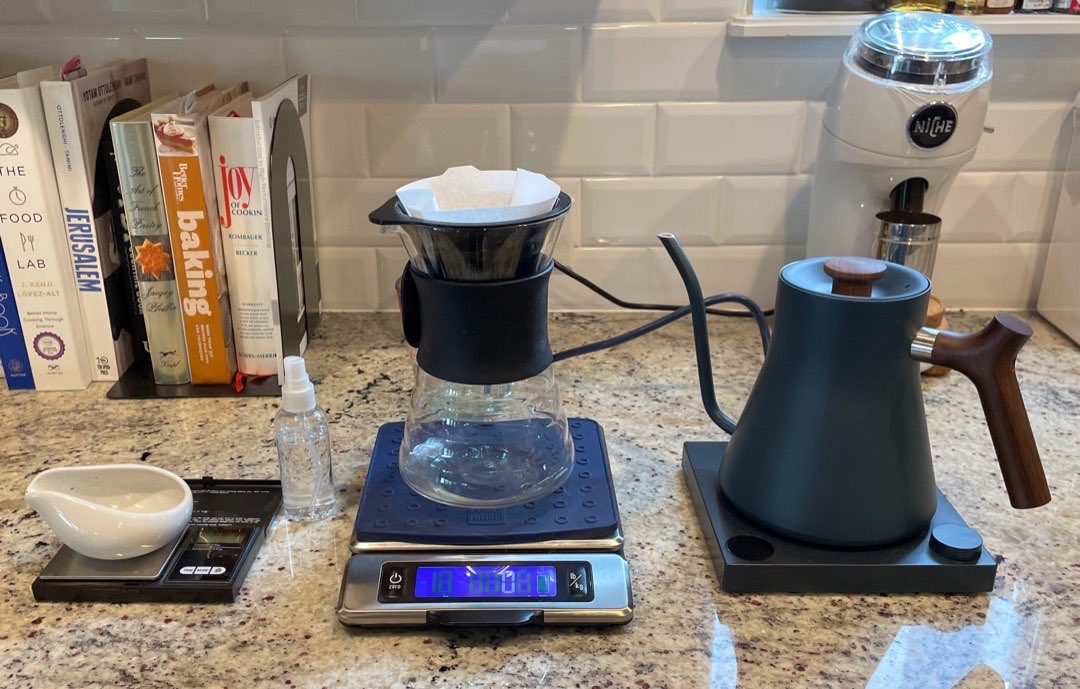
Every few weeks someone at a cupping asks me whether pour over is better than drip, and they usually expect me to say pour over because I’m the one holding the cupping spoon. I don’t say that. Both methods do the same thing: hot water passes once through a bed of ground coffee and a filter, and gravity pulls it out the bottom. What separates a sweet cup from a flat one is a short list of variables, and either method can hit them or miss them.
I’m a CQI Q Grader and an SCA-certified roaster, so my working week involves measuring what dissolved out of a coffee and then arguing about how it tastes. This comparison sticks to what changes in the cup and why, using published numbers. Where something is my opinion, I’ll say so.
If you’ve already decided to brew by hand, my step-by-step pour over guide has the full recipe. This page is about the decision.
The Quick Answer
- Pour over and drip are both percolation methods. Neither one is better in the cup by default.
- The SCA Golden Cup targets apply to both: 1.15–1.35% TDS, 18–22% extraction, about 55 grams of coffee per liter of water, water at 195–205°F.
- Pour over gives you control over every variable for one or two cups. Drip gives you a full pot with your hands free.
- A good drip machine holds brewing temperature. Many cheap ones don’t, and that is where drip’s reputation for flat coffee comes from.
- Caffeine follows the dose and the bean far more than the method. The FDA puts a 12-ounce cup of brewed coffee at roughly 113–247 mg.
- Both methods with a paper filter land at the low end for cafestol, the diterpene in coffee oil.
- A pour-over kit costs more than it looks once you count the grinder, a gooseneck kettle and a scale. Drip benefits from the same grinder.
Pour Over vs Drip at a Glance
| Factor | Pour Over | Drip Coffee Maker |
|---|---|---|
| Control | Every variable: grind, ratio, temperature, bloom, pour rate | Dose, grind and beans; temperature and flow are set by the machine |
| Time per brew | About 2:30–3:30 of pouring for one cup, plus kettle and grinding, all hands-on | Roughly 9–11 minutes for a full pot, almost all hands-off |
| Batch size | Usually one or two cups; larger drippers make more | A full carafe |
| Learning curve | Real. A week of mornings to get consistent | Minimal once the dose is right |
| Consistency | As good as your technique that morning | High on a well-built machine |
| Cleanup | Toss the filter, rinse the dripper | Toss the filter, rinse the carafe, descale on a schedule |
| Gear needed | Dripper, filters, gooseneck kettle, scale, burr grinder | The machine, filters, ideally a burr grinder |
| Filter | Paper, usually thick and rinsed; metal options exist | Paper basket filters; some machines ship a permanent mesh filter |
| Best for | One careful cup, learning to taste, single origins | Households, offices, busy mornings |
The row I’d point at is control. Pour over hands you every variable. Drip fixes most of them inside the machine, which is a good trade when the machine was built well.
What Actually Changes the Taste
Flavor comes from what dissolves out of the grounds and how much water it ends up in. Both methods aim for the same numbers.
Extraction and strength
The SCA’s Golden Cup standard describes two numbers. Brew strength, measured as total dissolved solids, should sit between 1.15 and 1.35 percent, which is 11.5 to 13.5 grams of dissolved coffee per liter. Extraction yield, the share of the dry grounds that ended up in the cup, should land between 18 and 22 percent. The recommended ratio to get there is 55 grams of coffee per liter of water, plus or minus ten percent, which works out near 1:18.
Strength is how concentrated the cup is. Extraction is how much you pulled out of the coffee, and it is what moves flavor from sour and thin when it’s too low to bitter and drying when it’s too high. The two are independent. A drip pot can be weak and over-extracted at once if the dose is low and the grind fine, and that is the bad home cup I taste most often.
My own pour over starts at 1:16, a touch stronger than the SCA midpoint. That’s a preference.
Temperature
The Golden Cup range for brewing water is 195–205°F, roughly 90.5–96°C. KitchenAid’s own product help page gives the SCAA range for water leaving a drip showerhead as 92–96°C (197.6–204.8°F), and notes that coffee leaving the basket sits around 192°F (89°C), because the grounds and the basket soak up heat.
This is where I’ll push back on the usual story. In a 2020 paper in Scientific Reports, Batali, Ristenpart and Guinard drip-brewed coffee at 87, 90 and 93°C and had a trained panel describe the results. When TDS and extraction yield were held fixed, brewing temperature had little effect on the sensory profile. TDS and extraction drove the flavor. Temperature matters mainly because it changes how fast you extract, so a machine running cool tends to produce under-extracted coffee unless something else makes up for it. The study used one coffee across a narrow range, so I read it as evidence against temperature mysticism, never as permission to brew lukewarm.
The opposite myth says pour over needs boiling water, or that boiling water scalds it. Water loses heat in the spout and the dripper, so the slurry never sits at the boil. Just off the boil suits light roasts, and dark roasts taste better toward the low end. Our coffee water temperature guide works through it roast by roast.
Contact time and grind
You’ll often read “medium grind for both.” It’s close, but the beds behave differently. A cone dripper for a single cup usually wants medium to medium-fine and drains in about two and a half to three and a half minutes. A flat-bottom drip basket brewing a full pot holds a deeper bed, water spends longer passing through it, and it usually wants medium. Too fine for a big basket and the bed floods and over-extracts. Too coarse for a small cone and the cup comes out sour.
Grind consistency matters more than either setting. A blade grinder makes boulders and dust in one batch, and neither brewer can rescue that (more in burr vs blade grinder). The best coffee grinder roundup is where I’d spend money first, whichever brewer you choose.
Bloom and agitation
The bloom is the small first pour that wets the grounds before the main brew. It’s often described as the step that “extracts flavor.” Its main job is releasing carbon dioxide left in the beans from roasting and wetting the whole bed evenly, so the main pour doesn’t slide past dry pockets.
Pour over lets you set the bloom and how much your pour stirs the bed. Most drip machines can’t bloom at all, and a few pre-infuse by pulsing a little water and pausing. In a drip machine the showerhead supplies all the agitation.
Filter bed shape
A cone gathers the grounds into a deep point, so water travels a longer path through the center. A flat bottom spreads the same coffee into an even layer. Cones respond more to pouring technique. Flat beds are more forgiving, which is why most drip baskets are flat or close to it.
What Drip Coffee Is, and What Separates a Good Machine
An automatic drip machine heats water, pushes it up a tube and sprays it from a showerhead over a basket of grounds. It is pour over with a machine holding the kettle.
The clearest outside check is the SCA Certified Home Brewer program. The SCA tests home machines against its brewing standards, including water temperature, brew time and whether the coffee lands in the Golden Cup range, and lists the ones that pass. Drip machines from Moccamaster, Bonavita, Breville, OXO and Fellow’s Aiden are on it. A good drip machine is not inherently under temperature. Cheap machines often are.
Three things decide whether a machine makes good coffee. The first is water temperature at the showerhead: if the heater can’t hold 92–96°C through the whole brew, extraction falls short. The second is showerhead coverage. A single stream hitting one spot digs a crater and leaves the edges barely touched, while a wide showerhead wets the whole bed. The third is the carafe. A glass carafe on a hot plate keeps heating the coffee after brewing, and within half an hour it tastes cooked. A thermal carafe holds the heat without the plate, so if you drink a pot across a morning, a thermal carafe coffee maker is worth prioritizing.
A full pot takes roughly 9 to 11 minutes on a well-made machine, according to KitchenAid. A machine that finishes far faster is usually running water through the bed too quickly. Our best drip coffee maker roundup leans on SCA-certified models for exactly this reason.
And drip can be adjusted. You control the dose, the grind, the beans and the machine. Most people who say otherwise have only ever changed the number of scoops.
What Pour Over Is
Pour over is the same percolation done by hand. You need a dripper (cone or flat-bottom), a paper filter, ground coffee and hot water. In practice you also want a gooseneck kettle for a slow, aimable stream, a scale so you can work in grams, and a burr grinder.
The short version of my recipe: 30 grams of coffee to 480 grams of water, ground medium to medium-fine, water just off the boil. Bloom with about twice the coffee’s weight in water for 30 to 45 seconds, then pour the rest in stages and aim to finish between 2:30 and 3:30. The step-by-step guide covers each stage and how to read the cup afterward. If you’re choosing a dripper, our best pour over coffee maker roundup compares cones, flat-bottoms and glass brewers.
What you gain is the ability to change one thing and taste the result, which is why I still teach new tasters on a dripper. What you give up is a few minutes of attention for every cup, plus the gear.
The Third Option: Automatic Pour-Over Machines
A newer class of machine reproduces pour over without the kettle. The good ones add a bloom phase, deliver water in pulses, and in some cases let you set the brew temperature. Several appear on the SCA certified list, and Fellow’s Aiden lets you program bloom and temperature for single cups or full batches.
They suit the person who wants pour-over choices written into a recipe but won’t stand at a kettle on a weekday. Treat the label with caution and look for an actual bloom setting. Our best automatic pour-over coffee maker page sorts out which machines earn the name.
Caffeine and Strength
One common claim says one of these methods carries more caffeine because its water runs hotter. Caffeine is highly soluble and comes out early in the brew, so within normal brewing temperatures the method changes very little. What moves caffeine is the dose and the bean. More grams of coffee means more caffeine. Robusta carries considerably more than arabica. The FDA’s range of roughly 113–247 mg for a 12-ounce cup of brewed coffee comes from those inputs, not from the brewer. The same agency cites 400 mg a day as an amount not generally associated with negative effects for most healthy adults. Our caffeine calculator will estimate your own cup.
Strength works the same way. “Stronger” means higher TDS, which comes from the ratio. Pour over often tastes stronger because hand brewers weigh their coffee while drip drinkers scoop and under-dose the pot.
Paper Filters and Cafestol
Coffee oil carries two diterpenes, cafestol and kahweol, and cafestol has been linked to raised LDL cholesterol in research on unfiltered coffee. A 2025 study by Orrje and colleagues in Nutrition, Metabolism & Cardiovascular Diseases measured it across brewing methods. Coffee from workplace brewing machines had a median of about 176 mg per liter. Paper-filtered home brews sat around 12 mg per liter. Boiled coffee came in near 939 mg per liter. The authors say a controlled trial is needed, so I make no health promise here.
What the numbers do show is that paper retains most of the diterpenes. Home pour over and home drip with paper filters both sit at the low end. A related myth says metal filters remove oils. They do the opposite: a metal mesh lets oil through, which is where the heavier body of a metal-filter pour over or a French press comes from. If cafestol matters to you, choose paper and ask your doctor about the rest.
Time, Effort and Real Cost
Pour over looks like the inexpensive option, because a plastic or ceramic cone and a pack of filters cost very little. The real kit is bigger. A burr grinder is the largest single cost, a gooseneck kettle and a scale add to it, and without them pour over is harder to repeat than a basic drip machine. You also stand at the kettle for every cup.
A good drip machine is one larger purchase that covers the brewing, and it still benefits from the same burr grinder, since a machine can’t fix a blade-ground coffee. A coffee maker with a built-in grinder puts both in one appliance. It saves counter space, but grind quality varies widely between models. Drip takes about a minute to load, then runs on its own, often on a timer.
Over a year, beans dominate the running cost whichever method you use, so good coffee beans are where the money shows up in the cup. Drip adds one upkeep job: descaling on a schedule, especially with hard water.
Which Should You Choose
Busy mornings. Buy a good drip machine, ideally SCA certified with a thermal carafe, set the dose by weight once, and stop thinking about it. A rushed pour over is usually worse than a well-built machine’s average cup.
One cup at a time. Pour over suits a single cup well, and it’s where the method shines. If you want one cup with no ritual at all, a single-serve coffee maker is a different trade, convenience first.
A crowd or an office. Drip, every time. A full carafe with no one babysitting it is the whole job, and a thermal carafe keeps the third cup from tasting cooked.
Learning to taste. Pour over. Changing one variable and tasting the result is the fastest way I know to understand extraction, and the skill carries to every other brewer you’ll own.
The Honest Verdict
Pour over and drip are the same brew method with different hands on the kettle. A well-built drip machine lands in the same Golden Cup range a careful hand pour does. A cheap one doesn’t, and that machine is the source of most complaints about drip.
My recommendation is simple. Buy a burr grinder first, because it improves both methods more than the choice between them does. Then choose by how you actually live: pour over if you brew one cup and want to learn, a good drip machine if you brew for more than one person or value your mornings more than the ritual. Weigh your coffee either way. The ratio decides more of what ends up in the cup than the brewer ever will.
Frequently Asked Questions
Does pour over have more caffeine than drip coffee?
Is pour over better than drip?
Why does pour over taste cleaner?
Is a drip coffee maker the same as pour over?
Is pour over stronger than drip?
Related Articles
10 Best Automatic Pour-Over Coffee Makers of 2026
drip-pour-over
9 Best Pour-Over Coffee Makers of 2026
drip-pour-over
How to Make Pour-Over Coffee: A Q Grader's Step-by-Step Guide
drip-pour-over
Burr vs. Blade Grinder: A Q Grader Explains What Actually Changes in the Cup
coffee-grinders
7 Best Drip Coffee Makers of 2026
drip-pour-over
About the Reviewer

Clara Bennett, CQI Q Grader, SCA Roaster
B.S. Food Science, UC Davis
Clara Bennett is a Coffee Quality Institute (CQI) licensed Q Grader and SCA-certified roaster with over a decade in specialty coffee — from competition barista to production roaster and green-coffee buyer. She has cupped thousands of coffees to CQI protocol and dialed in espresso on everything from $90 entry machines to commercial three-group setups. She founded Brew Gazette in 2026 to turn cupping-table standards into plain-English buying advice.