9 Best Non-Dairy Coffee Creamers of 2026
Q Grader Clara Bennett read the ingredient panel on every pick to find the 9 best non-dairy coffee creamers with no hidden sodium caseinate. Label-checked.
Updated
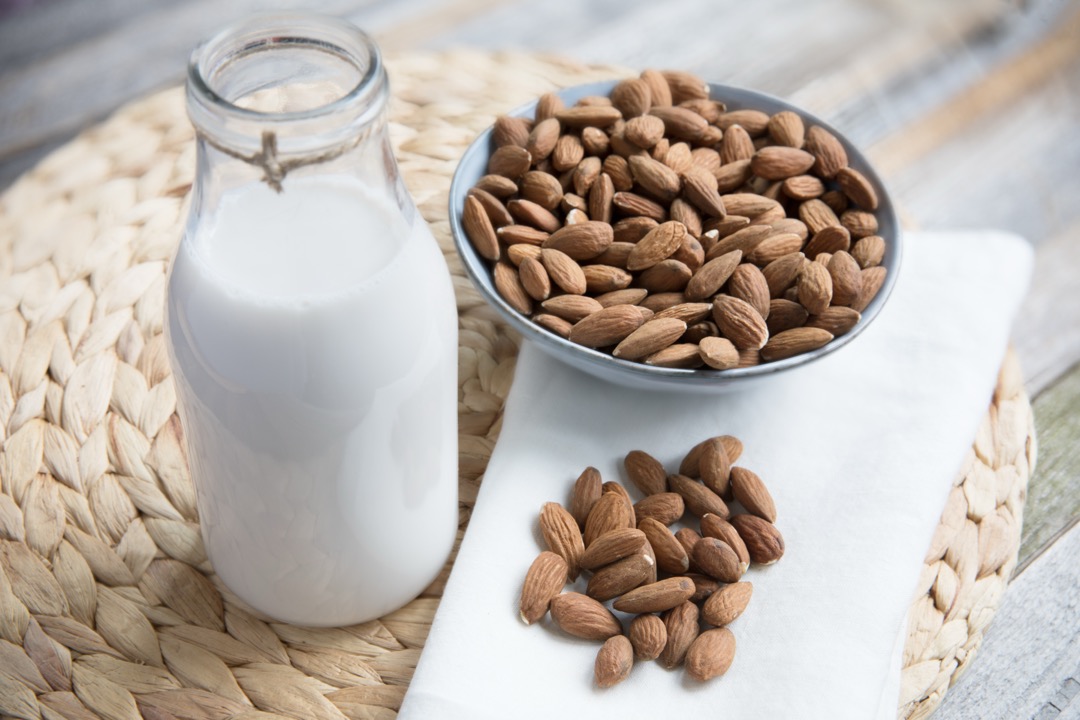
A product can say non-dairy on the front of the bottle in large friendly letters and still contain a milk protein. That is not a loophole somebody discovered, it is written into the regulation. FDA rule 21 CFR 101.62(b)(4) permits a food labeled non-dairy to contain sodium caseinate, a protein derived from milk, as long as the label discloses it as a milk derivative. In labeling terms, non-dairy is a statement about lactose and about not being a dairy food. It is not an allergen statement and it is not a vegan claim. Which means the search for the best non-dairy coffee creamer has to start somewhere unusual: the back of the package rather than the front.
I am a CQI Q Grader and an SCA-certified roaster, and I taste coffee for a living, which mostly means I drink it black. This page came out of a different problem. Readers of our coffee creamer roundup kept asking a version of the same question, which was whether the non-dairy powder they had been buying for years was actually free of dairy. For a great many of them the answer is no. So for this page I read the ingredient panel on every one of the nine products below, and on the ones that failed, and the verdict has its own column in the table so you do not have to take it on faith.
Nine picks follow, every panel checked, covering oat, almond, coconut, soy and macadamia bases in liquid, carton and powder form. Several of them are barista-format plant milks rather than bottles marked creamer, and that is a deliberate choice I defend below rather than gloss over. There is also a section naming five widely sold products that market themselves as non-dairy and contain milk protein anyway, including the one most people assume is safe.
Find the Best Non-Dairy Coffee Creamer for Your Need
Jump straight to the situation that matches yours.
- Overall best non-dairy creamers
- Best organic dairy-free coffee creamer
- Best non-dairy liquid coffee creamer
- Best healthy non-dairy coffee creamer
- Best sugar-free dairy-free coffee creamer
- Best unsweetened plant-based coffee creamer
- Best non-dairy powdered coffee creamer
- Best non-dairy French vanilla coffee creamer
- More use cases
How We Chose These Non-Dairy Creamers
The first gate was the ingredient panel, and it was ruthless. Before I considered flavor, price or review count, I read the full ingredient list on every candidate and discarded anything carrying sodium caseinate, calcium caseinate, whey, milk protein concentrate or the phrase a milk derivative. That single filter removed several of the highest-volume, best-known products in the category, including the powder most American households have in a cupboard right now. Every one of the nine picks below passed it, which is why the Dairy-Free Verdict column reads as a pass on all nine rows. That column is not decoration, it is the shortlist.
The second decision needs explaining rather than defending quietly. Four of these picks are barista-format plant milks, the Califia oat blend, the Elmhurst almond, the Silk soy and the Milkadamia, rather than products sold in a bottle marked creamer. I am not going to pretend they are creamers, because they are not. Here is why they are on the page anyway. The set of dedicated creamers that are genuinely free of milk protein is small, and several of the best-known ones are the traps described in the next section. Meanwhile a barista-formulated plant milk is engineered for exactly the job a creamer does: it carries enough fat and protein to change the body of a hot cup, and it is stabilised to survive the acid and heat that break a cheaper carton into flecks. A barista oat carton will give you a rounder, more coffee-friendly cup than most bottles with the word creamer printed on them, and it will froth, which almost no creamer does. If you want that texture rather than just the colour change, a barista milk plus a milk frother is a genuinely better answer than a creamer.
After that came behavior in the cup, which is where plant products earn or lose their reputation. Brewed coffee sits at around pH 5, and heat plus acid is what breaks an emulsion into the flecks floating on top of a cup you were looking forward to. I weighted the products whose reviews consistently report holding together in hot coffee, and I have flagged the ones that need shaking, warming or pre-dissolving. Last came cost per serving rather than shelf price, because container sizes in this category run from an 8 ounce powder bag to six 32 ounce cartons and the sticker price tells you almost nothing useful. The nine were then spread deliberately across bases, formats and price tiers so that a vegan, a keto drinker and someone who simply wants a clean label each land on a clear answer.
Why Non-Dairy on the Label Does Not Mean Dairy-Free
Here is the regulation in plain language. Under 21 CFR 101.62(b)(4), a product may be labeled non-dairy while containing a caseinate, provided the caseinate is declared as a milk derivative in the ingredient statement. The rule exists because the term was written to distinguish these products from dairy foods and from lactose, at a point in history when lactose intolerance was the concern and milk protein allergy and veganism were not mass-market considerations. It has never been updated. So the words on the front of a canister are legally accurate and practically misleading, and the ingredient panel is the only thing that answers the question you are actually asking.
These are the five products that made the point most clearly during the research for this page. None of them are picks here, and none of them are dairy-free.
Coffee mate Original Powder is the one that catches the most people, because a shelf-stable powder feels like it could not possibly contain dairy. It is also the most-reviewed creamer in the category, with more than 26,000 owner ratings behind it. The panel reads corn syrup solids, hydrogenated vegetable oil, and less than 2 percent of sodium caseinate (a milk derivative). It is lactose-free. It is not milk-free and it is not vegan.
International Delight French Vanilla prints the loophole on its own label. The panel lists contains 2 percent or less of: sodium caseinate, with an asterisk, and the asterisk resolves to a footnote reading sodium caseinate is not a source of lactose. That footnote is completely accurate and it is also the entire mechanism in a single line. The brand is telling you why it is allowed to say non-dairy, and it is telling you in small print underneath the ingredient list.
PRYMAL Sugar Free Creamer is the clearest example I found anywhere. The brand’s own Amazon bullet reads, and I am quoting the listing: nondairy delight, it is vegetarian and non-dairy, as we use sodium caseinate as the carrier in our MCT oil and coconut oil powder, which has the lactose removed. A brand calling its product non-dairy in the same sentence in which it discloses a milk protein. Note also the word vegetarian rather than vegan. That distinction is doing real work and it is easy to read past.
LevelUp Keto Creamer with MCT and collagen contains whey protein isolate and butter powder. It broadens the warning, because the keto and MCT creamer subcategory is where dairy hides under a low-carb halo. Collagen is animal-derived, whey is milk-derived, and butter powder is butter. A product can be excellent for a ketogenic diet and completely unsuitable for a dairy-free one, and the marketing rarely separates those two ideas for you. If anything, the keto shelf needs the panel check more than the ordinary creamer shelf does, not less.
Natural Bliss is a different trap, and it is worth knowing about even though nothing on this page is a Natural Bliss product any more. Nestlé sold a dairy-free almondmilk creamer under that brand alongside a Sweet Cream product that is real dairy, in near-identical packaging, on the same shelf, from the same company. As of this update the almond version is gone from Amazon and every Natural Bliss listing still standing is dairy: the Sweet Cream, and a plainly titled “Vanilla Flavored Creamer” whose panel reads skim milk, cream, sugar, natural flavor. So the brand name tells you nothing, and the one SKU that used to make it a safe answer is the one that was discontinued. Read the flavor line and the panel, never the brand.
The scan that protects you takes five seconds. Look for caseinate, sodium caseinate, calcium caseinate, whey, milk protein concentrate, and the bracketed phrase a milk derivative. If none of them appear, you are clear. And the shortest labels are the safest labels, which is exactly why a one-ingredient coconut powder and a two-ingredient almond carton both rank highly on this page.
Best Non-Dairy Coffee Creamers Overall
These are the nine I would put in a kitchen in 2026, each reviewed once below with its real strengths and its real problems. The use-case sections further down regroup these same products by what you are actually trying to do.
Best Overall: Califia Farms Oat Barista Blend
The Califia Oat Barista Blend takes the top spot because it is the pick that satisfies the most readers without any caveats attached. The panel is short, non-GMO and carrageenan-free, with no caseinate on it, so it clears the gate this entire page is built around. And the review record behind it is the deepest here by a very wide margin: 13,417 ratings at 4.6. In a category where the recurring complaint is that a product worked once and then a later carton behaved differently, a sample that size is meaningful evidence of consistency rather than a marketing number.
What sets a barista blend apart from a drinking oat milk is the ratio of fat to protein, tuned so the emulsion holds air. Steam it with a wand and you get microfoam with actual structure rather than the large, collapsing bubbles a standard oat carton produces. Whisk it with a handheld frother and it thickens properly. If you have been disappointed by plant milk in a latte, the odds are good you were using a drinking carton rather than a barista one, and our guide to frothing milk covers the technique side of the same problem.
Two honest limitations. Frothing is where reviewers disagree, with a recurring split between people who get textbook microfoam and people who get a flat pour, which is the ordinary variance of a plant emulsion rather than a defect. And there is a steady stream of reviews about stock arriving close to its date, so check the print on delivery and work through a six-pack rather than storing it for a season. It is also sweetened with cane sugar, so a delicate washed Ethiopian will come out slightly rounded rather than untouched.

Califia Farms Oat Barista Blend Oat Milk, 32 Oz (Pack of 6)
by Califia Farms
The oat barista blend I would hand to most people first: the deepest review record here, a panel with nothing hiding on it, and a formulation built to actually steam rather than just pour.
Pros
- 13,417 owner ratings at 4.6 is by a wide margin the deepest verified track record on this page, and depth matters more than usual with plant products because the failure people report is batch inconsistency rather than a single design flaw
- It is barista-formulated rather than a drinking oat milk, which in practice means the fat and protein are balanced to hold microfoam. It steams into properly textured milk with a wand and it whips up in a handheld frother, which is not true of most cartons that simply say oat milk on the front
- The panel is short, non-GMO and carrageenan-free, with no caseinate anywhere on it, so it passes the ingredient test this whole page is built around without a single asterisk
- Unopened cartons are shelf-stable, so a six-pack lives in a cupboard and only the working carton takes fridge space, and the same carton that lightens coffee also works in cereal, oatmeal and baking
Cons
- Frothing performance is the one thing reviewers disagree about, and the complaints are specific: some batches whip beautifully and others go flat. That is the normal variance of a plant emulsion rather than a defect, but do not buy six cartons expecting identical results from every one
- There is a recurring stream of reviews reporting stock that arrives close to its printed date. Check the date on delivery and plan to work through a six-pack rather than storing it for a season
- It is sweetened with cane sugar, so it is the wrong pick if you want something that leaves a bright single-origin completely untouched
Best French Vanilla: nutpods Unsweetened French Vanilla
Vanilla is where this category quietly fell apart, and it is worth saying plainly. The creamer that used to hold this slot was discontinued, and when I went looking for a replacement I found that almost every cheap single bottle of flavored plant creamer on Amazon, across Califia, Silk, So Delicious and nutpods’ own small bottles, no longer has an Add to Cart button at all. They are listed, they show a price, and the only way to buy them is same-day grocery delivery. This three-pack is the one genuine dairy-free French vanilla I could put in a cart at standard checkout, which is why it is here.
What makes it worth recommending on its own merits is that it is vanilla without sugar. That combination is genuinely hard to find, because sugar is the usual vehicle for the flavor: take it out of most vanilla creamers and you are left with something watery. Here the body comes from coconut cream sitting high on a nine-line panel, so it reads as vanilla and still lands at zero grams of sugar and about ten calories a serving. The bottles are shelf-stable until opened, so the pack sits in a cupboard and only the working bottle takes fridge space.
Be clear about what you are buying, though. This is unsweetened vanilla, not the sweet French vanilla a supermarket bottle trains you to expect, and anyone switching from a sweetened creamer will find it noticeably plainer and should plan to sweeten separately. The review pool is shallow at 300 ratings, and a three-pack of 32 ounce bottles is a real commitment to a single flavor.

nutpods Unsweetened French Vanilla Dairy-Free Coffee Creamer, 32 Oz (3-Pack)
by nutpods
The only dairy-free French vanilla on Amazon that clears standard checkout, and it is vanilla carried by coconut fat rather than sugar -- clean, genuinely unsweetened, and sold only as a three-pack.
Pros
- It is the only genuine dairy-free French vanilla I could actually buy on Amazon at standard checkout, which sounds like faint praise until you try to find a second one and discover the cheap single bottles are all locked behind same-day grocery delivery
- It is vanilla without sugar, and that combination is the hard one to find. The flavor rides on coconut fat and natural vanilla rather than a sweetener, so it lands at zero grams of sugar and about ten calories a serving while still reading clearly as vanilla in the cup
- Coconut cream sits high on the panel and that fat is what stops an unsweetened creamer tasting like flavored water, which is the usual failure of sugar-free vanilla products
- The bottles are shelf-stable until opened, so a three-pack lives in a cupboard and only the working bottle takes fridge space -- a practical advantage over the refrigerated single bottles this category used to be built on
Cons
- It is unsweetened vanilla, not the sweet French vanilla most people picture. If you are replacing a sweetened supermarket creamer you will find it markedly less sweet and should expect to add sugar separately
- 300 ratings is a shallow pool next to the oat and soy picks here, and it is a newer three-pack listing rather than a long-established SKU
- A three-pack of 32 ounce bottles is a real commitment to one flavor, and there is no small single-bottle version of this listing that clears standard checkout
Upgrade Pick: Elmhurst 1925 Unsweetened Almond Milk
Filtered water and almonds. That is the entire ingredient list, and on a page about a labeling loophole that is close to the strongest position a liquid can occupy. A two-line panel gives a milk derivative nowhere to hide, and it removes the need to trust anybody’s front-of-pack claim, including mine. If reading ingredient lists has made you tired, this is the carton that ends the exercise.
The technical interest is in how they get 5 g of protein per serving out of two ingredients. Most almond milk is made by soaking, blending and then straining, which throws away the almond solids and most of the protein with them, and the resulting thin liquid then needs gums and emulsifiers to feel like anything. Elmhurst uses a milling process they call HydroRelease that keeps the whole nut in the milk. The result is the highest almond concentration on this page and a product reviewers specifically single out for espresso, where a watery almond milk usually collapses under a shot and this one has enough substance to stand up to it.
The trade-offs follow directly from the same design. It is priced as a premium carton rather than a weekly staple, which is what a high nut load and no fillers cost. Unsweetened almond with nothing added is a plain, nutty flavor, and the reviewers who call it clean and the ones who call it austere are describing exactly the same carton. And because there are no gums holding the emulsion together, it separates in the bottle and goes off faster once opened than a stabilized competitor. Shake it hard, every time, and buy it in a quantity you will actually drink.

Elmhurst 1925 Unsweetened Almond Milk, 32 Ounce (Pack of 6)
by Elmhurst 1925
Two ingredients, water and almonds, which makes it the cleanest label of any liquid here and one where the dairy question answers itself before you finish reading the panel.
Pros
- Two ingredients: filtered water and almonds. That is the shortest label of any liquid here and it is the structural answer to this page's whole problem, because a two-line panel gives a milk derivative nowhere to hide
- It carries 5 g of protein per serving and that protein comes from the almonds themselves rather than an added isolate, because the HydroRelease process mills the whole nut into the milk instead of pressing it and discarding the solids
- The almond concentration is the highest here and reviewers single it out specifically for espresso, where a watery almond milk normally collapses under a shot and this one holds its shape
- No gums, no emulsifiers, no added sugar and no carrageenan, so nothing in the carton is doing flavor work except the almonds
Cons
- It is priced as a premium carton rather than a weekly staple, which is the honest cost of a two-ingredient formulation with a high nut load and nothing cheap bulking it out
- Unsweetened almond, undisguised, is a plain and nutty flavor. Reviewers who love it call it clean and reviewers who do not call it austere, and both are describing the same carton accurately
- Without gums holding the emulsion together it goes off faster once opened than a stabilized competitor, and it separates in the carton, so shake it properly every single time
SOWN Organic Oat Creamer, Sweet and Creamy
SOWN is the organic oat option and the runner-up to Califia for the top slot. USDA Organic certification means more on an oat product than it does on most, because oats are a heavily sprayed crop and glyphosate residue in conventional oats has been a live consumer issue for years. Here the certification is doing work rather than decorating a carton.
The thing reviewers keep saying about it is worth pulling out and explaining, because it is the single most common failure people have with plant creamer. It does not separate in hot coffee. The mechanism is that an oat base carries dissolved starch, and starch plus gellan gum builds an emulsion that tolerates the acid and heat of a fresh cup far better than an unstabilized nut milk does. When a plant creamer breaks into pale flecks on the surface, that is the emulsion failing, and this formulation resists it. It also has genuine body, so the cup changes texture rather than merely changing colour, which is the difference between lightening a coffee and diluting one.
Where it loses ground is price and sweetness. It costs meaningfully more per ounce than the Califia oat blend and both are oat cartons, so you are paying for the certification rather than for a different experience in the mug. Several reviewers find it too sweet, and on a light roast that sweetness sits on top of the coffee instead of underneath it. There is no unsweetened version in the line either, so pouring less is the only control you have.

SOWN Organic Oat Creamer, Sweet and Creamy, 32 Oz (Pack of 6)
by SOWN
The organic oat pick, and the one product here reviewers specifically praise for not separating in hot coffee, which is the failure mode that sends most people back to dairy.
Pros
- USDA Organic certification on an oat creamer, which is rarer than it sounds because oats are a heavily sprayed crop, so the certification is doing real work here rather than decorating the carton
- Reviewers keep returning to one specific behavior: it does not separate in hot coffee. Oat starch plus gellan gum builds an emulsion that tolerates the acid and heat of a fresh cup better than most nut bases do, and separation is the number one complaint about plant creamers generally
- The panel is an oat base plus six minor ingredients, all of them recognisable, with no caseinate and nothing that reads as filler
- It has genuine body. Where a thin plant milk disappears into a mug and leaves it grey and watery, this one changes the texture of the cup the way a creamer is supposed to
Cons
- It costs meaningfully more per ounce than the Califia oat blend and both are oat cartons, so you are paying for the organic certification rather than for a different result in the cup
- Several reviewers find it too sweet, and on a light roast that sweetness sits on top of the coffee rather than underneath it
- There is no unsweetened version in the line, so if the sweetness is the problem there is no way to dial it back other than pouring less
nutpods Hazelnut Unsweetened Non-Dairy Creamer
Flavored and unsweetened at the same time is a much rarer combination than it sounds. Almost every hazelnut creamer on the market uses sugar as the vehicle that carries the flavor, which is why the sugar-free shelf is mostly unflavored products and the flavored shelf is mostly sweet ones. This one lands in the gap: natural hazelnut flavor, coconut cream doing the body work, and 0 g of sugar on the label, formulated to Whole30, keto and paleo standards.
Coconut cream as the second ingredient is the reason it works. Unsweetened creamers frequently taste thin because sugar was quietly contributing mouthfeel as well as sweetness, and removing it leaves a hole. Coconut fat fills that hole with something the tongue reads as richness rather than sweetness. The panel is nine ingredients, water and coconut cream and almonds at the top, then acacia gum, dipotassium phosphate, sunflower lecithin and gellan gum holding the emulsion together, with no caseinate. The bottles are shelf-stable until opened, so a four-pack lives in a cupboard.
Be aware of what you are buying, though. The 4.1 average is the softest of the liquid picks here, and the reviews split hard rather than clustering: unsweetened hazelnut tastes nutty and clean to one group of people and bitter and odd to another, and there is very little middle ground. In 11.2 ounce bottles it is also expensive per ounce next to the 32 ounce cartons here. If unsweetened hazelnut turns out not to suit you, the KOS coconut powder gives you the same 0 g of sugar without a flavor to disagree with. Our page on the different nutpods options in the wider creamer market covers a different product in the same line, which is deliberate: these two do different jobs.

nutpods Hazelnut Unsweetened Non-Dairy Coffee Creamer, 11.2 Oz (4-Pack)
by nutpods
The rare creamer that is flavored, unsweetened and keto at once, carried by coconut fat rather than sugar, with a hazelnut note people either love or genuinely dislike.
Pros
- It is flavored and unsweetened at the same time, which is a genuinely rare combination. Almost every hazelnut creamer on the market uses sugar as the vehicle for the flavor, and this one gets there on coconut fat and natural flavors with 0 g of sugar on the label
- Coconut cream is the second ingredient and that fat is what gives it real weight in the cup. Unsweetened products often taste thin because sugar was quietly doing the body work, and this one does not have that problem
- 3,536 ratings is a deep record for a flavored product, where taste disagreement normally keeps both sample sizes and averages low, so there is real evidence behind it rather than launch enthusiasm
- The bottles are shelf-stable until opened, so a four-pack sits in a cupboard and only the working bottle takes fridge space, and the Whole30, keto and paleo formulation covers a restricted diet without needing a second product
Cons
- Unsweetened hazelnut is polarising in a way sweetened hazelnut is not. The 4.1 average is the softest of the liquid picks here and the reviews split hard between people who find it nutty and clean and people who find it bitter and strange
- In 11.2 ounce bottles it works out expensive per ounce next to the 32 ounce cartons here, and a four-pack does not last long in a two-cup-a-day household
- A minority of reviewers report it thin despite the coconut cream, which usually traces back to pouring it cold into a very hot cup without shaking the bottle first
KOS Organic Coconut Milk Powder
One ingredient: organic coconut. On a page about a labeling loophole, that is the strongest guarantee available, because a single-ingredient panel makes the caseinate problem structurally impossible rather than merely absent. You do not have to trust the front of the bag, the brand or me. There is nothing else in it.
It is also the best illustration here of why the servings figure matters more than the bag size. A 12.6 ounce bag looks small next to a carton of liquid until you notice it yields 179 servings, because dense coconut milk powder goes a long way per 2 g scoop. Divide the current price on the card by that servings number rather than by the ounces and it stops looking like a specialty splurge. Each scoop contributes 15 calories and 1.5 g of fat with 0 g of sugar, and being unflavored it is not locked to coffee: the same bag thickens a curry or goes into a smoothie, which is true of nothing else on this page.
The limitation is mechanical and it is a real one. Coconut milk powder clumps and refuses to dissolve in anything but hot liquid, because the fat coating on each particle will not wet out cold. Spoon it into iced coffee or cold brew and you will get a gelled skin on the outside of each lump and grit at the bottom of the glass. The workaround takes ten seconds, which is to dissolve a scoop in a splash of hot water and pour that slurry in, but it is a step you have to remember every time. It is also unflavored and unsweetened, and it adds body more than richness, so several reviewers expecting coconut cream describe getting something closer to a whitener. That description is accurate. Buy it for the panel and the value, not for indulgence.
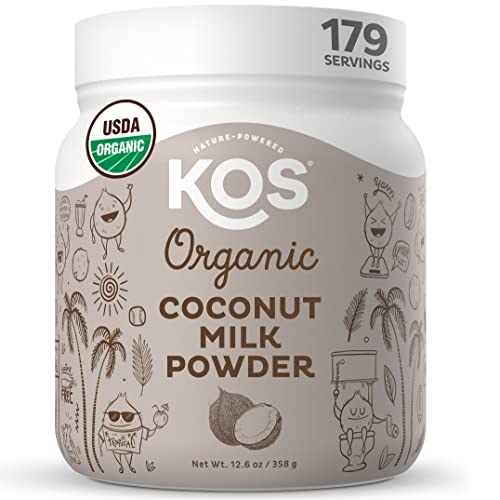
KOS Organic Coconut Milk Powder, USDA Certified Organic, 12.6 Oz
by KOS
One ingredient, organic coconut, which settles the dairy question outright, at the cost of a powder that needs heat and a whisk before it will behave.
Pros
- One ingredient: organic coconut. A single-ingredient panel makes the caseinate trap this page exists to warn about structurally impossible, which is a far stronger guarantee than any front-of-pack claim can give you
- 179 servings out of a 12.6 ounce bag, because dense coconut milk powder goes a long way per spoon, which makes it much better value than the bag size suggests once you divide by servings rather than by ounces
- USDA Organic and genuinely 0 g sugar, with 15 calories and 1.5 g of fat in a 2 g scoop, so it adds body without adding sweetness to a coffee you chose deliberately
- 5,186 ratings is a deep track record for a powder, and because it is unflavored it is not locked to coffee: the same bag thickens a curry or a smoothie
Cons
- It clumps and resists dissolving in anything but hot liquid. It will not work in cold brew or iced coffee unless you dissolve a scoop in a splash of hot water first and pour that in, which is a real extra step rather than a minor quibble
- It is unflavored and unsweetened, so if what you actually want is a sweet creamer this will taste thin and disappointing next to any of the liquids here
- It adds body more than richness. Several reviewers expected coconut cream and got something closer to a whitener, which is an accurate description of what a single-ingredient powder can do
Laird Superfood Non-Dairy Coconut Powder Creamer
Laird is the sweetened counterpart to the KOS powder and it carries the deepest review record of any powder on this page, 6,211 ratings, which for a clean-label specialty creamer is a genuinely unusual sample. That depth tells you the formulation is consistent from bag to bag rather than a single good batch that happened to land well.
The ingredient list is the interesting part, and it is four lines: coconut milk powder, organic coconut sugar, Aquamin and organic extra virgin coconut oil. Coconut sugar rather than corn syrup solids is the detail worth pausing on, because corn syrup solids are the first ingredient on the mass-market powders described in the trap section above. This gives you a sweet powdered creamer that stores in a cupboard and cannot curdle, without the base ingredient most people switching away from those powders are trying to leave behind. Aquamin is calcium sourced from marine algae, which puts back a mineral that moving from dairy to plant creamer usually removes without anyone noticing.
I have to be direct about the taste, because it is the most divisive thing I researched for this page. The 4.0 average is not made of people who mildly liked it. It is made of people who describe it as rich and people who describe it as soapy, in roughly the proportions that average implies, with very little in between. Buy one bag before you commit to a habit. Blending consistency draws the same complaint every coconut powder does, which is that it needs heat and agitation and will lump if you spoon it onto a cooling cup. And an 8 ounce bag is a short run next to the 179 servings in the KOS bag, so the reorder cycle is fast.

Laird Superfood Non-Dairy Superfood Creamer, Original Coconut Powder, 8 Oz
by Laird Superfood
The sweetened coconut powder with the deepest review record of any powder here, built on coconut sugar instead of corn syrup solids, and divisive enough that you should buy one bag before you commit.
Pros
- 6,211 ratings is the deepest record of any powder on this page and one of the deepest anywhere for a clean-label creamer, which tells you the formulation is consistent bag to bag rather than one good batch that happened to taste right
- It is sweetened with organic coconut sugar rather than corn syrup solids, and corn syrup solids are precisely the ingredient the mass-market powders lead their panels with, so it delivers a sweet powdered creamer without the base most people are trying to leave behind
- The panel runs to four ingredients: coconut milk powder, organic coconut sugar, Aquamin and organic extra virgin coconut oil. Aquamin is calcium sourced from marine algae, which puts back a mineral plant creamers usually strip out
- It is the sweetened counterpart to the KOS powder, so if you want the cupboard storage and the no-curdling behavior of a powder but not an unflavored one, this is the version that tastes of something
Cons
- Taste is the most polarising of anything I researched for this page. The 4.0 average is made of people who describe it as rich and people who describe it as soapy, with very little middle ground, so treat it as a try-it-and-see purchase rather than a safe default
- Blending consistency is reported as uneven, with the same complaint pattern as every coconut powder: it needs heat and agitation, and spooning it onto a cooling cup leaves lumps
- An 8 ounce bag is a short run next to the 179 servings in the KOS bag, so the cost per serving is high and the reorder cycle is fast
Silk Plant Based Shelf-Stable Soy Milk, Original
Soy is the plant milk that behaves most like dairy in a hot cup, and the number that explains why is on the front of the carton: 8 g of protein per serving, the highest on this page. Protein is what gives milk its structure under heat and what lets it hold foam, which is precisely why soy was the default plant milk in cafes for two decades before oat arrived. If you have been frustrated by nut milks breaking in your coffee, soy is the base most likely to solve it.
The format is the second reason it is here. These are aseptic cartons, shelf-stable for months unopened, so a six-pack goes in a cupboard and only the working carton takes fridge space. It is certified gluten-free, kosher, non-GMO and carrageenan-free, with no dairy on the panel, which makes it the pick for a household stacking several dietary requirements at once rather than just one. Reviewers also call it out specifically for coffee rather than for drinking, and that distinction matters, because plenty of plant milks taste pleasant cold in a glass and then disappear entirely into a hot mug.
Two things to be plain about. This is soy milk being used as a creamer, not a creamer, and I would rather say so than let the heading imply otherwise. It lightens coffee well and it holds up under heat, but it does not carry the fat load of a purpose-built creamer, so it is thinner and you will pour more of it to reach the same colour. And soy is one of the major allergens as well as something plenty of people avoid deliberately, so this pick simply does not apply to a real slice of readers. For everyone else it is the most dairy-like plant option on the page.

Silk Plant Based Shelf-Stable Soy Milk, Original, 32 Fl Oz (6 Count)
by Silk
The highest-protein pick here at 8 g per serving, which is why it holds up in a hot cup better than the nut milks, sold as soy milk and honestly used as a creamer.
Pros
- 8 g of protein per serving is the highest on this page, and that number is the reason it behaves most like dairy under heat. Soy protein resists breaking far better than a nut emulsion does, which is why soy has been the default plant milk in cafes for two decades
- The aseptic cartons keep for months unopened, so a six-pack goes in a cupboard rather than the fridge and you only chill the one in use
- Reviewers specifically call it out for coffee rather than for drinking, which is a meaningful distinction because a milk that tastes good cold in a glass often vanishes in a hot cup
- Certified gluten-free, kosher, non-GMO and carrageenan-free, with no dairy anywhere on the panel, which makes it the pick for a household stacking several dietary constraints at once
Cons
- It is soy milk being used as a creamer rather than a creamer, and I would rather say that plainly than let a section heading imply otherwise. It lightens coffee well but it does not carry the fat load of a purpose-built creamer
- Being thinner than a dedicated creamer, you will pour more of it to reach the same colour and body in a mug
- Soy is one of the major allergens and a common thing people are deliberately avoiding, so this pick excludes a real slice of the audience by definition
Best Budget: Milkadamia Macadamia Milk, Original
This is the least expensive product on the page, and it earns the budget slot on more than price. Macadamia is the base almost nobody tries, and it deserves more attention than it gets: the fat profile is rounder and lower in bitterness than almond, which shows up in the cup as a smoother finish, particularly under a dark roast where an almond milk can add a thin astringency on top of an already roasty coffee. Milkadamia is effectively the only strong option in the base, which is both its appeal and its limitation. It is worth saying that the budget end of this category thinned out badly this year, because the cheap single bottles that used to fill it are now sold almost exclusively through same-day grocery delivery rather than ordinary checkout.
Two details separate it from a generic nut carton. The macadamias are raw rather than roasted before milling, and that is not a marketing line: roasting nuts before they go into a milk pushes the flavor toward toasted bitterness, which is the last thing you want sitting underneath coffee that is already roasted. And it is fortified with vitamin A palmitate, vitamin D2, B12 and calcium phosphate. Fortification is worth more than it sounds on a page like this, because the quiet cost of switching from dairy to plant creamer is dropping the nutrients dairy was supplying, and most plant products do not put them back. The panel runs to twelve lines and the fortification accounts for most of that length rather than filler, with no caseinate anywhere on it.
The caution is the review base. At 489 ratings it is a shallow pool next to the oat and soy picks, which run into the thousands, and while 4.6 is an encouraging average, read it as early evidence rather than settled consensus. Macadamia also has so little competition that there is almost nothing to benchmark it against, so you are taking the category somewhat on trust. It is sold as a single refrigerated 32 ounce bottle with no multipack, so it occupies fridge space from the day it arrives.

Milkadamia Macadamia Milk, Original, 32 Oz
by Milkadamia
The budget pick, and the lowest price on this page: a macadamia outlier made from raw rather than roasted nuts and fortified with the vitamins a move off dairy normally costs you.
Pros
- It is the only strong macadamia option available, and macadamia is worth trying because the fat profile is rounder and lower in bitterness than almond, which shows up as a smoother finish in a dark roast
- It is made from raw rather than roasted macadamias, and that matters in the cup: roasting nuts before milling pushes the flavor toward toasted bitterness, which is the last thing you want sitting underneath an already roasty coffee
- Fortified with vitamin A palmitate, vitamin D2, B12 and calcium phosphate, which counts for more than it sounds, because the quiet cost of moving from dairy to a plant creamer is dropping the nutrients dairy was supplying
- The panel runs to twelve lines and every one of them is identifiable, with the fortification accounting for most of the length and no caseinate anywhere on it
Cons
- 489 ratings is a shallow review pool next to the oat and soy picks here, which run into the thousands. The 4.6 average is encouraging but read it as early evidence rather than settled consensus
- Macadamia is a niche base with very little competition, so there is almost nothing to benchmark it against and you are taking the category somewhat on trust
- It is sold as a single 32 ounce refrigerated bottle rather than a multipack, so it takes fridge space from the day it arrives and there is no bulk option
Best Organic Dairy-Free Coffee Creamer
Organic certification and dairy-free status are two separate questions and one does not imply the other. USDA Organic governs how the ingredients were farmed and processed, which means no synthetic pesticides and no GMO inputs. It says nothing at all about whether a milk protein is in the formula, and an organic creamer containing organic caseinate would still be organic. Both picks here carry the certification and both also pass the panel check independently, which is the combination you actually want. SOWN is the liquid answer, where the certification is doing real work because oats are a heavily sprayed crop. KOS is the powder answer, and a one-ingredient organic panel is about as unambiguous as food labeling gets.
| Product | Price | Buy |
|---|---|---|
| SOWN Organic Oat Creamer, Sweet and Creamy, 32 Oz (Pack of 6)Best organic dairy-free creamer USDA Organic oat creamer that reviewers specifically praise for not separating in a hot cup | $35.70 | View on Amazon |
| KOS Organic Coconut Milk Powder, USDA Certified Organic, 12.6 OzBest organic powdered option One organic ingredient, coconut, which makes both the organic claim and the dairy-free claim trivially verifiable | $22.25 | View on Amazon |
Best Non-Dairy Liquid Coffee Creamer
Liquid is the format that asks nothing of you. It arrives pre-emulsified from the factory, so it blends into hot or iced coffee instantly with no dissolving step, which is the single practical advantage it holds over every powder here. The choice within liquid is really about storage. A refrigerated bottle like the Milkadamia takes fridge space from the day it arrives and runs on a seven to ten day clock once opened. A shelf-stable bottle or carton like the nutpods or the Califia lives in a cupboard until you open it, which is what makes buying a multipack sensible instead of a storage problem. Decide where it will physically live and the choice narrows itself.
| Product | Price | Buy |
|---|---|---|
| nutpods Unsweetened French Vanilla Dairy-Free Coffee Creamer, 32 Oz (3-Pack)Best sugar-free flavored liquid A dedicated dairy-free creamer with a clean nine-ingredient panel, flavored and still at zero grams of sugar | $29.95 | View on Amazon |
| Califia Farms Oat Barista Blend Oat Milk, 32 Oz (Pack of 6)Best liquid for texture Six shelf-stable cartons that store in a cupboard and froth properly when you want texture | $29.22 | View on Amazon |
| Milkadamia Macadamia Milk, Original, 32 OzBest fortified liquid Refrigerated macadamia with vitamins A, D2 and B12 added back in | $8.59 | View on Amazon |
Best Healthy Non-Dairy Coffee Creamer
Healthy is not a claim I can make about a coffee creamer and I am not going to try. What I can do is point at three measurable things that people usually mean when they ask this question: how many ingredients are in it, whether sugar was added, and whether anything was put back in. Elmhurst is two ingredients with no added sugar and no gums at all. KOS is one ingredient with no added sugar. Milkadamia is the fortified answer, because moving off dairy quietly costs you the calcium, D and B12 dairy was supplying, and this is the pick on the page that replaces them. Nothing here treats anything, and specific dietary questions belong with your own healthcare provider rather than with a coffee writer.
| Product | Price | Buy |
|---|---|---|
| Elmhurst 1925 Unsweetened Almond Milk, 32 Ounce (Pack of 6)Shortest liquid label, no additives Filtered water and almonds, no gums, no emulsifiers, no sweetener of any kind | $41.94 | View on Amazon |
| KOS Organic Coconut Milk Powder, USDA Certified Organic, 12.6 OzFewest ingredients on the page A single organic ingredient with 0 g sugar and 15 calories per scoop | $22.25 | View on Amazon |
| Milkadamia Macadamia Milk, Original, 32 OzBest fortified option Fortified with vitamin A palmitate, D2, B12 and calcium, which plant creamers usually leave out | $8.59 | View on Amazon |
Best Sugar-Free Dairy-Free Coffee Creamer
Sugar-free is a claim about the number on the nutrition panel, and the interesting question is what carries the flavor once the sugar is gone. Fat is the answer, which is why both picks here are coconut-based. Coconut fat delivers a sensation the tongue reads as richness without any sweetness attached, and it is the reason the nutpods hazelnut manages to taste distinctly of hazelnut at 0 g of sugar while most sugar-free creamers taste like nothing at all. KOS does the same thing in powder form without a flavor on top. If you have tried sugar-free creamers before and found them watery, a low-fat formulation was almost certainly the cause rather than the missing sugar.
| Product | Price | Buy |
|---|---|---|
| nutpods Hazelnut Unsweetened Non-Dairy Coffee Creamer, 11.2 Oz (4-Pack)Best sugar-free flavored creamer 0 g sugar with real hazelnut flavor, carried by coconut cream rather than sweetener | $18.81 | View on Amazon |
| KOS Organic Coconut Milk Powder, USDA Certified Organic, 12.6 OzBest sugar-free powder 0 g sugar and one ingredient, for body without any flavor or sweetness added | $22.25 | View on Amazon |
Best Unsweetened Plant-Based Coffee Creamer
Unsweetened and sugar-free are not the same thing and the distinction is worth being precise about, because it changes what lands in your cup. Sugar-free describes a panel figure and permits a product to taste sweet anyway using a high-intensity sweetener, which is how most of that shelf is built. Unsweetened means nothing was added to make it sweet at all, so what you taste is the almond or the coconut and then the coffee. That matters most if you spend money on beans. A sweetened creamer flattens a good washed Ethiopian into generic pleasantness, and the florals you paid for stop being detectable within one pour. An unsweetened creamer adds fat and body while leaving the roaster’s work intact underneath, which is the only way a single-origin survives being lightened. Add sugar separately if you want it and you control both variables independently.
| Product | Price | Buy |
|---|---|---|
| Elmhurst 1925 Unsweetened Almond Milk, 32 Ounce (Pack of 6)Best unsweetened plant-based creamer Water and almonds only, so a good single-origin comes through the pour unchanged | $41.94 | View on Amazon |
| nutpods Hazelnut Unsweetened Non-Dairy Coffee Creamer, 11.2 Oz (4-Pack)Best unsweetened flavored option Unsweetened but not unflavored, with hazelnut carried on coconut fat rather than sugar | $18.81 | View on Amazon |
Best Non-Dairy Powdered Coffee Creamer
Powder has one structural advantage nothing liquid can match: it cannot curdle. Spray-drying leaves no intact protein network to destabilise, so a spoonful disperses cleanly into a cup straight off the boil and into the most acidic light roast you own. It also stores in a cupboard for months and travels without a thought. The cost is the mirror image. The fat coating on each particle will not wet out in cold liquid, so iced coffee needs the powder dissolved in a splash of hot water first, and both powders here draw clumping complaints from people who skipped that step. On cost per serving, KOS wins decisively at 179 servings from a small bag, while Laird gives you sweetness and a much larger review base.
| Product | Price | Buy |
|---|---|---|
| KOS Organic Coconut Milk Powder, USDA Certified Organic, 12.6 OzBest unsweetened powdered creamer 179 servings from one organic ingredient, so the small bag stretches much further than it looks | $22.25 | View on Amazon |
| Laird Superfood Non-Dairy Superfood Creamer, Original Coconut Powder, 8 OzBest sweetened powdered creamer Sweetened with coconut sugar rather than corn syrup solids, with 6,211 ratings behind it | $9.49 | View on Amazon |
Best Non-Dairy French Vanilla Coffee Creamer
I want to be straight about this section rather than stretch the category to fill it. The nutpods three-pack is the only true vanilla product among these nine picks, and it is the only dairy-free French vanilla I could buy at standard checkout at all. If French vanilla specifically is what you want and dairy is out, that is the pick, with the caveat that it is unsweetened vanilla rather than the sweet kind. The other two here are honest alternatives rather than vanillas. SOWN is a sweet and creamy oat creamer that scratches the same itch, sweetness plus body, without a declared vanilla flavor. Laird is the sweetened coconut powder, and it is the option if you want that profile in a cupboard-stable form. Both are good products. Neither is vanilla, and pretending otherwise would waste your money.
| Product | Price | Buy |
|---|---|---|
| nutpods Unsweetened French Vanilla Dairy-Free Coffee Creamer, 32 Oz (3-Pack)Best non-dairy French vanilla creamer The only genuine vanilla among these picks and the only one buyable at standard checkout, though it is unsweetened vanilla | $29.95 | View on Amazon |
| SOWN Organic Oat Creamer, Sweet and Creamy, 32 Oz (Pack of 6)Best sweet and creamy alternative Sweet and creamy organic oat, the same sweetness and body without a declared vanilla flavor | $35.70 | View on Amazon |
| Laird Superfood Non-Dairy Superfood Creamer, Original Coconut Powder, 8 OzBest sweetened powder alternative Coconut sugar sweetness in powder form for anyone who wants cupboard storage over a fridge bottle | $9.49 | View on Amazon |
Best Non-Dairy Coffee Creamers by Use Case
A few readers arrive with one specific requirement the sections above do not headline, so here is the best pick on this page for each of them.
| Product | Price | Buy |
|---|---|---|
| Silk Plant Based Shelf-Stable Soy Milk, Original, 32 Fl Oz (6 Count)Best gluten-free dairy-free coffee creamer Certified gluten-free and kosher with 8 g of protein per serving, the highest here | $32.46 | View on Amazon |
| nutpods Unsweetened French Vanilla Dairy-Free Coffee Creamer, 32 Oz (3-Pack)Best non-dairy flavored coffee creamer A real vanilla from a dedicated creamer, carried by coconut fat rather than sugar, on a clean nine-ingredient panel | $29.95 | View on Amazon |
| Califia Farms Oat Barista Blend Oat Milk, 32 Oz (Pack of 6)Best non-dairy vegan coffee creamer Oat, non-GMO, carrageenan-free and no animal ingredient anywhere on the label | $29.22 | View on Amazon |
| Elmhurst 1925 Unsweetened Almond Milk, 32 Ounce (Pack of 6)Best soy-free dairy-free coffee creamer An almond base with two ingredients, for anyone avoiding soy as well as dairy | $41.94 | View on Amazon |
| Laird Superfood Non-Dairy Superfood Creamer, Original Coconut Powder, 8 OzBest plant-based coffee creamer powder Four recognisable ingredients in a cupboard-stable powder that cannot curdle | $9.49 | View on Amazon |
| Milkadamia Macadamia Milk, Original, 32 OzBest non-dairy natural coffee creamer Two nut ingredients plus fortification, made from raw rather than roasted macadamias | $8.59 | View on Amazon |
Buyer's Guide
I taste coffee professionally, which mostly means I drink it black, but the questions that arrive in my inbox about non-dairy creamer are almost never about flavor. They are about whether the label is telling the truth. These are the six things that decide which product suits you, in the order I would weigh them.
Read the Panel for Caseinate First
This is the only step that cannot be skipped, and it takes about five seconds. Turn the package over and scan the ingredient list for the words caseinate, sodium caseinate, calcium caseinate, whey, milk protein concentrate or the phrase a milk derivative. If any of them appear, the product contains milk protein, no matter how large the words non-dairy are on the front. FDA rule 21 CFR 101.62(b)(4) permits exactly that combination, so the front of the pack cannot answer the question for you. The one shortcut that genuinely works is a short label. A one-ingredient coconut powder and a two-ingredient almond carton make the trap structurally impossible, which is why the cleanest-panel picks on this page also carry the least risk of an unpleasant surprise.
Choose the Base for What It Does to the Cup
The five bases behave differently and the difference is easy to taste. Oat is the most reliable performer in coffee because oat starch gives it body and it resists separating in a hot acidic cup, which is why barista oat cartons dominate cafes. Almond is the lightest and the cleanest tasting, and it is also the thinnest, so it whitens a cup more than it enriches it. Coconut brings the most fat and therefore the most richness, with a coconut note that suits a fruit-forward light roast and can sit oddly under chocolate. Soy has the highest protein and behaves the most like dairy under heat. Macadamia is the outlier: rounder, lower in bitterness, and the smoothest finish of the five. If you have never enjoyed a plant creamer, changing the base is more likely to fix it than changing the brand.
Sweetened, Unsweetened or Sugar-Free
These are three different things and they are routinely confused. Sweetened means sugar was added, usually cane sugar or coconut sugar, and it is what most flavored creamers are. Unsweetened means no sweetener of any kind was added and the product tastes of its base, which is what the Elmhurst almond and the KOS coconut powder do. Sugar-free is a nutrition claim about the sugar figure on the panel, and a product can hit 0 g while still tasting sweet or, as with the nutpods hazelnut here, while carrying flavor and no sweetness at all. If you are chasing the best tasting non-dairy coffee creamer for a coffee you actually chose, start unsweetened and add sugar separately. That way you control body and sweetness independently instead of letting one product decide both.
Liquid, Powder and Where It Will Live
Liquid creamer arrives pre-emulsified, so it blends into hot and iced coffee immediately with no technique required, and the cost is that it occupies fridge space and runs on a seven to ten day clock once opened. Powder cannot curdle at all, because spray-drying leaves no intact protein network to break, and it stores in a cupboard for months, but it needs heat to wet out and will clump into grit if you spoon it into a cold glass. Shelf-stable aseptic cartons split the difference: cupboard storage until you open one, fridge afterwards. Decide where the creamer will physically live before you decide what is in it, because that single question eliminates most of the page for you.
Curdling and Separation in Hot Coffee
Brewed coffee sits at around pH 5, and heat plus acid is what destabilises an emulsion into the flecks that float on the surface of a cup you were looking forward to. Plant creamers do not curdle in the dairy sense, since there is no casein network to flocculate, but they do break, which looks similar and is just as unwelcome. Two things reduce it reliably. Let the coffee sit for thirty seconds off the boil rather than pouring into water at full temperature, and warm the creamer slightly rather than pouring it straight from a cold fridge into a hot mug. Formulation matters too: oat bases with gellan gum, which is what SOWN and Califia use, are markedly more stable than an unstabilized nut milk with no gums in it at all.
Cost Per Serving, Not Price Per Bottle
Container sizes in this category are wildly inconsistent, running from an 8 ounce powder bag to six 32 ounce cartons, which makes the shelf price close to useless as a comparison. Divide the current price on each product card by the servings the package actually yields and the ranking on this page reorders itself immediately. A small organic powder bag delivering 179 servings can work out cheaper per cup than a liquid that looks like better value on the shelf. This is also where non-dairy coffee creamer brands separate into two camps that compete on different things: the mass-market names win on price and distribution, while the specialty names compete on the ingredient list and expect you to pay for the shorter panel. Work out which of those you are actually buying before you compare numbers.
How to Choose the Best Non-Dairy Coffee Creamer
Work through it in this order and the decision collapses fast. First, turn the package over and scan for caseinate, whey or the phrase a milk derivative. If any of them appear, put it back, whatever the front says. Second, decide where the creamer will physically live, because that eliminates most of the page in one move: no fridge means a powder, a fridge with room means a liquid, and a cupboard plus a fridge means a shelf-stable carton.
Third, pick the base for what you want it to do. Oat for body and stability in a hot cup, almond for a clean light taste, coconut for the most fat and richness, soy for the most dairy-like behavior under heat, macadamia for the smoothest low-bitterness finish. Fourth, decide between sweetened, unsweetened and sugar-free, and remember those are three different things. Fifth, divide the price on each card by the servings the package actually yields, because that number reorders this page more than any other single calculation. If you drink good beans and want texture rather than sweetness, an unsweetened base plus a frother will do more for your cup than any sweetened creamer, and the technique is covered in our guide to frothing milk.
Final Verdict
The Califia Farms Oat Barista Blend is my best overall non-dairy coffee creamer for 2026. It has the deepest review record on this page at 13,417 ratings, a short non-GMO panel with no caseinate on it, and a barista formulation that gives a hot cup real body and will actually hold microfoam, which almost nothing sold as a creamer does. If cost is the binding constraint, the Milkadamia is the value pick at the lowest price on this page, made from raw rather than roasted nuts and fortified with the vitamins a move away from dairy normally costs you. If you want the shortest possible label, Elmhurst 1925 is two ingredients, water and almonds, and the dairy question answers itself.
The bigger takeaway is the one I would want a reader to carry away from this page even if they buy none of these nine. Non-dairy on the front of a package is a legal term about lactose, not a promise about milk protein, and the only reliable way to know what you are drinking is to read the ingredient panel. That five-second habit protects you across the whole category, including the products that are not on this page. Once you have a creamer you trust, the coffee underneath it is what decides whether the cup is any good: if you are reaching for creamer mainly to make the coffee drinkable, start with fresher beans, and if convenience is the priority, our instant coffee picks pair cleanly with any of the shelf-stable options above. For the full picture including dairy and mixed formulations, our coffee creamer roundup covers the rest of the category.
Frequently Asked Questions
Is Coffee Mate a non-dairy creamer?
What is non-dairy coffee creamer made of?
Is non-dairy coffee creamer bad for you?
How long does non-dairy coffee creamer last?
Is Coffee Mate non-dairy creamer vegan?
Related Articles
About the Reviewer

Clara Bennett, CQI Q Grader, SCA Roaster
B.S. Food Science, UC Davis
Clara Bennett is a Coffee Quality Institute (CQI) licensed Q Grader and SCA-certified roaster with over a decade in specialty coffee — from competition barista to production roaster and green-coffee buyer. She has cupped thousands of coffees to CQI protocol and dialed in espresso on everything from $90 entry machines to commercial three-group setups. She founded Brew Gazette in 2026 to turn cupping-table standards into plain-English buying advice.