10 Best Percolators of 2026
Q Grader Clara Bennett ranks the 10 best percolators of 2026: electric, stovetop, 12-cup, and genuinely plastic-free picks, judged on heat control and what actually touches the water.
Updated
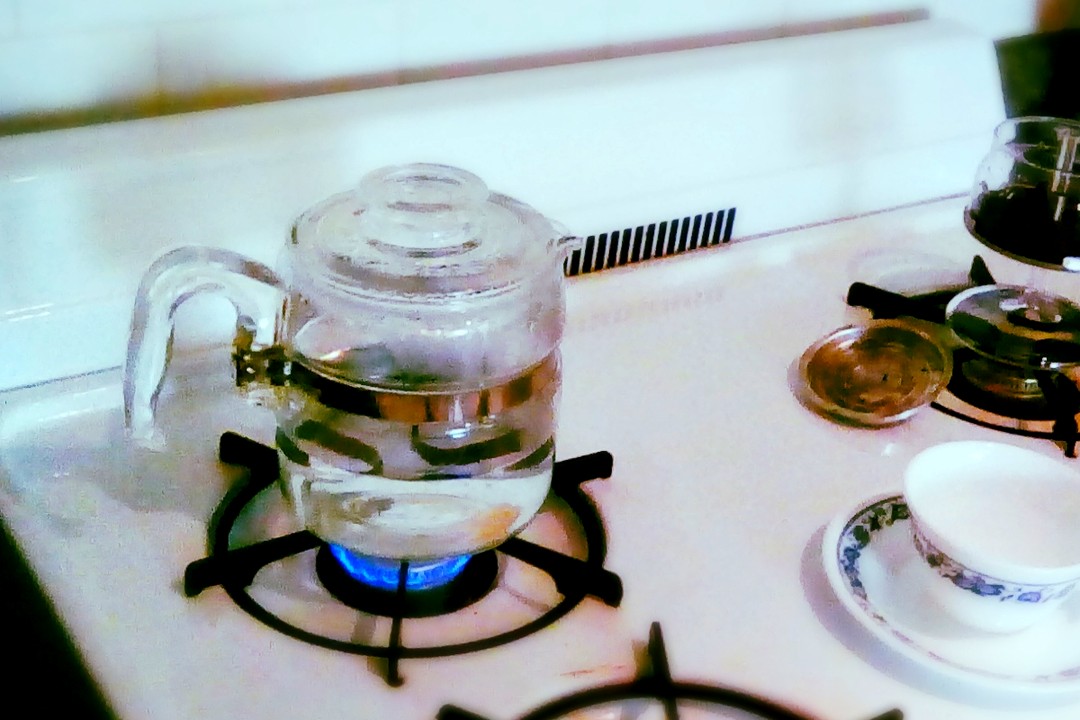
Percolators are the brewer I get asked to defend more than any other. Somebody’s grandmother made coffee in one, they remember it as bitter, and the received wisdom in specialty coffee for thirty years has been that the method is beneath discussion. I taste coffee for a living and I think that verdict is lazy. The method is not the problem. Unattended percolators are the problem, and the difference between the two is about four decisions you make before you buy and one habit you build afterwards.
Here is what is actually happening inside the pot. Water in the base heats until it is buoyant enough to climb a hollow tube up the middle, where it sprays out across a perforated basket of coarse grounds and drains back down into the pot, and then the whole thing happens again with water that is now coffee. That recirculation is the defining feature of the method and it is the source of both its strength and its reputation. Passing water through the bed repeatedly extracts far more total dissolved solids than a single pass through a drip basket, which is why a percolator makes a fuller, heavier, more old-fashioned cup than anything else at this price. It is also why a percolator that keeps cycling past the point where the coffee is done pushes extraction into the range where the last and bitterest compounds come out. The Specialty Coffee Association puts the useful extraction window at roughly eighteen to twenty-two percent of the coffee’s mass, with water between about 195 and 205 degrees. A percolator on a rolling boil, left alone for another ten minutes, sails past both numbers. Nobody selling percolators will tell you that, and it is the single most useful thing to know before you buy one.
So I judged these ten on the things that follow from that mechanism rather than on style. Does the pot stop on its own, or does it demand your attention. What actually touches the water, which is a harder question than it looks because Amazon’s Material field describes the shell and a pot advertised as stainless routinely has a plastic basket. Whether the capacity range lets you brew the batch you actually want, because a percolator brews to the geometry of its basket and cannot make a good half pot. And which part breaks first, which in this category is almost never the pot. I have picks here for an electric kitchen appliance, a classic stovetop pot, a genuinely aluminum-free and plastic-free build, a compact for one or two drinkers, a crowd-sized urn, and a camp pot for an open fire. Grind coarse, whatever you buy, and a burr grinder is the thing that makes that possible.
Find the Best Percolator for Your Kitchen
The right percolator depends on whether you want an appliance or a method, and on what you are willing to have touching the water. Jump to your situation:
- Overall best percolators
- Best stovetop percolators
- Best electric percolators
- Best 12-cup percolators
- Best plastic-free coffee percolators
- More use cases: camping, glass, small batches
How I Chose These Percolators
Every pot here had to clear the same bar: a currently stocked listing with a real owner-review record rather than a handful of ratings, a permanent metal basket, and a construction I could actually verify rather than infer. That last one did most of the work. I read each listing’s own component breakdown rather than trusting its Material field, because in this category the two frequently disagree, and the pots that state what the perk tube and basket are made of are a meaningfully different set from the ones that just say stainless steel. Where a brand went quiet about its internals I treated the claim as covering the shell only, and you will see that reflected in the water path column above.
Beyond that I weighted heat management heaviest, because it is the one variable that decides whether percolator coffee is good or is the thing people remember from childhood. Electric pots earn credit for a genuine automatic cutoff and an adjustable capacity range; stovetop pots earn it for a clear knob you can actually read the brew through. Then I looked at the failure reports rather than the headline ratings, which in this category cluster tightly and tell you very little, and a clear pattern emerged: the pots survive, the knobs and the electrical bases do not. Finally I spread the picks deliberately across electric and stovetop, across capacities from six cups to forty-five, and across materials, so that an RV, a household of four, a campsite, and somebody avoiding aluminum each find a clear answer.
Best Percolators Overall
These are the ten I would recommend in 2026, each reviewed once below. The best overall pick leads, because it suits the most kitchens.
Best Overall: Presto 02811 Stainless Steel 12-Cup
The Presto 02811 is the pot I would put in most kitchens, and the reason is the brew cycle rather than anything on the spec sheet. It runs an 800-watt element and gets through a full pot at roughly a cup a minute, and in a brewer defined by recirculation, speed is a quality feature: the faster the cycle finishes, the fewer times the same water is pumped back over grounds that have already given up what they have. Then the thermostat cuts the perk and drops the pot to keep-warm, which is the thing a stovetop pot cannot do for you and the thing that separates good percolator coffee from the bitter cliché.
The capacity range matters more than it looks. Presto rates this from two cups to twelve, and in a category where a percolator brews to the geometry of its loaded basket, a pot that can genuinely be run small is a pot that makes decent coffee on a Tuesday as well as on a holiday morning. It has by a wide margin the longest owner record of any electric percolator on this page, which in a market now full of two-year-old brands is the most useful signal available to a buyer.
Two honest limits. Presto lists this model as not dishwasher safe, which is a real inconvenience given that the perk tube is the part that goes rancid if you only rinse it; buy a bottle brush and use it. And the base is fixed, so if you want to pour at the table, the upgrade pick below is the one that does that. Durability reports are mixed in the way every pot in this category’s are, with a visible minority of early element failures against a long tail of people running the same pot a decade later.

Presto 02811 Stainless Steel 12-Cup Electric Coffee Percolator
by Presto
The electric percolator I would put in most kitchens: a fast brew cycle that limits how many times the coffee gets recirculated, a real two-to-twelve-cup range, and the longest owner record of any electric percolator here.
Pros
- It brews at roughly a cup a minute off an 800-watt element, which matters more than it sounds: the faster a percolator gets through its cycle, the fewer times the same coffee is pumped back over the bed, and recirculation is the single mechanism that turns percolator coffee bitter
- The automatic keep-warm holds serving temperature without parking the pot on a hotplate, so the coffee is not being cooked down for the second half of the morning the way it is in a glass-carafe drip machine
- It is genuinely adjustable from two cups to twelve, which is not a marketing line in this category: a percolator needs its basket loaded for the batch you are actually brewing, and a pot that only does twelve is a pot that makes bad coffee for one person
- Presto has been selling essentially this pot for decades and the owner record behind it is the deepest of any electric percolator on this page, which in a category full of two-year-old brands is the most useful signal available
Cons
- Presto lists this one as not dishwasher safe, so it is a hand-wash pot, and the perk tube in particular needs a bottle brush through it rather than a rinse
- The base is fixed, so you carry the whole appliance and its cord to the table, or you pour at the counter
- Durability reports are genuinely mixed, with a visible minority of owners reporting the element failing inside the first year against a long tail of people who have run one for a decade
Best Budget: Café Brew Glass 8-Cup
The Café Brew is the cheapest pot in this roundup by a clear margin, and I recommend it for a specific reason rather than just its price: it is the best pot here for learning the method. The body is SCHOTT DURAN borosilicate, the German lab glass used in serious cookware, which means you watch the whole brew happen. You see the moment the first surge hits the knob, you watch the colour go from straw to amber to deep brown, and after three or four pots you stop timing and start reading it. That is the entire skill of stovetop percolation, and no metal pot can teach it to you.
It is also completely unfussy: dishwasher safe, and happy on gas, ceramic, or electric coil. What it is not is a plastic-free pot, and that distinction is important enough that I want to be blunt about it. The glass body is inert, but the basket, the stem, and the stand are all BPA-free polypropylene, so on this pot the plastic sits directly in the hot water path rather than above it. Café Brew is upfront about that in the listing. If avoiding plastic is why you are shopping for a percolator, skip to the plastic-free section below.
The failure mode is the one you would predict: owners report the plastic stem softening or deforming when the pot is run on a burner larger or hotter than it should be, which is a good reason to keep the flame under the base and the heat moderate. That is correct technique anyway.

Café Brew Glass Coffee Percolator, Stovetop, 8 Cup, BPA-Free
by Café Brew
The cheapest way into percolator brewing and the best one for learning the method, since you can see every stage of the perk, as long as you are not trying to avoid plastic.
Pros
- It is the cheapest pot in this roundup by a clear margin, which makes it the honest way to find out whether you actually like percolator coffee before committing to a metal pot
- The body is SCHOTT DURAN borosilicate glass, the same German lab glass used in cookware, so it takes direct stovetop heat and does not hold coffee oils in a scratched surface the way a neglected metal pot does
- You can watch the entire brew, and for a method this dependent on timing that is a genuine teaching tool: you see the moment the perk starts, you see the colour in the knob darken, and you learn to pull the pot instead of guessing
- It is dishwasher safe and runs on gas, ceramic, and electric coil hobs, so there is no maintenance ritual attached to it
Cons
- The basket, stem, and stand are BPA-free polypropylene, which means this is emphatically not the pick if you are trying to keep plastic out of the water path
- Owners report the plastic stem softening or deforming if the pot is run on a burner that is too large or too hot for it, which is the failure this design is known for
- Glass is glass, and the handle joint is the part people report breaking
Best Upgrade: Presto 02815 Cordless 12-Cup
The Presto 02815 is the priciest pot here, and the thing you are actually paying for is specificity. Most percolator listings say stainless steel and leave you to work out whether that means the whole brewing path or just the shell you can see. Presto spells this one out: stainless pot, stainless perk tube, stainless grounds basket, stainless lid. After reading several dozen listings in this category I can tell you how rare that is, and if you care what your coffee touches, that sentence is worth more than any feature.
The cordless base is the other half of it, and it is the one convenience feature in this category that genuinely changes how you use the pot. It lifts off and goes to the table, so a percolator stops being a counter appliance you walk back to and becomes something you serve from. It is also rated dishwasher safe, unlike the 02811, which matters precisely because the perk tube and basket are the parts that are awkward to clean by hand and rancid if you skip them.
The honest cautions are two. Off the base the pot is uninsulated metal, so the keep-warm stops the moment you pick it up and the coffee cools at table faster than a vacuum carafe would allow. And it carries the joint-lowest owner rating on this page, with early-failure reports in a pattern that reads like a newer model rather than a proven one. It is the pick for someone who wants the verified water path and the cordless pour and is buying with that risk understood.

Presto 02815 Black Stainless Steel 12-Cup Cordless Coffee Percolator
by Presto
The premium pick for anyone who wants the water path spelled out rather than implied, plus a pot that lifts off its base to pour cord-free at the table.
Pros
- Presto spells out that the perk tube, grounds basket, and lid are stainless steel, not just the pot, and that specificity is rare enough in this category to be the main reason to buy it: most listings say stainless and mean the shell
- The pot lifts off its power base, so you pour at the table with no cord, which is the one convenience feature in this category that actually changes how you use the appliance
- Unlike the 02811 it is rated dishwasher safe, which matters because the perk tube and basket are the awkward parts to clean and the parts that go rancid if you do not
- The glass cover lets you watch the perk, so you can judge colour and pull it early if you want a lighter cup rather than trusting the light
Cons
- It is the priciest pot in this roundup, and a good part of that premium is the cordless base rather than the brewing
- Off the base it is an uninsulated metal pot, so the keep-warm stops the moment you pick it up and the coffee cools quickly at the table
- It carries the joint-lowest owner rating here, with early-failure reports that fit the pattern of a newer model rather than a proven one
Best Stovetop: Farberware Classic Yosemite 12-Cup
The Farberware Yosemite is the reference design of this entire category, and that has a practical benefit beyond nostalgia: essentially every piece of percolator technique advice ever written assumes a pot shaped exactly like this one. When somebody tells you to turn the heat down the second it starts perking and pull it six to eight minutes later, they are describing this pot.
It does the fundamentals correctly. The permanent metal basket means there is nothing to buy again, ever, which is how the method was designed to work: percolation assumes a metal basket and a coarse grind, and paper discs are a patch for the wrong grind rather than an upgrade. It is fully immersible and dishwasher safe, which is more useful here than on most pots because you can actually get the perk tube clean rather than rinsing it and hoping. And the clear knob gives you the brew cue you need.
Two things to know. There is no auto shutoff, so this pot requires you to be in the kitchen, and an unattended stovetop percolator is exactly the thing that gave the method its reputation. And the lid knob is the part owners report breaking, which on a pot where the knob is your only instrument is more than cosmetic. One disclosure on the rating: Farberware pools this listing’s owner reviews with its 8-cup sibling, so read the score as a signal about the Yosemite line rather than about this exact size.
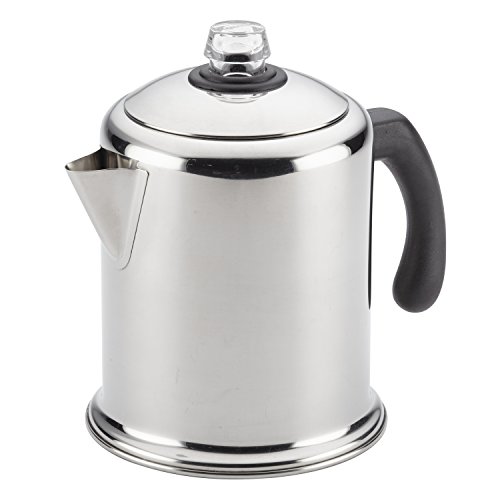
Farberware Classic Stainless Steel Yosemite 12-Cup Coffee Percolator
by Farberware
The classic stovetop percolator and the one most technique advice is written for, with a permanent metal basket and a body you can put through the dishwasher.
Pros
- The permanent filter basket means no paper, ever, which is the whole point of a percolator: the method was designed to work with a metal basket and a coarse grind, and paper is a workaround for the wrong grind
- It is fully immersible and dishwasher safe, so the perk tube and basket can be cleaned properly rather than rinsed, and coffee oils in a perk tube are the usual reason an old percolator tastes stale
- The clear knob shows you the moment percolation starts, which is the cue you actually brew by on a stovetop pot: you turn the heat down when it starts and you time from there
- This is the reference design of the category, which has a practical benefit beyond nostalgia: every piece of technique advice written about percolators assumes a pot shaped exactly like this one
Cons
- There is no auto shutoff, so you have to be in the kitchen and you have to pull it, and a stovetop percolator left to its own devices is the thing that gave the method its bitter reputation
- The lid knob is the part owners report breaking, and on a pot where the knob is how you read the brew, that is more than cosmetic
- Farberware pools this listing's owner reviews with its 8-cup sibling, so read the rating as a signal about the line rather than about this exact size
Best Stainless Steel: COLETTI Bozeman 9-Cup
The Coletti Bozeman is the pot I point people to when the question is specifically about materials, because Coletti makes no aluminum and no plastic an explicit product claim rather than leaving you to infer it from a spec field. That difference is the whole reason this pick exists. Plenty of pots on the market are materially fine and simply do not say so, which means a buyer who cares cannot verify it. Coletti says it in the title, repeats it in the bullets, and backs it up with the detail that gives it away: a glass knob instead of a plastic one, which removes the single plastic component that sits in the steam path on nearly every rival.
The build follows the claim. It is genuinely rated for a campfire rather than being a thin kitchen pot with an outdoor photo on the listing, it is dishwasher safe, and it carries a real brand warranty in a category where most competition is unbranded. At nine cups it also lands in a useful gap between the six-cup electrics and the twelve-cup pots, which is about right for a couple who drink a lot or a small household.
The limits are specific and easy to check. It does not work on induction, and Coletti states that plainly and sells a separate induction model, so confirm your hob before ordering. The glass knob is the part owners report breaking, which is the trade you accept for not having a plastic one. And as with the Farberware, the review count is pooled across the size siblings.

COLETTI Bozeman Percolator Coffee Pot, NO Aluminum or Plastic, 9 Cup
by Coletti
The most credible all-metal percolator here, with no aluminum and no plastic stated outright rather than implied, and a glass knob where nearly everything else uses plastic.
Pros
- Coletti makes the no-aluminum, no-plastic construction an explicit product claim rather than leaving you to infer it from a Material field, and that is the difference between a pot you can recommend to someone avoiding aluminum and one you can only guess about
- The glass knob replaces the plastic one almost every rival uses, which removes the one plastic part that sits directly in the steam path on most percolators
- It is rated for a campfire as well as a hob, and the build is heavy enough to justify that rather than being a thin pot with an outdoor photo on the listing
- It is dishwasher safe and carries a brand warranty, which in a category dominated by unbranded pots is worth something
Cons
- It does not work on induction, and Coletti says so plainly on the listing: they sell a separate induction model, so check your hob before you order this one
- The glass knob is the part owners report breaking, which is the trade you make for not having a plastic one
- The owner reviews are pooled with the 12-cup sibling, so the count reflects the line rather than this exact size
Best Mid-Price Electric: West Bend 12-Cup
The West Bend is the electric I recommend when the budget stops short of the Presto 02811, and it earns that on disclosure. Its listing names the stem, the basket, and the spreader as stainless, and most electric percolators at this price leave all three deliberately vague. Buying the one that tells you is a reasonable way to spend fifty dollars.
The spreader deserves a paragraph because almost nobody mentions it. It is a plate that sits over the grounds and catches the water arriving from the perk tube, distributing it across the whole bed rather than letting it drill a single channel through the middle. Channelling is the reason a pot can be simultaneously weak and bitter, over-extracting one narrow path while barely wetting the rest of the coffee, and a spreader is a real, mechanical defence against it. On a pot at this price it is the most meaningful feature on the listing.
The rest is straightforward: twelve cups, automatic keep-warm, and a ready-to-serve light that saves you the main percolator error. The lid knob is plastic and it is the single most common breakage in owner reports, though it sits above the water rather than in it. Owners are also genuinely split on how loud it is, which is worth weighing for an appliance you stand next to first thing in the morning.

West Bend Electric Percolator Classic Style Coffee Maker, 12-Cup
by West Bend
The mid-price electric that tells you what its internals are made of, including the spreader that keeps water from channelling straight through the coffee bed.
Pros
- West Bend names the stem, basket, and spreader as stainless in the listing itself, which most electric percolators at this price leave deliberately vague
- The spreader is the part nobody talks about and it does real work: it distributes the water arriving from the perk tube across the whole bed instead of drilling a channel through the middle of it
- It costs meaningfully less than the Presto 02811 while brewing the same twelve cups with automatic keep-warm, so it is the sensible option if the budget stops short of the overall pick
- The ready-to-serve light saves the main stovetop mistake, which is leaving a percolator running past the point where it has finished
Cons
- The lid knob is plastic, and it is the single most common breakage in owner reports, though it sits above the water rather than in it
- Owners are split on how loud it is, and a percolator is an appliance you stand next to in a quiet kitchen
- Reliability reports are mixed in the same shape as the rest of this category, with a minority of early failures
Best Plastic-Free Electric: APOXCON 12-Cup
The APOXCON is the answer to a question the electric percolator market mostly dodges. Stovetop buyers who want no aluminum and no plastic have Coletti and several others. Electric buyers have had almost nothing, because an electric pot has a base, a cord, a thermostat, and a knob, and the easy way to build all of that is with plastic. APOXCON states no aluminum components and then backs it up in the detail that usually gives the game away: the viewing knob is glass, not plastic.
It also does the electric conveniences properly, with a cordless serving base, a cool-touch handle, and automatic keep-warm. I will give the listing credit for something unusual too: it contains actual brewing instruction rather than marketing copy, specifying coarse grounds and a fill above the minimum line. Both of those are the things people get wrong, and a manufacturer that says so is a manufacturer that understands its own product.
The caveat is real and I would not want it buried. The owner record behind this one is far thinner than anything else on this page, which means its rating is provisional rather than proven, and there is no long-run reliability signal to weigh the early-failure reports against. The glass knob that makes it plastic-free is also, predictably, the part people report arriving broken. Buy it because you specifically want an electric pot with no aluminum and no plastic in the water path, and go in knowing that is a newer product than the Prestos.

APOXCON Electric Coffee Percolator, Stainless Steel, No Aluminum No Plastic, 12 Cup
by APOXCON
The one electric percolator that genuinely keeps aluminum and plastic out of the water path, with the caveat that its owner record is still thin.
Pros
- It is the only electric percolator I found that states no aluminum components and backs it up by fitting a glass knob instead of a plastic one, which makes it the answer to a question the rest of the electric market dodges
- The pot serves cordless off its base, so it does the same table trick as the Presto upgrade pick for less
- The listing gives real brewing instruction rather than marketing copy, specifying coarse grounds and a fill above the minimum line, and both are the things people get wrong
- The cool-touch handle and automatic keep-warm are the two features that make an electric percolator easier to live with than a stovetop one
Cons
- The owner record is far thinner than anything else on this page, so treat its rating as provisional rather than proven
- The glass knob that makes it plastic-free is also the part owners report arriving broken or breaking early
- There are early-failure reports, and with a brand this new there is no long-run reliability signal to weigh them against
Best Small Batch: Presto 02822 6-Cup
The Presto 02822 exists for a reason that is mechanical rather than about counter space, and it is the reason I push back when somebody buys the biggest pot available. A percolator brews to the geometry of its basket. Load a twelve-cup basket with grounds for four cups and fill the pot below its line, and the water does not soak the bed evenly, it finds the path of least resistance through it. The result is thin and sour, and no amount of technique fixes it. If you are one or two drinkers, a six-cup pot is not a compromise, it is the correct tool.
Helpfully, Presto gives this small pot the same explicit component breakdown as its far pricier cordless model: stainless pot, perk tube, grounds basket, and lid. So it is also one of the few genuinely verified plastic-free water paths at any size, which is unusual in a compact appliance. The footprint suits an RV, a galley kitchen, or an office corner, and the automatic keep-warm means it behaves like an appliance you can walk away from.
Two caveats worth knowing. It costs more than the twelve-cup Farberware while brewing half as much, because what you are paying for is the element and the base rather than the metal. And owners consistently report the basket holding less than its rated six cups’ worth of grounds, so expect to brew toward the lower end of the range if you want full-strength coffee.

Presto 02822 Stainless Steel 6-Cup Electric Coffee Percolator
by Presto
The compact electric for one or two drinkers, with the same explicitly stainless internals as Presto's premium pot and a footprint that fits an RV counter.
Pros
- Presto lists the pot, perk tube, grounds basket, and lid as stainless, so this small pot has the same spelled-out water path as the far pricier cordless model
- A six-cup pot is the right answer for one or two drinkers, and the reason is mechanical rather than convenience: a percolator brews to the geometry of its basket, so a half-filled twelve-cup pot makes thin, weak coffee no matter how good it is
- The footprint suits an RV, a galley kitchen, or an office corner, and the automatic keep-warm means it behaves like an appliance rather than a project
- It has a deep owner record for a compact percolator, which is unusual because most small ones come from brands with no history
Cons
- It costs more than the twelve-cup Farberware while brewing half as much, because you are paying for the element and the base, not the metal
- Owners report the basket holding less than the rated six cups' worth of grounds, so expect to brew nearer the bottom of its range for full-strength coffee
- There is no headroom, so it is the wrong pot the first time you have four people over
Best for Crowds: Hamilton Beach 45-Cup Urn
An urn is a different appliance from everything else here, and it is worth being clear about why you would want one. It percolates the same way, but it dispenses from a tap instead of pouring from a spout, which means a room full of people serves itself while you do something else. Above roughly fifteen cups that is the only sane way to make coffee for a group, and this Hamilton Beach is the one pick here that addresses the problem at all, at a price the foodservice urns in the same size class do not approach.
The flexibility is what makes it usable rather than an occasional embarrassment. It brews from fifteen cups up to a full load, so it is not locked into one batch size the way many urns are, and the interior fill marks and ready light make it hands-off for somebody who is hosting rather than brewing. The two-way lever pours a single cup or fills continuously, which matters when the line is ten people deep.
Now the thing the listing does not tell you in the title: the body is aluminum. Hamilton Beach’s own spec field says so even though nothing in the product name or the bullets does, and it is the reason this is the one pot on this page I would rule out for anybody specifically avoiding aluminum. A related detail worth planning around is that the title says forty-five cups while Amazon’s own spec table for the same listing says forty-two, so size your event by the lower number. Owners also report the interior discolouring over time, which is what aluminum does with coffee acids and is cosmetic rather than a fault.

Hamilton Beach 45 Cup Coffee Urn and Hot Beverage Dispenser
by Hamilton Beach
The large-batch answer for a party or a church hall, with flexible batch sizes and self-serve dispensing, as long as an aluminum interior is acceptable to you.
Pros
- It brews anywhere from fifteen cups to a full load rather than forcing you into one batch size, which is what separates a usable urn from one that only works when the whole room shows up
- The two-way lever pours a single cup or fills continuously, so a queue of people can serve themselves without anyone lifting a hot vessel
- The ready light and the interior fill marks make it a genuinely hands-off appliance for someone who is hosting rather than brewing
- It is the only pick here that answers the large-batch problem at all, and it does it at a price the foodservice urns in this size class do not come close to
Cons
- The body is aluminum, which Hamilton Beach's own spec field confirms even though the listing never says so in the title, so this is the one pot on this page to skip if you are avoiding aluminum
- The title says forty-five cups while Amazon's spec table for the same listing says forty-two, so size it by the lower figure and you will not be caught short
- Owners report the interior discolouring and staining over time, which is normal for aluminum and is cosmetic, but it does make the pot harder to judge as clean
Best for Campfires: GSI Outdoors Enamelware
The GSI Outdoors is the speckled camp coffeepot everybody pictures, and porcelain enamel over steel is the right material for the job it does. It goes straight into a fire, it takes soot and scraping, and it cleans up with a scrub rather than the careful polishing a mirror-finish kitchen pot demands. It is also light enough to strap to the outside of a pack, which is the practical line between a percolator that goes camping and one that stays in the vehicle.
The details are sensible for outdoor use. The silicone handle is usable straight off the heat, and GSI fits the same clear knob the kitchen pots use, so you get a real brew cue rather than guessing at a fire-blackened pot. GSI has been making this pattern since the mid-eighties and warranties it, which is more than most camp cookware carries.
Two honest limits. Enamel chips, and once it does, the steel underneath will rust, so treat this as a camp pot with a service life rather than an heirloom. Owners also describe the internal basket assembly and the lid as flimsy compared with the kitchen pots here, which is fair. And over a fire you have no heat control except where you put the pot, so campfire percolation is a skill, and the fastest way to build it is to practise on a hob first.
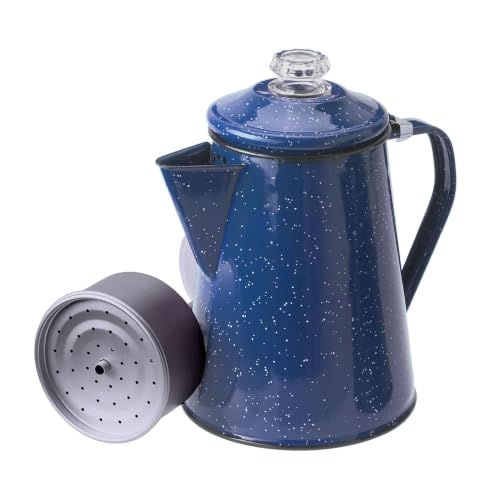
GSI Outdoors Percolator Coffee Pot, Enamelware Campfire Boiler
by GSI Outdoors
The classic speckled camp percolator, light enough to pack and happy over an open fire, with the enamel chipping that comes with the territory.
Pros
- Porcelain enamel over steel is the traditional campfire material for a reason: it shrugs off direct flame and soot in a way a polished kitchen pot does not, and it cleans up with a scrub rather than a polish
- It is light enough to strap to the outside of a pack, which is the practical difference between a percolator that goes camping and one that stays in the truck
- The silicone handle stays usable straight off a fire, and the clear PercView knob gives you the same visual brew cue as the kitchen pots
- GSI has been making this pattern since the mid-eighties and warranties it, which is more than most camp cookware carries
Cons
- Enamel chips, and once it does the steel underneath rusts, which is the failure owners report most and the reason this is a camp pot rather than a forever pot
- Owners describe the internal basket assembly and the lid as flimsy next to the kitchen pots here
- It has no heat control of its own, so over a campfire you are managing the coffee by moving the pot, which takes practice
Best Stovetop Percolators
A stovetop percolator hands you the control an electric pot takes away, which is either the point or the problem depending on how you want to spend your mornings. There is no thermostat and no cutoff, so you are the cutoff: turn the heat to a bare simmer the second the knob starts bouncing, and pull the pot when the colour goes deep rather than letting it run. Done that way a stovetop pot makes as good a cup as anything here, costs far less for the same capacity, has nothing electrical to fail, and is the only kind that works over a fire.
| Product | Price | Buy |
|---|---|---|
| Farberware Classic Stainless Steel Yosemite 12-Cup Coffee PercolatorBest stovetop overall The reference design every piece of percolator technique advice is written for, with a permanent basket and a dishwasher-safe body | $35.99 | View on Amazon |
| COLETTI Bozeman Percolator Coffee Pot, NO Aluminum or Plastic, 9 CupBest stovetop for materials All stainless with a glass knob and no plastic anywhere in the water path, though it will not run on induction | $37.34 | View on Amazon |
| GSI Outdoors Percolator Coffee Pot, Enamelware Campfire BoilerBest stovetop for a fire Enamel over steel that goes straight into a campfire and packs light, at the cost of chipping over time | $34.95 | View on Amazon |
Best Electric Percolators
An electric percolator is buying the cutoff. The thermostat ends the perk cycle when the brew is done and drops the pot to keep-warm, which removes the one failure that defines bad percolator coffee: water cycling through a bed that has nothing left to give. You also get a capacity range you can actually use, a ready light, and a pot you can walk away from. What you give up is the ability to stop the brew early for a lighter cup, and you add two components that can fail, the element and the base, which is why reliability reports across every brand here are mixed.
| Product | Price | Buy |
|---|---|---|
| Presto 02811 Stainless Steel 12-Cup Electric Coffee PercolatorBest electric overall A cup-a-minute cycle off an 800-watt element, a genuine two-to-twelve-cup range, and the longest track record of any electric here | $75.26 | View on Amazon |
| West Bend Electric Percolator Classic Style Coffee Maker, 12-CupBest electric under fifty Names its stem, basket, and spreader as stainless, and the spreader is what stops water channelling through the coffee bed | $49.99 | View on Amazon |
| APOXCON Electric Coffee Percolator, Stainless Steel, No Aluminum No Plastic, 12 CupBest electric with no plastic The only electric that states no aluminum components and fits a glass knob rather than a plastic one | $64.72 | View on Amazon |
Best 12-Cup Percolators
Twelve cups is this category’s default size and the right one for a household, but read it correctly: a percolator cup is about five ounces, so twelve of them is roughly sixty ounces, or four large mugs. The real decision inside this size is electric or stovetop, because the three pots below make the same amount of coffee in three completely different ways. Pick by how much attention you want to pay and whether you want to pour at the table.
| Product | Price | Buy |
|---|---|---|
| Presto 02811 Stainless Steel 12-Cup Electric Coffee PercolatorBest 12-cup overall Brews the full twelve in about twelve minutes then holds it on keep-warm, and runs down to two cups when you do not need the batch | $75.26 | View on Amazon |
| Farberware Classic Stainless Steel Yosemite 12-Cup Coffee PercolatorBest 12-cup stovetop The same twelve cups with no element to fail and nothing to plug in, for about half the price, if you will stand over it | $35.99 | View on Amazon |
| Presto 02815 Black Stainless Steel 12-Cup Cordless Coffee PercolatorBest 12-cup for serving Lifts off its base so the whole pot goes to the table cord-free, with every internal component named as stainless | $99.99 | View on Amazon |
Best Plastic-Free Coffee Percolators
This is the question that sends most people to percolators in the first place, and it needs a careful answer rather than a reassuring one. Two things to separate. Aluminum is safe by the available evidence: the FDA treats it as generally recognised as safe in cookware, measured leaching from aluminum brewers is small against tolerable intake levels, and the Alzheimer’s link has not been supported by the research for two decades now. So if you own an aluminum pot, you do not need to throw it away. But plenty of people would simply rather not, and that preference is easy to satisfy here, because the second issue is more concrete: a listing that says stainless steel is usually describing the shell, and the basket, stem, or knob can still be plastic sitting in hot water. The three pots below are the ones where the manufacturer breaks the construction down component by component instead.
| Product | Price | Buy |
|---|---|---|
| COLETTI Bozeman Percolator Coffee Pot, NO Aluminum or Plastic, 9 CupBest plastic-free overall States no aluminum and no plastic outright and fits a glass knob, which is the component most rivals leave plastic | $37.34 | View on Amazon |
| APOXCON Electric Coffee Percolator, Stainless Steel, No Aluminum No Plastic, 12 CupBest plastic-free electric The only electric stating no aluminum components, with a glass viewing knob and a cordless base | $64.72 | View on Amazon |
| Presto 02822 Stainless Steel 6-Cup Electric Coffee PercolatorBest plastic-free small pot Presto names the pot, perk tube, grounds basket, and lid as stainless, giving a small pot a fully specified water path | $54.17 | View on Amazon |
Best Percolators by Use Case
A few situations do not need a whole section but do change which pot is right. Here are the best picks on this list for each.
| Product | Price | Buy |
|---|---|---|
| COLETTI Bozeman Percolator Coffee Pot, NO Aluminum or Plastic, 9 CupBest percolator for camping Campfire-rated, all stainless, and heavy enough to survive a season of being thrown in a truck | $37.34 | View on Amazon |
| GSI Outdoors Percolator Coffee Pot, Enamelware Campfire BoilerBest packable percolator The lightest pot here and the one designed to be strapped to a pack rather than carried in a kitchen | $34.95 | View on Amazon |
| Café Brew Glass Coffee Percolator, Stovetop, 8 Cup, BPA-FreeBest glass percolator Borosilicate glass so you can watch every stage of the perk, though its basket and stem are plastic | $22.99 | View on Amazon |
| Presto 02822 Stainless Steel 6-Cup Electric Coffee PercolatorBest percolator for an RV A compact six-cup electric that brews a small batch properly instead of half-filling a large basket | $54.17 | View on Amazon |
| Hamilton Beach 45 Cup Coffee Urn and Hot Beverage DispenserBest percolator for a party An urn that dispenses from a tap so fifteen to forty-five cups can serve themselves | $64.95 | View on Amazon |
Buyer's Guide
A percolator is the simplest electrically or thermally driven brewer you can buy: a pot, a hollow tube, a basket, and heat. There is no pump, no shower head, no bloom, and no programme. That simplicity means only a handful of decisions actually change what you end up with, and they are not the ones most listings emphasise. These are the six I weigh, in the order they should decide your purchase.
Electric or stovetop, the decision that comes first
Settle this before anything else, because it changes both the shortlist and the coffee. An electric percolator has its own element, a thermostat, and an automatic cutoff that stops the perk cycle when the brew is done and drops to keep-warm. That cutoff is the whole argument: the defining failure of percolator coffee is recirculating near-boiling water through a bed that has already given up everything it has, and an electric pot simply will not let that happen. A stovetop percolator gives you the control instead of the automation, which is better if you want it and worse if you forget. You watch the knob, turn the heat down the moment percolation starts, and pull the pot when the colour is right. Stovetop pots are also the only ones that work on a campfire, cost far less for the same capacity, and have nothing electrical to fail. Choose electric if you want a kitchen appliance, stovetop if you want a brewing method.
What actually touches the water: stainless, aluminum, glass, and plastic
This is the factor that listings obscure most, and the one worth reading carefully. Amazon's Material field describes the housing, so a pot listed as stainless steel can still have an aluminum perk tube, a plastic basket, or a plastic knob sitting in the steam path. The brands that mean it say so component by component: Presto breaks out the pot, perk tube, grounds basket, and lid on its 02815 and 02822, West Bend names the stem, basket, and spreader, and Coletti and APOXCON make no aluminum and no plastic an explicit claim. Where a listing goes quiet about the internals, assume the claim covers the shell only. The practical ranking is straightforward: stainless is inert, easy to clean, and has no flavour of its own. Glass is equally inert but typically arrives with a plastic basket and stem, as the Café Brew does. Enamel over steel is fine until it chips. Aluminum is safe by the evidence but reacts with coffee acids over time, which is why aluminum interiors stain, and it is the one material people actively want to avoid.
Capacity, and why a percolator cup is five ounces
Percolator capacity is quoted in five-ounce cups, not mugs, so a twelve-cup pot makes about sixty ounces, which is four large mugs rather than twelve. Size for your normal morning rather than your biggest gathering, because the more important rule is that a percolator brews to the geometry of its basket. The basket needs to be properly loaded and the water needs to reach above the minimum fill line, or the water finds a channel through the bed instead of soaking it, and you get a thin, sour pot. That is why the adjustable ranges matter: a pot rated two to twelve cups, like the Presto 02811, is designed to be loaded for a small batch, while a fixed large pot simply is not. One or two drinkers want a six-cup pot. A household wants twelve. A crowd wants an urn, and an urn is a different appliance with a dispensing tap rather than a spout.
Heat control and the bitterness problem
This is where percolators earned their reputation and where a good one earns it back. The Specialty Coffee Association's brewing standard puts the ideal water contact range at roughly 195 to 205 degrees Fahrenheit, with the target extraction yield between eighteen and twenty-two percent of the coffee's mass dissolved into the cup. A percolator is the only common home brewer that will happily blow through the top of both numbers: it can run the water at a full boil, and because it passes that water through the same grounds over and over, it can push extraction well past twenty-two percent into the range where the bitter, astringent compounds that come out last dominate the cup. Everything that makes a percolator good is a defence against that. An automatic cutoff on an electric pot ends the cycle. Turning a stovetop pot down to a bare simmer as soon as it starts perking keeps the water below a rolling boil. Pulling the pot when the knob runs dark rather than letting it go another five minutes is the whole technique. Nobody in this category will tell you those numbers, and they are the reason the method works.
The basket, the stem, and the grind
The basket is a perforated metal cup and the stem is the hollow tube that lifts water to it, and between them they set your grind. There is no paper filter, so anything finer than the perforations falls through into the finished coffee and then boils there for the rest of the cycle, which is where the muddy sediment and the harsh finish come from. Coarse grounds, roughly French press texture, are not a stylistic preference here, they are what the hardware requires. Look for a basket with a lid or spreader plate, which distributes arriving water across the whole bed instead of letting it drill a hole through the middle: West Bend names its spreader explicitly and it is one of the more meaningful features on a cheap electric. A permanent metal basket, which every pot here has, also means no consumables ever, which is a quiet running-cost advantage over drip and a large one over pods.
Handles, knobs, and the parts that actually break
Read the one-star reviews in this category and a pattern appears immediately: the pot almost never fails, the knob does. The clear knob on the lid is how you read the brew on a stovetop pot, and it is glass on the Farberware, Coletti, and APOXCON and plastic on most of the rest. Plastic knobs crack from heat cycling, glass ones break when dropped, and either way you have lost the instrument you brew by. On electric pots the second failure point is the element and the third is the cord base, neither of which is serviceable, which is why reliability reports across every brand in this category are mixed and why the cheapest electric is rarely the best value. Then check the practical things: a stay-cool handle, a spout that pours without dribbling down the side, and whether the pot is dishwasher safe, which varies even within one brand's range. Presto's cordless model is dishwasher safe while its 02811 is not.
How to Brew Better Coffee in Any Percolator
Three habits matter more than which pot you bought. First, grind coarse. A percolator basket has perforations instead of a paper filter, so anything fine enough to fall through ends up boiling in the finished coffee for the rest of the cycle, which is where both the sediment and the harsh finish come from. French press texture is about right. Our free coffee grind size chart shows the target against every other method, and a burr grinder is what makes a consistent coarse grind possible at all, since a blade grinder produces dust and boulders at the same time.
Second, keep the water off a rolling boil. Percolation needs the water hot enough to climb the tube and no hotter. On a stovetop pot that means turning the heat down to a bare simmer the instant it starts perking, and on an electric pot the thermostat does it for you. Third, and most important, stop it when it is done. Six to eight minutes of active percolation after it starts is the usual window; the knob running a deep brown is the cue. Every extra minute past that is the pot recirculating water through grounds that have nothing left to give, which is exactly how you get the bitterness the method is blamed for. Work out your dose with our coffee-to-water ratio calculator and remember the pot’s cups are five ounces each, not eight.
Finally, clean the perk tube, not just the pot. Coffee oils build up inside it, go rancid, and quietly ruin every subsequent brew no matter how fresh the beans are. A bottle brush after each use and a vinegar cycle monthly is the whole maintenance routine. The same logic applies to any brewer you own, and our guide to cleaning a coffee maker covers the descaling side in more detail.
How to Choose the Best Percolator
Run the six factors above in order and the decision resolves quickly. Start with electric or stovetop, because that is really a question about yourself rather than about coffee: an electric pot has a cutoff and forgives inattention, a stovetop pot gives you control and punishes forgetting. Then decide what you want touching the water, and read the component breakdown rather than the Material field, because in this category those two often disagree. Then size the pot to your ordinary morning rather than your busiest one, remembering that a percolator cannot brew a good half batch and that its cups are five ounces.
For most kitchens the honest answer is the Presto 02811: it brews fast, which limits recirculation, it stops on its own, and it runs from two cups to twelve so it suits a quiet Tuesday as well as a full house. If you would rather have the method than the appliance, the Farberware Yosemite does the same twelve cups for much less and will last as long as you keep the knob intact. If materials are the reason you are here, the Coletti Bozeman is the clearest stovetop answer and the APOXCON is the only electric one. And if you are brewing for a room, the Hamilton Beach urn is the only pick here that does it, with the aluminum body understood.
Whatever you land on, the pot is one link in a chain. Grind coarse and fresh, keep the heat moderate, and pull it when it is done rather than when you remember. If after all that you decide you want a cleaner, lighter cup instead of a heavy one, a drip machine or a French press is a better fit for that preference, and if you want the small intense concentrate that percolators are often confused with, that is a moka pot. Browse our full coffee brewer reviews for the rest, and dial in your ratios with our free brewing calculators.
Frequently Asked Questions
What grind size should I use in a coffee percolator?
Do percolators make better coffee than drip machines?
Do you need filters for a coffee percolator?
How do I clean a coffee percolator?
Is a percolator the same as a moka pot?
Is it safe to use an aluminum percolator?
Why did percolators fall out of fashion?
Related Articles
About the Reviewer

Clara Bennett, CQI Q Grader, SCA Roaster
B.S. Food Science, UC Davis
Clara Bennett is a Coffee Quality Institute (CQI) licensed Q Grader and SCA-certified roaster with over a decade in specialty coffee — from competition barista to production roaster and green-coffee buyer. She has cupped thousands of coffees to CQI protocol and dialed in espresso on everything from $90 entry machines to commercial three-group setups. She founded Brew Gazette in 2026 to turn cupping-table standards into plain-English buying advice.