12 Best Moka Pots of 2026
Q Grader Clara Bennett ranks the 12 best moka pots of 2026 -- aluminum vs stainless, induction-safe, electric, and Cuban cafecito picks, judged on how evenly each boiler brews.
Updated
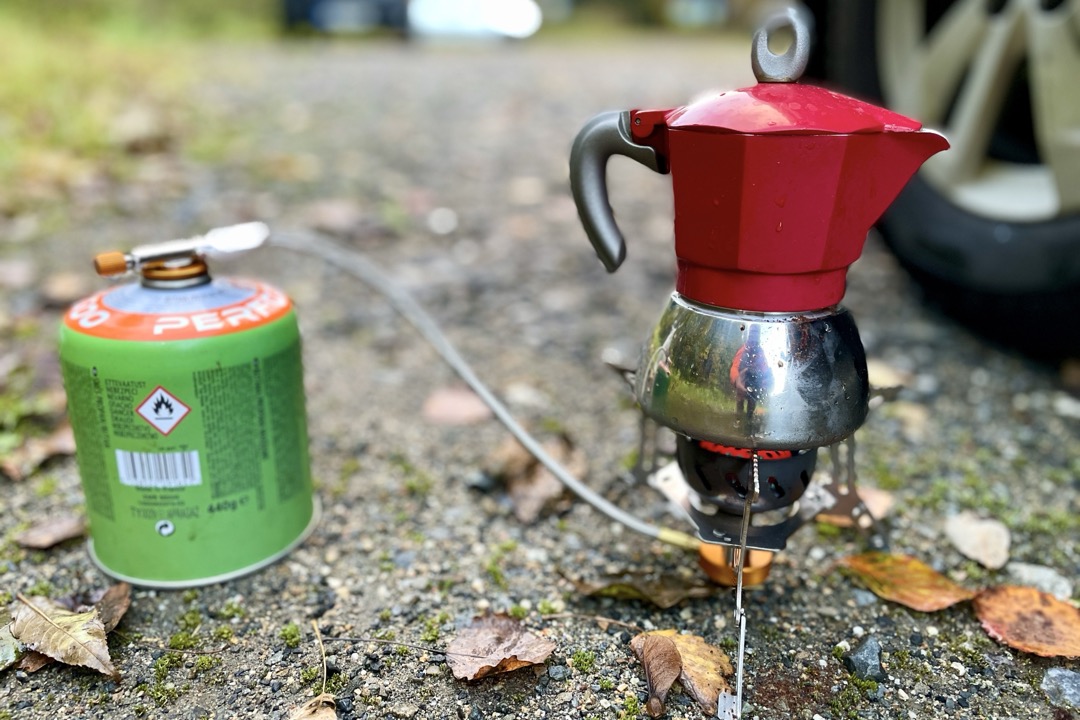
I taste coffee for a living, and the moka pot is the brewer I get asked about with the most confusion attached. People buy one expecting espresso, get something else, and either fall in love with it or quietly put it in a cupboard. So let me set the expectation first, because it changes which pot you should buy: a moka pot does not make espresso. It makes something genuinely its own — a small, intense, syrupy coffee at roughly three to four times the strength of drip, brewed by steam pressure rather than a pump, and it is what Italians actually drink at home rather than the espresso they drink standing at a bar.
The physics are worth understanding because they explain every recommendation below. You seal water in the lower boiler, put ground coffee in the basket above it, and apply heat. As the water heats, the trapped air and steam above it build pressure — about one to one and a half bar in a standard pot, against the nine bar an espresso machine generates — and that pressure forces hot water up through the coffee bed and out into the upper chamber. Everything that makes a moka pot good or bad follows from that single mechanism. The boiler has to heat evenly, or the grounds nearest the hot spot scorch while the rest under-extract. The seal has to hold, or the pressure leaks away and you get a weak trickle. The basket has to be full and level, or water channels straight through and the cup comes out thin and sour. And the pot has to come off the heat the instant it gurgles, because residual heat steams the finished coffee into bitterness within a minute.
For this roundup I judged twelve moka pots on the things that follow from that mechanism — boiler material and how evenly it conducts, whether the base is magnetic enough for an induction hob, how the pressure design behaves, how the pot manages residual heat, and crucially whether the wear parts are replaceable, because a moka pot with a serviceable gasket is a thirty-year purchase and one without is landfill. I spread the picks deliberately across materials, sizes, stove types, and price so that an induction kitchen, a dorm room with no stove, a solo drinker, and a household making four lattes each find a clear answer. Pair whichever you choose with freshly ground beans and a dark enough roast, and if you are new to the method, our step-by-step guide to how to use a moka pot is the fastest way to a good first cup.
Find the Best Moka Pot for Your Kitchen
The right moka pot depends far more on your stove and your serving size than on brand loyalty. Jump to your situation:
- Overall best moka pots
- Best moka pot for Cuban coffee
- Best stainless steel moka pot
- Best aluminum moka pot
- Best electric moka pot
- Best moka pot for induction cooktops
- Best small moka pot, 1 to 3 cup
- Best large moka pot, 9 to 12 cup
- More use cases: camping, budget, lattes
How I Chose and Tested These Moka Pots
Every pot here had to clear the same bar: a verified, currently stocked Amazon listing with a real owner-review base rather than a few dozen ratings, a genuine safety valve, and a construction I would put my own coffee through. I judged them on how evenly the boiler conducts heat, because uneven conduction is the single biggest cause of the scorched, bitter cup people blame on the method rather than the pot. Then on material and what it does to the flavor, on whether the base is genuinely magnetic for induction rather than merely marketed that way, on how well the pot manages the heat left in it when the brew ends, and on whether gaskets and filter plates are standard sizes you can actually buy. I weighted the picks toward mainstream, serviceable designs and against unbranded pots with proprietary dimensions, and I spread them across every stove type and serving size so that nobody has to compromise on the two things that are not negotiable: fitting your hob and filling its basket.
Best Moka Pots Overall
These are the twelve I would recommend without hesitation in 2026, each reviewed once below. The best overall pick leads, because it is the one that suits the most kitchens.
Best Overall: Bialetti Moka Express
The Bialetti Moka Express is the pot the category is named after, and after ninety-odd years it is still the one I hand to somebody buying their first. The case for it is not nostalgia. The octagonal cast aluminum body is a genuinely good piece of thermal engineering: the faceted shape spreads flame heat around the circumference of the boiler rather than letting it pool under the center, so the water rises at an even rate and the coffee bed extracts evenly instead of scorching at the hottest point. Thin, cheap moka pots fail exactly there, and it is why their coffee tastes burnt no matter how carefully you brew.
Two things elevate it beyond the specs. Aluminum is reactive, and over a few months of use a thin layer of coffee oils seasons into the metal, taking the faint metallic edge off the early brews and rounding the cup into the soft, cocoa-heavy body that people mean when they say a moka pot tastes Italian. And every wear part is a commodity: gaskets, filter plates, handles, and even complete boilers are cheap and universally stocked, so a perished seal is a two-dollar repair rather than a reason to replace the pot. That combination is why these routinely outlast the kitchens they were bought for. The honest limits are simple: bare aluminum is not magnetic, so it will not work on induction without an adapter plate, and it must never see detergent or a dishwasher, which will strip the seasoning and pit the metal. If your hob is gas, ceramic, or electric, this is the pot.

Bialetti Moka Express Stovetop Espresso Maker, 6 Cup
by Bialetti
The original and still the best moka pot for most kitchens -- an evenly heating aluminum body that seasons into a rounder cup over time, the deepest owner-review record in home coffee, and spare parts that make it effectively immortal.
Pros
- This is the pot that invented the category in 1933 and it is still the one I hand to a beginner -- the octagonal aluminum body scatters heat evenly around the boiler rather than concentrating it under the center, which is why the extraction comes out smooth and chocolatey instead of scorched at the edges the way it does in thin, cheap pots
- More than 119,000 owner reviews at a 4.6 average is the deepest verified track record of any coffee brewer I have looked at in any category -- when a design has been bought, used daily, and rated at that scale for decades, you are not gambling on whether it works
- Aluminum seasons with use: a thin layer of coffee oils builds into the metal over months, and it genuinely rounds the cup, taking the metallic edge off the first few brews and adding the soft, cocoa-heavy body that people mean when they say a moka pot tastes Italian
- Every wear part is a commodity -- gaskets, filter plates, handles, and full replacement boilers are all cheap and universally stocked, so a perished seal is a two-dollar fix rather than a reason to buy a new pot, and these things routinely last thirty years
Cons
- Bare aluminum is not magnetic, so it will not work on an induction hob without a separate steel adapter plate -- if your kitchen is induction, buy the Moka Induction or the Venus instead and save yourself the disappointment
- Never put it in the dishwasher: detergent strips the seasoning and pits the aluminum, leaving a dull grey pot that makes noticeably harsher coffee. Rinse with hot water only
- The metal handle sits close to the boiler and gets genuinely hot on a gas flame -- keep the flame under the base rather than licking up the sides, and keep a towel nearby
Best Budget: Primula Classic Moka Pot
The Primula Classic is what I point people to when they want to find out whether moka pot coffee is for them before committing real money, and the argument is stronger than it sounds. A moka pot has no motor, no pump, no electronics, and no moving parts — it is a sealed pressure vessel and a basket. The coffee genuinely does not know what you paid for the aluminum around it, so the drink coming out of this pot is the same drink coming out of pots costing three times as much.
What separates it from the truly cheap pots is that the boiler is cast aluminum rather than the thin spun metal used in the no-name tier. Cast aluminum has enough mass to spread heat, so it does not develop the localized hot spot that scorches the first grounds it touches — the defect that makes people conclude they dislike moka coffee when what they dislike is a bad pot. It is built and sold for Cuban cafecito as much as for Italian moka, and the 6-cup size is exactly right for that ritual: enough concentrate to whip a proper sugar espuma and still have coffee to pour over it. Nearly eighteen thousand reviews back it up. The tradeoffs are the ones you would expect: the gasket perishes faster than a Bialetti’s and you should plan on replacing it annually, it is aluminum so induction is out, and the finish is plainer. None of that reaches the cup.

Primula Classic Moka Pot Stovetop Espresso Maker, 6 Cup
by Primula
The best way to find out whether moka pot coffee is for you without spending real money -- identical brewing physics to the icons, genuine cast aluminum rather than tin-thin spun metal, and the deepest review base of any budget pot.
Pros
- It brews the same drink as pots costing three times more, because a moka pot is a pressure vessel with no moving parts -- water boils, steam pressure pushes it up through the grounds, and the coffee does not know what you paid for the aluminum around it
- Cast aluminum rather than the thin spun aluminum used in the cheapest no-name pots, so the boiler heats evenly and does not develop the hot spot that scorches the first grounds it touches and makes a pot taste burnt
- It is explicitly built and marketed for Cuban cafecito as well as Italian moka, and the 6-cup size is the sweet spot for that ritual -- enough concentrate to whip a proper espuma with sugar and still have coffee left to pour over it
- More than 18,000 reviews at a solid average makes it the most proven budget moka pot on Amazon, which matters more in this category than in most because cheap moka pots fail in specific, predictable ways and this one demonstrably does not
Cons
- The gasket is the weak point at this price and will perish faster than a Bialetti's -- budget on replacing it once a year if you brew daily, which is cheap but is a step you have to remember
- Aluminum, so it will not run on an induction hob without an adapter plate
- The finish is plainer than the Bialetti's and the handle is lighter-gauge plastic, so it looks and feels like the value option it is -- which matters not at all to the coffee
Best Upgrade: Bialetti Brikka
The Bialetti Brikka is the only pot in this roundup that produces real crema, and the mechanism is honest engineering rather than a marketing claim. A weighted valve sits on the outlet and holds the brew back until the boiler reaches roughly two bar instead of the one to one and a half a standard pot manages, then releases it in a burst. That pressure differential is enough to emulsify the coffee’s oils into foam, in the same way a pump machine does, and the resulting cup is denser and more syrupy than any standard moka pot can produce.
The crema is not cosmetic, and this is where a taster’s perspective matters. Foam traps volatile aromatics that would otherwise escape, so a Brikka shot smells and tastes more intense in the first seconds. More practically, it survives contact with milk: standard moka coffee tends to vanish into a cappuccino, while a crema-topped Brikka shot holds its own the way espresso does. That is what makes it the upgrade pick despite carrying the lowest rating here at 3.9 stars. Be clear about why that rating is low, because it is not a defect — the weighted valve is genuinely sensitive, and a grind slightly too fine, a boiler filled slightly too full, or heat slightly too high will make it sputter or fail to build pressure at all. It makes two small shots and it demands a consistent burr grind. If you want to fill a basket and walk away, buy the Moka Express and be happier. If you want to chase the shot, nothing else here comes close.

Bialetti Brikka Moka Pot Stovetop Espresso Maker, 2 Cup
by Bialetti
The enthusiast's moka pot -- a weighted pressure valve that builds real crema and a denser, more espresso-like cup than any standard pot, at the cost of a fussier brew that punishes an inconsistent grind.
Pros
- It is the only stovetop pot here that produces genuine crema, and the mechanism is honest engineering rather than marketing: a weighted pressure valve holds the brew back until the boiler reaches roughly two bar, then releases it in a burst that emulsifies the coffee oils into foam the way a real espresso machine does
- That extra pressure also extracts more, so the cup is denser and more syrupy than any standard moka pot can manage -- it is the closest you will get to espresso without a pump machine and a grinder to match
- The crema is not cosmetic. It carries aroma and it survives contact with milk, which is why a Brikka shot makes a far better home cappuccino base than standard moka coffee, which tends to disappear into the foam
- Bialetti build and the same universally available gaskets and filters as the rest of the range
Cons
- The 3.9 average is the lowest rating in this roundup and it is not an accident -- the pressure valve is genuinely fussy, and a grind that is slightly too fine, a boiler filled slightly too full, or heat that is slightly too high will make it sputter or refuse to build pressure at all
- It only makes two small shots, so it is a personal brewer, not a pot for a household
- It demands a specific technique and a consistent grind to be worth its price -- if you want to fill the basket and walk away, buy a Moka Express and be happier
Best Stainless Steel: Bialetti New Venus Induction
The Bialetti New Venus is the pot I recommend to anyone who does not want to think about their moka pot ever again. It is 18/10 stainless steel top to bottom, and that changes both the maintenance and, more interestingly, the coffee. Steel is chemically inert, so there is no seasoning period to endure, no faint metallic note on the first brews, and no risk of the flavor being flattened by a reactive surface. The cup comes out cleaner and brighter, with the acidity and the distinct origin character of the bean coming through instead of being rounded into generic cocoa — which makes it the right pot if you drink anything more interesting than a dark supermarket blend.
Practically, it removes every one of aluminum’s anxieties. You can use soap. You can scrub it. It will not pit, oxidize, or go chalky grey if somebody leaves it wet or puts it through a dishwasher cycle. And the magnetic steel base means it works on induction, gas, electric, and ceramic without an adapter, so it is the only pot here you can buy without first checking what your stove is. Over thirty-one thousand reviews make it far and away the most proven stainless moka pot on the market, in a subcategory otherwise dominated by unbranded pots with a few hundred ratings. One technique note matters: steel holds heat longer than aluminum, so pull it off the burner the moment it gurgles and run the base under cold water, or the residual heat will steam the last of the extraction into bitterness.

Bialetti New Venus Induction Stainless Steel Stovetop Coffee Maker, 6 Cup
by Bialetti
The best stainless steel moka pot and the safest single choice if you do not know what your stove is -- inert steel that never needs seasoning, works on induction out of the box, and has more owner reviews than every rival stainless pot combined.
Pros
- 18/10 stainless steel top to bottom, which changes what the pot tastes like as much as how it looks -- steel is chemically inert, so there is no faint metallic note on the first brews and no seasoning period to sit through, and a light roast keeps its florals instead of being flattened into cocoa
- The magnetic steel base means it works on induction, gas, electric, and ceramic without an adapter, so it is the one moka pot you can buy without first checking what your stove is
- Steel tolerates the abuse aluminum will not: you can scrub it, you can use soap, and unlike an aluminum pot it will not pit or go chalky if someone in your house puts it through the dishwasher by accident
- Over 31,000 reviews make this by far the most proven stainless moka pot available, in a subcategory otherwise full of unbranded pots with a few hundred ratings
Cons
- Steel has a higher heat capacity than aluminum and holds onto that heat, so it runs hotter for longer at the end of the brew -- pull it off the burner the moment it gurgles and cool the base under the tap, or you will steam the last of the extraction into bitterness
- It costs meaningfully more than the aluminum Moka Express for the same volume of coffee
- Purists genuinely prefer the aluminum cup, and they are not imagining it -- steel gives a cleaner, brighter, more separated brew, while aluminum gives the rounder, heavier, more nostalgic one. Neither is wrong, but know which you are buying
Best for Induction: Bialetti Moka Induction
The Bialetti Moka Induction exists to solve a specific and increasingly common problem: you grew up on aluminum moka coffee, you moved into a kitchen with an induction hob, and the all-steel pots taste subtly wrong to you. Bialetti’s answer is a bi-layer boiler with a magnetic steel exterior that the hob can see, bonded to an interior and an upper chamber made of the same aluminum as a Moka Express. The result is induction compatibility without giving up the round, heavy, traditional cup, and nobody else does this as well.
There is a real brewing advantage hiding in here too. Induction heats the base directly and responds instantly to a change in power, which no gas flame or electric coil can match. That means you can drop the heat the moment the pot begins to gurgle and stop the extraction precisely where you want it, rather than lifting a hot pot off a burner that is still radiating. For a method whose entire failure mode is over-extraction in the final seconds, that responsiveness is worth having. The costs are honest: it is the most expensive pot here for its size, and you are paying entirely for that bonded boiler. The two-metal construction also cannot be serviced the way a single-material pot can — gaskets are replaceable, the boiler is not. And check your hob’s minimum pan detection diameter before buying a small size, because a narrow moka pot base can fall below it and the ring simply will not fire.

Bialetti Moka Induction Stovetop Espresso Maker, 6 Cup
by Bialetti
The moka pot for an induction kitchen that refuses to compromise on flavor -- a magnetic steel boiler bonded to a classic aluminum upper chamber, so you get induction compatibility and the traditional round cup at the same time.
Pros
- It solves the induction problem without giving up the aluminum cup, which is the trick nobody else pulls off: the boiler is a bi-layer with a magnetic steel exterior so the hob can see it, while the upper chamber the coffee actually passes through is the same aluminum as a Moka Express
- That construction means an induction kitchen can have the traditional round, cocoa-heavy moka flavor rather than the brighter, cleaner profile an all-steel pot gives -- if you grew up on this coffee and moved into a flat with an induction hob, this is the pot that gives it back
- Induction heats the base directly and responds instantly when you turn it down, which is a genuine brewing advantage: you can drop the power the second it starts to gurgle and stop the extraction exactly where you want it
- More than 17,000 reviews behind a design Bialetti themselves introduced as the first induction Moka, so it is a mature product rather than a first-generation experiment
Cons
- It is the most expensive pot in this roundup for its size, and you are paying entirely for the bi-layer boiler
- The two-metal construction is not something you can service the way you can a single-material pot -- gaskets are replaceable, the boiler is not
- On a very small induction ring the pot's base can fall below the hob's minimum detection diameter and the burner will refuse to fire; check your ring's minimum pan size before you buy
Best Everyday Value: GROSCHE Milano
The GROSCHE Milano is the pot I hand to a busy kitchen, and the reason is a detail most reviews treat as trivial. (If you are brewing for two or three people rather than one, skip to the 9-cup version of this same pot below.) Traditional moka pots mount a metal or thin phenolic handle a couple of inches from an open gas flame, and it gets genuinely hot. The Milano’s oversized soft-touch handle with a burn guard fixes that completely, which matters enormously if the person making coffee in your house is half-awake, in a hurry, or is not you.
The body is food-grade anodized aluminum rather than bare aluminum, and that is a meaningful upgrade at this price. Anodizing seals the surface, so the pot resists the pitting and chalky oxidation that ruins a neglected bare-aluminum pot, while still giving you aluminum’s fast, even conduction and its rounder flavor profile. The quiet detail that earns it a place, though, is that GROSCHE deliberately uses a standard 6-cup gasket size — which means generic replacement seals from any brand will fit it, and that is precisely what separates a pot you keep for a decade from one that becomes landfill the first time the seal perishes. Over twenty-five thousand reviews and a wide range of colors and sizes round it out. The limits: it is still aluminum, so induction is out despite the listing’s optimism about glass tops, and it costs close to a Moka Express without Bialetti’s thirty-year parts ecosystem behind it.
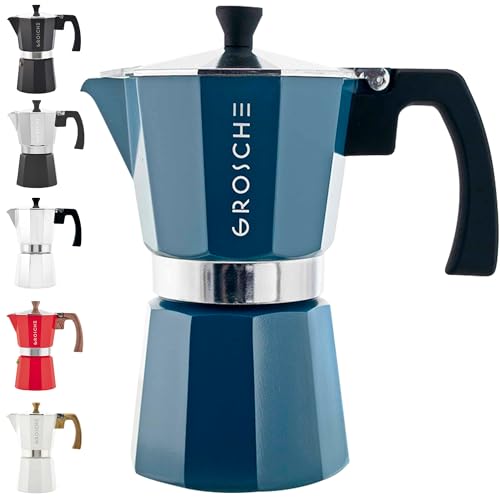
GROSCHE Milano Stovetop Espresso Maker, 6 Cup
by GROSCHE
The most livable traditional moka pot here -- a genuinely cool, guarded handle, a sealed anodized body that shrugs off neglect, and a standard gasket size that keeps it serviceable for years.
Pros
- The soft-touch handle with a burn guard fixes the single most common complaint about traditional moka pots -- a metal handle mounted inches from a gas flame -- and it is the reason this is the pot I recommend to households where somebody else makes the coffee
- Food-grade anodized aluminum rather than bare aluminum: the anodizing seals the surface, so it resists the pitting and chalky oxidation that ruins a neglected bare-aluminum pot, while still giving you the aluminum flavor profile
- It uses a standard 6-cup gasket size, which sounds like a footnote and is actually the difference between a pot you keep for a decade and one you bin -- generic replacement seals from any brand will fit
- Over 25,000 reviews and a wide range of colors and sizes, so it is a proven design that does not have to look like a piece of industrial equipment on your counter
Cons
- Anodized aluminum is still aluminum, so it is not induction-compatible without an adapter plate -- the listing notes it will heat very slowly on glass-top induction, which in practice means it will not work
- It costs close to a Bialetti Moka Express without the Bialetti's thirty-year parts ecosystem behind it
- The colored anodized finish will scuff if you are rough with it in a crowded sink
Best Electric: IMUSA Electric Espresso Maker
The IMUSA electric moka pot removes the single thing that makes people give up on the method: standing over a burner trying to judge, by sound, the exact second to cut the heat. Its detachable base heats to a controlled temperature and switches itself off, which means the extraction stops before the pot starts pushing steam through a spent puck. That is not a convenience feature — over-extraction in the last few seconds is the most common way a moka pot brew goes bitter, and automating it away genuinely improves the average cup for most people.
It earns a 4.6 average across more than twenty-five hundred reviews, which puts it at the top of the electric moka pots I could find and is unusual in a category where ratings are typically mediocre. The reason, I think, is the boiler: this is cast aluminum rather than the thin stamped metal most electric moka pots use, so it conducts evenly instead of scorching. It brews six cups or three from the same body, so a solo morning and a pot for guests come from one appliance, and the cool-touch handle and visual brewing window mean you can watch the coffee rise without touching anything hot. The honest tradeoffs are inherent to the format: you surrender the moment-to-moment control an attentive stovetop brewer has, it needs counter space and an outlet, and the heating base is a single point of failure in a design that otherwise has nothing to break.

IMUSA Electric Espresso Maker, 6 or 3 Cup
by IMUSA
The best electric moka pot -- an auto-shutoff base that stops the extraction before it turns bitter, a real cast aluminum boiler, and the highest owner rating of any electric moka pot on Amazon.
Pros
- It removes the one thing that makes people give up on moka pots: standing over a burner guessing when to cut the heat. The detachable base heats to a controlled temperature and switches itself off, so the extraction stops before the pot starts pushing steam and bitterness through the puck
- A 4.6 average across more than 2,500 reviews puts it at the top of the electric moka pots I could find on Amazon, in a category where the ratings are usually mediocre
- It brews 6 or 3 cups from the same body, so a solo morning and a pot for guests come from one appliance rather than two
- A cast aluminum boiler rather than the thin stamped metal most electric moka pots use, and a genuinely cool-touch handle with a visual brewing window so you can see the coffee rise
Cons
- You give up the control a stovetop gives you -- the base decides the heat curve, so you cannot ease off the power mid-brew the way an attentive stovetop brewer can
- It is a corded countertop appliance, which means counter space and an outlet, and it is the wrong tool for a camping trip or a small kitchen with no room to spare
- The base is the failure point on any electric moka pot: when the element goes, the pot goes with it, unlike a stovetop pot where nothing can break
Best Budget Electric: LAOION Electric Moka Pot
The LAOION is the cheapest self-regulating electric moka pot I would actually put my name to, and it has one feature I wish every pot here had: a transparent upper chamber. That sounds decorative and it is genuinely useful. The single most reliable visual cue in moka brewing is the moment the stream turns from dark and syrupy to pale, foamy, and blond — that is the point where you have stopped extracting coffee and started extracting bitterness. On every other pot in this roundup you have to infer that moment from the gurgling sound. Here you simply watch it happen.
It backs that up with two independent auto-shutoffs, one triggered at boiling point and one when the pot is lifted from the base, which is more protection than most electric moka pots offer and is presumably why it holds a 4.6 average across more than thirty-five hundred reviews. The cordless detachable base and small footprint make it genuinely workable in a dorm room, an office, or a hotel where a stove is not an option. Two things to weigh honestly: the upper chamber is BPA-free heat-rated plastic rather than metal or glass, and while that is safe, hot coffee sitting against plastic is not what I would choose for a pot I intended to brew in daily for a decade. The aluminum boiler is also thinner than the IMUSA’s cast one, so it heats faster and slightly less evenly.

LAOION Electric Moka Pot Cuban Coffee Maker, 6 or 3 Cup
by LAOION
The cheapest self-regulating electric moka pot worth owning -- a see-through upper chamber that shows you exactly when to stop, twin auto-shutoffs, and a cordless base that works anywhere with an outlet.
Pros
- A transparent upper chamber lets you watch the coffee rise, which is genuinely useful rather than decorative -- the moment the stream turns from dark and syrupy to pale and foamy is the moment extraction has gone too far, and on every other pot here you have to judge that by sound
- Two independent auto-shutoffs, one when the boiling point is reached and one when the pot is lifted off the base, which is more protection than most electric moka pots offer and the reason it earns a 4.6 across more than 3,500 reviews
- Genuinely portable for an electric: the cordless detachable base and the small footprint make it workable in a dorm, an office, or a hotel room where a stove is not an option
- It brews 6 or 3 cups, and at this price it is the cheapest way to get a self-regulating electric brew rather than standing over a burner
Cons
- The upper chamber is BPA-free plastic rather than metal or glass, and while it is heat-rated, hot coffee sitting against plastic is not what I would choose for a pot I brewed in every day for a decade
- The food-grade aluminum boiler is thinner than the IMUSA electric's cast aluminum, so it heats faster and less evenly
- As with any electric moka pot, the base is a single point of failure, and LAOION is not a brand with a long service history
Best Large Batch: Easyworkz Diego 12-Cup
The Easyworkz Diego fills a gap that is genuinely hard to fill: a large-capacity moka pot in stainless steel. Most 9- and 12-cup pots are aluminum, and most stainless pots stop at six cups, so if you want both volume and steel — which is to say, if you have an induction hob and a household to caffeinate — your options narrow quickly. This is a heavy-gauge magnetic 18/8 body holding a genuine 17.5 ounces, and it is the only pot in this roundup that is actually dishwasher safe.
The feature that makes it a daily driver rather than a weekend pot is the included reducer insert. A moka pot cannot brew a partial batch — the basket must be filled level or the water channels through and the cup comes out thin and sour — so an oversized pot is normally useless for a single cup. The reducer changes the effective basket volume so you can brew small in a big pot and still extract properly, which quietly solves the biggest problem with buying for your maximum rather than your average. The insulated hollow lid and handle also matter more here than on a small pot, because a full 17.5-ounce steel pot is heavy and hot. Two cautions: a full 12-cup basket needs around forty grams of coffee, so budget for that, and a large boiler takes noticeably longer to come up to pressure, which is exactly where over-extraction creeps in. Keep the heat moderate and stay with it.
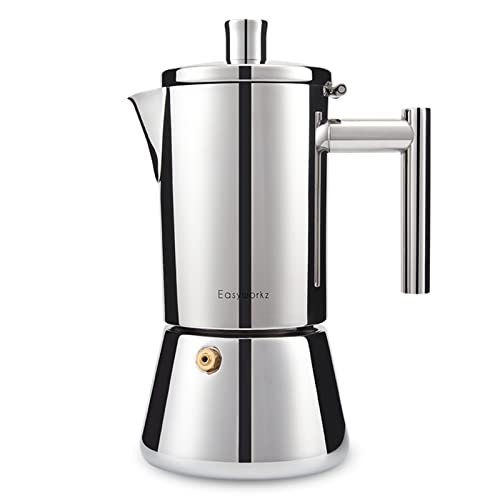
Easyworkz Diego Stainless Steel Stovetop Espresso Maker, 12 Cup
by Easyworkz
The best large moka pot -- a real 12-cup stainless body that works on induction, comes with a reducer so smaller batches still extract properly, and is the only pot here you can genuinely put in the dishwasher.
Pros
- A genuine 12-cup, 17.5-ounce capacity in a heavy-gauge magnetic 18/8 stainless body, which is the combination that is hard to find -- most large moka pots are aluminum, and most stainless pots stop at six cups
- It ships with a reducer insert, so you can brew a smaller batch in the same pot without the half-full basket that ruins extraction in an oversized moka pot -- this is the detail that makes a big pot usable every day rather than only on weekends
- The magnetic base means it works on induction as well as gas and electric, and the mirror-polished 18/8 steel is dishwasher safe, which no aluminum pot in this roundup can claim
- The insulated hollow lid and handle stay cool enough to pour a heavy full pot safely, which matters much more at 17.5 ounces than it does at 9
Cons
- A 12-cup pot needs roughly 40 grams of coffee to fill its basket properly, and a moka pot brews badly with a partly filled basket -- so buy this only if you genuinely brew large batches or will use the reducer
- It takes noticeably longer to come up to pressure than a 6-cup pot, and a long slow heat-up is where over-extraction creeps in, so keep the heat moderate and stay with it
- Easyworkz is a value brand rather than an heirloom one, and the parts ecosystem is nothing like Bialetti's
Best for a Household: GROSCHE Milano 9-Cup
If you want the aluminum cup at household scale, this is the Milano I recommended above scaled up: the same food-grade anodized body, the same soft-touch handle with its burn guard, holding just over fifteen ounces instead of nine. For a house of two or three that is one brew instead of two. The anodizing earns its place more on this pot than on the small one, because a big boiler is the one nobody dries properly, and bare aluminum left damp is what goes chalky and pitted.
There is a second, less obvious reason to want this size, and it is the one I would actually buy it for: milk drinks. A latte or a cappuccino needs a strong, concentrated pour that will not disappear into steamed milk, and a 6-cup pot cannot supply enough of it for more than a single drink. Fifteen ounces of moka concentrate is the right base for a round of milk coffees, and it pairs naturally with a milk frother for a genuinely good home cappuccino at a fraction of what an espresso setup costs. Aluminum also scales better than steel does — it heats faster and more evenly as boiler volume grows, which matters more the bigger the pot gets. GROSCHE sizes the gasket to the 9-cup standard here too, so seals stay a commodity rather than a hunt. The caveats are the size ones: a 9-cup basket needs roughly thirty grams of coffee and brews badly half-filled, so this is the wrong pot if you usually make one cup, and it is heavy when full.

GROSCHE Milano Stovetop Espresso Maker, 9 Cup
by GROSCHE
The household-size aluminum moka pot -- fifteen ounces of concentrate, which is the sensible way to make enough for more than one latte, with a sealed anodized body and a standard gasket size that keeps it serviceable for decades.
Pros
- It is the Milano scaled to household size, which means the same food-grade anodized aluminum body as the 6-cup -- anodizing seals the surface against the pitting and chalky oxidation that ruins a neglected bare-aluminum pot, and that matters more on a big pot because a large boiler is the one you are least likely to dry thoroughly after every brew
- Fifteen ounces of moka concentrate is a real base for milk drinks: a latte or a cappuccino needs a strong pour that will not vanish into the milk, and a 6-cup pot simply cannot supply enough of it for more than one drink
- GROSCHE uses a standard 9-cup gasket size rather than a proprietary one, so generic replacement seals from any brand will fit -- which is exactly what decides whether a pot lasts three years or thirty, and it is the thing unbranded large pots get wrong
- The soft-touch handle has a burn guard built into it, and that is a bigger deal at this size than at 6 cups: a full 15-ounce aluminum pot is heavy and hot, and a bare metal handle on a gas flame is where people actually get burned
Cons
- A 9-cup basket needs roughly 30 grams of coffee to fill properly, and a half-filled basket brews thin, weak, channelled coffee -- so this is the wrong pot if you usually make one cup
- Aluminum, so induction is effectively out: the body is not magnetic, and the listing's own note that it works on glass tops but heats very slowly is an admission rather than a feature
- The same rinse-only, no-detergent cleaning rules as any aluminum pot apply, and a bigger boiler simply takes longer to dry properly
Best Cheap Stainless: IMUSA Stainless Steel Espresso Coffeemaker
This pot should not exist at its price. Stainless steel moka pots normally start at three times what this one costs, and steel is the material that removes every one of aluminum’s anxieties — no seasoning period, no metallic first brews, no oxidation if somebody leaves it wet in the sink overnight, and no panic if it meets dish soap. That makes it exactly the right pot to keep somewhere it will not be babied: an office kitchen, a rental, a holiday house, a second home.
The build is thoughtful for the money. The flip-up top and side pour spout let you serve without unscrewing anything hot, and the cool-touch handle and knob keep your fingers off the metal entirely. A 4.4-star average puts it level with pots here costing twice as much, which at this price tells you the fundamentals are right rather than merely adequate. Two things to know before you buy. The listing specifies gas, ceramic, and electric stovetops and pointedly does not claim induction, so treat it as a non-induction pot — not all stainless grades are magnetic, and it is not worth the gamble. And the gauge is thinner than the Bialetti Venus’s, so it dents and water-spots more easily and is far less proven at around thirteen hundred reviews. This is the value bet in the roundup, and it is a good one.

IMUSA Stainless Steel Stovetop Espresso Coffeemaker, 6 Cup
by IMUSA
An absurd amount of moka pot for the money -- real stainless steel with no seasoning ritual and no oxidation worries, at a price below most aluminum pots, and the right choice for an office or a rental kitchen.
Pros
- It is the cheapest pot in this roundup by a wide margin and it is stainless steel, which is a combination that should not exist -- steel pots normally start at three times this price
- Steel means no seasoning period, no metallic first brews, no oxidation if you leave it wet, and no anxiety about soap, so it is the pot to keep at an office, a rental, or a holiday house where nobody will baby it
- The flip-up top and side pour spout make it genuinely easy to serve from without unscrewing anything hot, and the cool-touch handle and knob keep your fingers off the metal
- A 4.4 average puts it level with pots costing twice as much, which at this price tells you the fundamentals are right
Cons
- The listing specifies gas, ceramic, and electric stovetops and does not claim induction, so treat it as a non-induction pot -- the steel here is not necessarily the magnetic grade
- The gauge is thinner than the Bialetti Venus and the finish is more prone to water spotting and dents
- At around 1,300 reviews it is far less proven than the 25,000-plus-review pots above it, so it is the value gamble rather than the sure thing
Best for One: Bialetti Mini Express
The Mini Express solves a problem that afflicts every solo moka drinker: a 6-cup pot brewed for one person means a half-filled basket, water channelling through the gap, and a thin, sour cup. A moka pot’s ratio is fixed by its geometry, so the only way to brew well for one is to own a pot sized for one. This is a 2-cup body whose basket you can genuinely fill level for a single serving.
The design detail that makes it more than a small pot, though, is that it brews directly into the two included glasses rather than into an upper chamber. That is not a gimmick. Coffee sitting in a hot metal chamber keeps cooking on residual heat, which is why the last of a moka brew often tastes flatter and more bitter than the first — and it is the failure mode a moka pot is most prone to. Coffee that lands in a glass stops extracting immediately, so the whole serving tastes the way the first drops did. The cups rest on an aluminum warming plate that heats along with the pot, so the coffee lands preheated instead of dropping ten degrees on contact. The costs are real: two 1.4-ounce cups is genuinely all it makes, a second person means a second brew, and it costs more than several larger pots here because you are paying for the design and the matched glasses. As a one-person daily ritual, it is lovely.

Bialetti Mini Express Moka Set, 2 Cup with 2 Espresso Glasses
by Bialetti
The best small moka pot for a solo drinker -- it brews straight into two preheated glasses so nothing stews in the pot, and a 2-cup basket you can actually fill properly for one serving.
Pros
- It brews directly into the two included cups rather than into an upper chamber, which is not a gimmick -- coffee that never sits in a hot metal pot stops cooking the moment it lands, so the last drops taste the same as the first instead of stewing while you fetch a mug
- The cups rest on an aluminum warming plate that heats with the pot, so the coffee lands in a preheated vessel and does not lose ten degrees the instant it is poured
- A 2-cup body is the right size for one person: you can fill the basket properly for a single serving, where using a 6-cup pot for one cup means a half-filled basket and a thin, under-extracted brew
- It is genuinely charming on a counter and it makes a good gift, which is a legitimate reason to buy a coffee pot
Cons
- Two 1.4-ounce cups is all it makes, so it is strictly a one-person brewer and a second person means a second brew
- It costs more than several larger pots here, because you are paying for the design and the matched glasses as much as the coffee
- Aluminum, so no induction without an adapter, and the same rinse-only cleaning rules as the Moka Express
Best Moka Pot for Cuban Coffee
Cuban cafecito is a moka pot drink first and foremost, and the requirements are specific: aluminum for the traditional round flavor, a 6-cup size so there is enough concentrate to whip a proper sugar espuma with the first dark drops and still have coffee to pour over it, and a very dark espresso roast in the basket. These three are the pots I would use.
| Product | Price | Buy |
|---|---|---|
| Primula Classic Moka Pot Stovetop Espresso Maker, 6 CupBest for Cuban cafecito Cast aluminum built and sold for cafecito, 6 cups of concentrate for a proper espuma, at the lowest price of any proven pot here | $24.99 | View on Amazon |
| GROSCHE Milano Stovetop Espresso Maker, 6 CupBest handle for daily cafecito The same aluminum cup with a guarded soft-touch handle and a standard gasket size, so it survives a busy household kitchen | $44.99 | View on Amazon |
| IMUSA Electric Espresso Maker, 6 or 3 CupBest electric for cafecito Brews 6 or 3 cups with an auto-shutoff base, so the concentrate never over-extracts while you are whipping the sugar | $39.99 | View on Amazon |
The technique matters as much as the pot. Put a few teaspoons of sugar in a cup, catch the very first thick, syrupy drops from the spout, and whip them hard until the mixture turns pale and creamy — then pour the rest of the brew over it. Use a properly dark roast; a bright single-origin will fight the sugar rather than carry it. Our guide to coffee beans for espresso covers the roasts that work.
Best Stainless Steel Moka Pot
Stainless steel is the choice when you want a pot that never needs seasoning, tolerates soap and neglect, works on induction if the grade is magnetic, and gives you a cleaner, brighter cup that flatters a lighter roast. These three cover the range from the proven benchmark to the value bet.
| Product | Price | Buy |
|---|---|---|
| Bialetti New Venus Induction Stainless Steel Stovetop Coffee Maker, 6 CupBest stainless overall 18/10 steel from Bialetti with more owner reviews than every rival stainless pot combined, and it works on every hob type | $45.52 | View on Amazon |
| Easyworkz Diego Stainless Steel Stovetop Espresso Maker, 12 CupBest large stainless A genuine 12-cup magnetic 18/8 body that is the only dishwasher-safe pot here, and it ships with a reducer for small batches | $64.99 | View on Amazon |
| IMUSA Stainless Steel Stovetop Espresso Coffeemaker, 6 CupBest cheap stainless Real stainless at a price below most aluminum pots, ideal for an office or rental where nobody will baby it | $17.99 | View on Amazon |
Best Aluminum Moka Pot
Aluminum conducts heat faster and more evenly than steel, and because it is reactive it seasons over months into the soft, heavy, cocoa-forward cup that defines traditional moka coffee. The tradeoffs are non-negotiable: rinse only, no detergent, never a dishwasher, and no induction hob without an adapter plate.
| Product | Price | Buy |
|---|---|---|
| Bialetti Moka Express Stovetop Espresso Maker, 6 CupBest aluminum overall The original octagonal cast aluminum body that spreads flame heat evenly, seasons into a rounder cup, and has spare parts forever | $51.99 | View on Amazon |
| GROSCHE Milano Stovetop Espresso Maker, 6 CupBest aluminum for a household Sealed anodized aluminum that resists pitting, with a guarded cool handle and a standard 6-cup gasket | $44.99 | View on Amazon |
| Primula Classic Moka Pot Stovetop Espresso Maker, 6 CupBest budget aluminum Cast rather than spun aluminum at the lowest price here, so it heats evenly instead of scorching the first grounds it touches | $24.99 | View on Amazon |
Best Electric Moka Pot
An electric moka pot is the right answer in two situations: you have no stove, or you want the pot to decide when the brew is finished instead of standing over a burner listening for the gurgle. Both of these have auto-shutoff bases, which is the feature that actually protects the cup.
| Product | Price | Buy |
|---|---|---|
| IMUSA Electric Espresso Maker, 6 or 3 CupBest electric overall A cast aluminum boiler and an auto-shutoff base, with the highest owner rating of any electric moka pot on Amazon | $39.99 | View on Amazon |
| LAOION Electric Moka Pot Cuban Coffee Maker, 6 or 3 CupBest budget electric A see-through upper chamber that shows you the exact second to stop, plus twin auto-shutoffs, for meaningfully less | $30.59 | View on Amazon |
Neither is the pot to buy if you enjoy the ritual of managing the heat yourself — a stovetop pot gives you far more control over the final seconds of extraction. But for a dorm, an office, or anyone who has ruined one too many brews by walking away, an electric pot makes better coffee than an unattended stovetop one ever will.
Best Moka Pot for Induction Cooktops
Induction hobs heat by inducing a current in ferrous metal, and bare aluminum is not magnetic — put a classic Moka Express on an induction ring and nothing at all happens. You need either a stainless body or a bonded steel boiler. These three genuinely work.
| Product | Price | Buy |
|---|---|---|
| Bialetti Moka Induction Stovetop Espresso Maker, 6 CupBest for induction with the classic taste A magnetic steel boiler bonded to an aluminum upper chamber, the only way to get induction and the traditional round cup at once | $68.33 | View on Amazon |
| Bialetti New Venus Induction Stainless Steel Stovetop Coffee Maker, 6 CupBest all-steel for induction All 18/10 stainless, works on every hob without an adapter, and the most proven induction-safe moka pot by review count | $45.52 | View on Amazon |
| Easyworkz Diego Stainless Steel Stovetop Espresso Maker, 12 CupBest large pot for induction A heavy magnetic 18/8 base at 12-cup capacity, for an induction kitchen with a household to caffeinate | $64.99 | View on Amazon |
An adapter plate is the fallback if you already own an aluminum pot you love, but it is a poor purchase reason: it inserts a slow, uneven layer between the hob and the boiler and throws away most of induction’s efficiency and responsiveness. One thing to check first, whichever you buy: small moka pots can have a base narrower than your ring’s minimum detection diameter, in which case the hob will refuse to fire.
Best Small Moka Pot (1 to 3 Cup)
Buying small is not a compromise, it is the correct move for a single drinker — because a moka pot’s ratio is set by its geometry and a half-filled basket brews thin, channelled, sour coffee no matter how good the pot is. Buy for your usual serving, not your maximum. Our free moka pot ratio calculator shows what each size actually holds and what it delivers into the cup, which is roughly a third less than the number on the box.
| Product | Price | Buy |
|---|---|---|
| Bialetti Mini Express Moka Set, 2 Cup with 2 Espresso GlassesBest 2-cup for one Brews straight into two preheated glasses so nothing stews in the pot, with a basket you can genuinely fill for one serving | $57.16 | View on Amazon |
| Bialetti Brikka Moka Pot Stovetop Espresso Maker, 2 CupBest small pot for crema Two shots with real crema from its weighted pressure valve, for a solo drinker who wants the most espresso-like cup here | $40.36 | View on Amazon |
| IMUSA Electric Espresso Maker, 6 or 3 CupBest small pot with a shutoff Drops to a 3-cup basket when you only want one or two, and shuts itself off before the small batch over-extracts | $39.99 | View on Amazon |
Best Large Moka Pot (9 to 12 Cup)
Large pots are for households and for milk drinks, where you need enough concentrate that it will not vanish into steamed milk. The same rule applies in reverse, though: a 12-cup basket needs roughly forty grams of coffee and brews badly when partly filled, so buy this size only if you will genuinely use it or the pot ships with a reducer.
| Product | Price | Buy |
|---|---|---|
| GROSCHE Milano Stovetop Espresso Maker, 9 CupBest 9-cup aluminum Just over fifteen ounces of anodized-aluminum moka concentrate, the right base for a round of milk drinks | $54.99 | View on Amazon |
| Easyworkz Diego Stainless Steel Stovetop Espresso Maker, 12 CupBest 12-cup, induction-safe steel A 17.5-ounce magnetic stainless body with a reducer insert, so the same pot brews small batches properly too | $64.99 | View on Amazon |
More Moka Pot Use Cases
A few situations do not need a whole section but do change which pot is right. Here are the best picks on this list for each.
| Product | Price | Buy |
|---|---|---|
| GROSCHE Milano Stovetop Espresso Maker, 6 CupBest moka pot for camping Explicitly rated for propane camp stoves, with a guarded handle and a sealed anodized body that survives a pack | $44.99 | View on Amazon |
| IMUSA Stainless Steel Stovetop Espresso Coffeemaker, 6 CupBest budget moka pot Stainless steel at the lowest price in this roundup, with no seasoning ritual and nothing to ruin if it gets neglected | $17.99 | View on Amazon |
| GROSCHE Milano Stovetop Espresso Maker, 9 CupBest moka pot for lattes Fifteen ounces of concentrate is enough for a round of milk drinks, where a 6-cup pot vanishes into the milk | $54.99 | View on Amazon |
| Bialetti Brikka Moka Pot Stovetop Espresso Maker, 2 CupBest moka pot for espresso-style shots The weighted valve builds roughly two bar and real crema, which is as close to an espresso shot as a stovetop pot gets | $40.36 | View on Amazon |
Buyer's Guide
A moka pot is the simplest brewer in this house -- a boiler, a basket, a filter plate, and a gasket, with nothing to break and nothing to program. That simplicity means the differences between pots are few but they matter enormously, because each one changes either what the coffee tastes like or whether the pot will work on your stove at all. These are the six things I actually weigh, in the order they should decide your purchase.
Stove Compatibility: the question that disqualifies half the market
Settle this before anything else, because it is the difference between a pot that works and an ornament. Induction hobs heat by inducing a current in ferrous metal, and the classic moka pot is bare aluminum, which is not magnetic -- put a Moka Express on an induction ring and absolutely nothing happens. If your kitchen is induction, your real list is stainless steel pots like the Bialetti New Venus and the Easyworkz Diego, or hybrid steel-boiler designs like the Bialetti Moka Induction. A steel adapter plate will rescue an aluminum pot you already own, but it inserts a slow, uneven layer between the burner and the boiler and wastes most of the efficiency you bought induction for. Gas, ceramic, and traditional electric coils take anything. And if you have no stove at all -- a dorm, an office, a hotel -- an electric moka pot with its own base is the whole answer.
Material: aluminum versus stainless, and what each does to the cup
This is the factor that changes the coffee, not just the pot. Aluminum conducts heat faster and spreads it more evenly around the boiler, and critically it is reactive: months of use build a seasoned layer of coffee oils into the metal that genuinely softens the cup, producing the round, heavy, cocoa-forward brew people mean when they say a moka pot tastes traditional. The price is care -- rinse only, no detergent, never a dishwasher -- and no induction. Stainless steel is inert, so there is no seasoning period, no metallic first brews, and no way to ruin it with soap. The cup it makes is cleaner, brighter, and more separated, which flatters a lighter or single-origin roast that aluminum would flatten. Neither is better in the abstract. Match it to what you drink.
Size: fill the basket or ruin the coffee
Moka pot sizes are quoted in espresso cups of roughly 1.5 to 2 ounces, not mugs, so a 6-cup pot makes about 9 ounces of concentrate -- two or three small servings, or one respectable mug's worth cut with water. The rule that people get wrong is that a moka pot cannot brew a partial batch. The basket must be filled level and the boiler filled to the safety valve, because the geometry of the pot sets the ratio; brew one cup in a 12-cup pot with a half-empty basket and the water channels straight through, giving you a thin, sour, under-extracted brew. So buy for your usual serving, not your maximum. One drinker wants a 1 to 3 cup pot, a couple wants 6, a household or anyone making milk drinks wants 9 or 12 -- and if you need both, look for a pot that ships with a reducer insert, like the Easyworkz Diego.
Pressure design: standard valve versus a Brikka-style weighted valve
Every moka pot works the same way -- steam pressure in the sealed lower boiler pushes water up through the coffee bed -- and a standard pot reaches roughly one to one and a half bar, which is enough to extract hard but not enough to emulsify the oils into crema. The Bialetti Brikka adds a weighted valve on the outlet that holds the brew back until the boiler reaches about two bar and then releases it in a burst, and that burst does produce genuine crema and a noticeably denser, more syrupy cup. It is the only pot here that gets meaningfully closer to espresso. The tradeoff is honest and it shows in its rating: the valve is sensitive to grind, dose, and heat, so it will sulk if your grind is inconsistent. Standard valve if you want reliability, weighted valve if you want to chase the shot.
Handle, spout, and heat management
This sounds like a comfort factor and it is really a safety and consistency one. A traditional moka pot mounts a metal or thin phenolic handle inches from an open gas flame, and it gets hot; the GROSCHE Milano's soft-touch handle with a burn guard and the IMUSA pots' cool-touch handles are meaningful upgrades if anyone in your house is less than careful. Heat management matters just as much to the coffee: the last thing you want is the pot sitting on a burner after the brew finishes, because the residual heat steams the coffee in the upper chamber and turns it bitter within a minute. That is the whole argument for an electric pot with an auto-shutoff base, and the reason the Bialetti Mini Express, which brews straight into two cups, produces such a clean-tasting final drop -- the coffee simply is not sitting on the metal.
Serviceability: gaskets, filter plates, and the thirty-year pot
A moka pot has exactly two wear parts, the rubber gasket and the perforated filter plate, and whether replacements are easy to buy decides whether you own this pot for three years or thirty. The gasket hardens and cracks from heat cycling and needs replacing roughly annually with daily use -- the tell is steam escaping the seam, a slow brew, or a weak trickle, all symptoms of pressure leaking instead of pushing through the grounds. Bialetti's sizes are the de facto standard and GROSCHE deliberately uses standard 6-cup seals, so generic replacements from any brand will fit; unbranded pots with proprietary dimensions are the ones that become landfill. This is the quiet reason to pay a little more for a mainstream design, and it is why a well-kept Moka Express outlives the kitchen it was bought for.
How to Brew Better Coffee in Any Moka Pot
The pot matters less than three habits, and they are worth more than any upgrade. First, start with hot water in the boiler rather than cold. Filling with pre-boiled water means the pot spends far less time on the heat, which means the grounds sitting in the basket are not slowly roasting while the water comes up — this single change fixes most of the harshness people blame on the method. Second, use a medium-fine grind, level it in the basket, and never tamp it; a moka pot’s one and a half bar cannot push through a tamped puck, and the result is either a choked trickle or a vented safety valve. Our free coffee grind size chart gives the target particle size against every other brew method, and the moka pot ratio calculator works out how many grams that level basket actually holds for your pot size and roast — a dark roast weighs about a third less than a light one at the same fill.
Third, and most important, get it off the heat the moment it starts to gurgle. That gurgle is the sound of the boiler running dry and pushing steam rather than water through the coffee, and every second past it is pure bitterness extracted into an otherwise good cup. Take the pot off, run the base under a cold tap for a few seconds to kill the residual heat, and pour immediately. Keep the heat moderate throughout — a moka pot on a roaring flame extracts unevenly and scorches the grounds nearest the hot spot.
How to Choose the Best Moka Pot
Run the six factors above in order and the decision collapses fast. Start with your stove, because it disqualifies half the market: if you have induction, your list is the stainless and bonded-boiler pots and nothing else. Then choose your material by what you drink — aluminum for dark traditional blends and the round, seasoned cup, stainless for lighter or single-origin coffee and a life free of maintenance rules. Then size it to your usual serving rather than your biggest one, because a moka pot cannot brew a partial batch. Everything after that is refinement.
For most kitchens the honest answer is the Bialetti Moka Express: it makes the definitive version of this drink, it costs little, and with a two-dollar gasket every year or so it will outlive several of your future kitchens. If you are on a budget or curious rather than committed, the Primula Classic brews the same coffee for meaningfully less. If your hob is induction, the Bialetti New Venus is the safest buy and the Moka Induction is the one that keeps the traditional aluminum flavor. And if you have no stove at all, the IMUSA electric makes a better cup than an unattended stovetop pot ever will, because it stops the extraction before you would have.
Whatever you land on, remember the pot is one link in a chain. Grind fresh with a burr grinder, start with hot water, keep the heat moderate, and pull it off the second it gurgles. Browse our full coffee brewer reviews for more, and dial in your ratios with our free brewing calculators.
Frequently Asked Questions
What grind size should I use in a moka pot?
Is moka pot coffee the same as espresso?
Which moka pots work on an induction cooktop?
Aluminum or stainless steel -- which moka pot is better?
How do I clean a moka pot?
When should I replace the moka pot gasket?
Moka pot or French press -- which should I buy?
What coffee should I use in a moka pot?
Related Articles
About the Reviewer

Clara Bennett, CQI Q Grader, SCA Roaster
B.S. Food Science, UC Davis
Clara Bennett is a Coffee Quality Institute (CQI) licensed Q Grader and SCA-certified roaster with over a decade in specialty coffee — from competition barista to production roaster and green-coffee buyer. She has cupped thousands of coffees to CQI protocol and dialed in espresso on everything from $90 entry machines to commercial three-group setups. She founded Brew Gazette in 2026 to turn cupping-table standards into plain-English buying advice.