10 Best Coffee and Espresso Grinders of 2026
CQI Q Grader Clara Bennett ranks the 10 best coffee and espresso grinders of 2026: one grinder that reaches a true espresso fine and a proper French press coarse, tested on adjustment resolution, retention, and how fast it switches between the two.
Updated
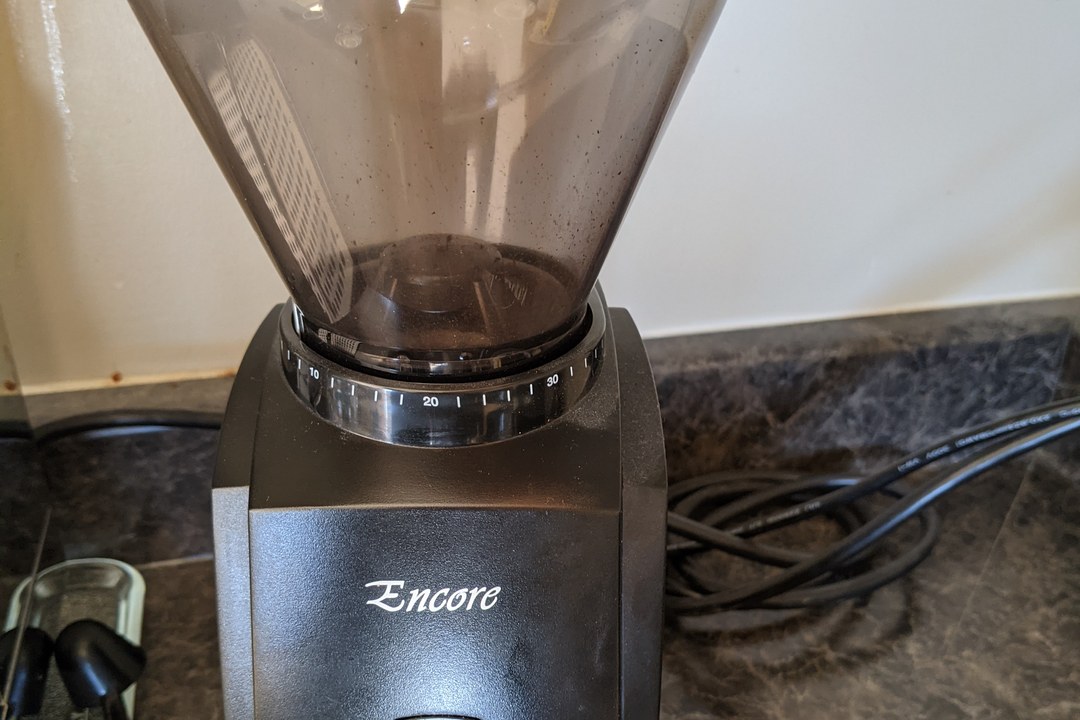
Espresso and filter coffee want opposite things from the same machine, and that is the whole reason this category is hard to shop. Espresso needs a very fine grind inside a band only a few dozen microns wide, with adjustment steps small enough to correct a shot that ran two seconds fast. A French press needs a coarse, uniform grind at the other end of the range entirely. Most grinders are built to be good at one of those and merely adequate at the other, and the listing rarely tells you which.
The good news is that the compromise is much smaller than it used to be. Manufacturers have noticed that most households own an espresso machine and a filter brewer rather than one or the other, and grinders now exist that keep genuine espresso resolution at the fine end while still reaching a proper coarse. Baratza re-geared an entire classic model around exactly this problem. Single-dose grinders solved the other half of it by removing the hopper, so switching from a dark espresso blend to a light filter roast no longer means the first few grams are yesterday’s coffee.
I ranked these ten on fine-end resolution first, then on retention and how cleanly the grinder switches, then on coarse range, burr geometry, and what owners report after a year of daily use. Whichever you choose, the grinder is only part of the setup, so pair it with the right espresso machine and freshly roasted espresso beans.
| Product | Price | Buy |
|---|---|---|
| Breville BCG820BSS Smart Grinder ProBest Overall | $199.95 | View on Amazon |
| SHARDOR Conical Burr Espresso Coffee Grinder with Precision Timer 2.0Budget Pick | $71.99 | View on Amazon |
| MiiCoffee DF64 II Single Dosing Coffee GrinderPremium Pick | $399.00 | View on Amazon |
| DF54 Single Dose Coffee GrinderRunner-Up | $260.00 | View on Amazon |
| Baratza Encore ESP Coffee GrinderRunner-Up | $199.95 | View on Amazon |
| 1Zpresso J-Ultra Manual Coffee GrinderRunner-Up | $199.00 | View on Amazon |
| KINGrinder K6 Manual Coffee GrinderRunner-Up | $109.00 | View on Amazon |
| Turin SK40 Single Dose GrinderRunner-Up | $199.00 | View on Amazon |
| AMZCHEF Burr Coffee Grinder with 48 SettingsRunner-Up | $99.99 | View on Amazon |
| Aromaster Conical Coffee Bean Grinder with 48 SettingsRunner-Up | $132.99 | View on Amazon |
Find the Best Coffee and Espresso Grinder for Your Setup
Different brewing habits point at genuinely different grinders. Jump to the case that matches how you actually make coffee:
- Overall best coffee and espresso grinders
- Best coffee grinder for espresso and pour-over
- Best coffee grinder for espresso and drip coffee
- Best coffee grinder for espresso and French press
- More dual-duty pairings
How I Chose and Evaluated These Grinders
Every grinder here had to clear the same bar: a verified, currently-live Amazon listing sold new, a real owner review pool rather than a handful of ratings, and genuine capability at both ends of the range. That second half is where most candidates fell out. Plenty of well-regarded grinders reach an espresso-fine setting on paper but cross the entire espresso band in two or three clicks, which makes dialling a shot a matter of luck. I weighted adjustment resolution at the fine end first, then retention and how cleanly the grinder switches between coffees, then coarse range, burr geometry, and finally the depth and age of the owner feedback.
Two categories got excluded outright. Blade grinders are not in this roundup at any price, because a blade chops rather than mills and cannot produce a uniform particle size at either end of the range, regardless of what the listing claims about espresso. And I left out several excellent filter grinders — the Fellow Ode and the Baratza Virtuoso+ among them — because their fine end is not built for a portafilter, and putting them on a page about espresso capability would be misleading. If filter is genuinely your only brew method, our best coffee grinder roundup is the better page for you.
Best Coffee and Espresso Grinders Overall
These are the ten I would recommend in 2026, each reviewed once below with its full strengths and tradeoffs. The best overall pick leads because it fits the most kitchens; the use-case sections further down regroup these same grinders by how you actually brew.
Best Overall: Breville BCG820BSS Smart Grinder Pro
The Smart Grinder Pro wins this page for a reason that has less to do with grind quality than with whether you will actually use both halves of the grinder. Sixty settings cover a full espresso-to-French-press range, which several grinders here can claim. What none of the others at this price match is that Breville ships the portafilter cradle and the grounds container in the same box, so moving from pulling a shot to grinding a pot is swapping one attachment. That sounds like a convenience detail until you watch what happens in a kitchen where it is not true: the awkward half of the routine quietly stops happening, and the dual-purpose grinder becomes a single-purpose one.
The dosing system reinforces it. You set the dose with an LCD timer in fifth-of-a-second increments and save it, which means your espresso number and your drip number both live in the machine. Combined with the numbered grind collar, switching becomes two deliberate actions you can write down and repeat rather than a re-dial every time. And with more than seven thousand owner reviews at 4.5 stars, this is by a wide margin the most thoroughly proven grinder on this page. On a motorised appliance that matters more than any spec, because motor and gearbox failures only reveal themselves at a scale a two-hundred-review pool cannot show you.
The honest limitations are retention and step size. It is hopper-fed, so a few grams stay in the chute between doses — fine if you brew one bean both ways, a real flavour problem if you keep a dark espresso blend next to a light filter roast. And the stepped adjustment is coarser at the espresso end than the stepless grinders further down, so on a fussy light roast you can land beside your target rather than on it. For most households running an espresso machine and a drip brewer on the same counter, neither is enough to change the recommendation.
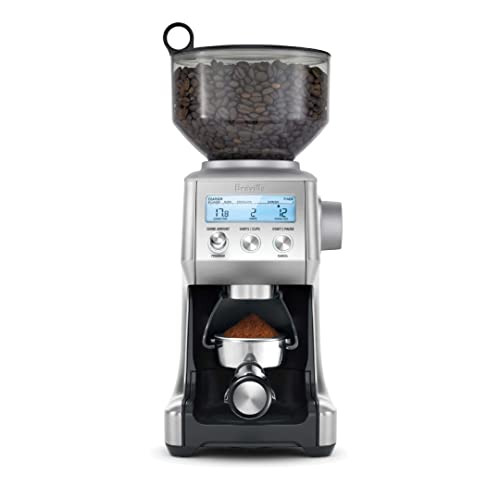
Breville BCG820BSS Smart Grinder Pro
by Breville
The most complete one-grinder answer for a kitchen that pulls shots and brews a pot -- genuine range at both ends, both attachments in the box, and the deepest owner review pool of anything here.
Pros
- Sixty grind settings spread across a full espresso-to-French-press range is the reason this is my overall pick for a one-grinder kitchen -- most grinders make you choose which end of that range they are good at, and this one covers both ends with enough steps in between that neither brew method feels like an afterthought
- It ships with a portafilter cradle and a grounds container in the same box, so switching from pulling a shot to grinding a batch for drip is swapping one attachment rather than improvising a workaround -- the small friction that decides whether a household actually uses both halves of a dual-purpose grinder
- The dose is set by an LCD timer in 0.2-second increments with settings you can save, which is what makes the switching repeatable: you write down your espresso number and your drip number once, and the grinder returns to each without a re-dial
- More than seven thousand owner reviews at 4.5 stars is by a wide margin the deepest evidence base in this category, and that matters on a motorised appliance, because gearbox and motor failures only show up at a scale a small review pool cannot reveal
Cons
- It is hopper-fed, so a few grams stay behind in the chute between doses -- if you switch beans as often as you switch brew methods, a single-dose grinder further down this list keeps the two coffees cleanly separated in a way this one cannot
- The stepped adjustment is coarser at the espresso end than a stepless grinder, so on a fussy light roast you can land next to your target rather than exactly on it
- The upper hopper and several internal parts are plastic, which is where the price stays at this level, and owners who grind daily for years do report replacing them
Budget Pick: SHARDOR Conical Burr Espresso Coffee Grinder
The budget end of this category is full of grinders that mention espresso in the title and then give you a dial with no fine resolution and nowhere to put a portafilter. The SHARDOR sits at the bottom of this list’s price range and is the only grinder down there that includes a portafilter holder, which is the tell — a brand that ships one has thought about the espresso half rather than listing it as a keyword.
The timer is the other reason it makes the list. It resolves to a tenth of a second and remembers your setting, which is precisely what a dual-purpose grinder needs, because your espresso dose and your drip dose are different numbers and you do not want to rediscover them each morning. Fifty-one adjustment settings give it more steps across the range than several grinders at twice the money, and the touchscreen makes moving between an espresso setting and a coarse one a readable action rather than a guess. With over nine hundred reviews at 4.4 stars, it also has a genuine owner base behind it, which counts for more at this price than any spec on the box.
Where the price shows is in the motor and the static. A full coarse batch takes noticeably longer than on the Breville, and the motor warms if you run doses back to back. Fine grounds cling to the catch cup and puff out when you tip them into a portafilter unless you spritz the beans with a drop of water first — free to fix, but you will be doing it every day. And it is fulfilled by the brand’s own storefront rather than by Amazon, so a warranty claim goes through SHARDOR. For someone setting up a first espresso machine who also brews drip, none of that outweighs what you get for under a hundred dollars.

SHARDOR Conical Burr Espresso Coffee Grinder with Precision Timer 2.0
by SHARDOR
The cheapest honest dual-duty grinder here -- a real portafilter holder, a tenth-of-a-second timer, and enough range to serve both a machine and a drip brewer for well under a hundred dollars.
Pros
- This sits at the bottom of the price range here and is the only grinder at that end that ships with a portafilter holder, which is what makes the espresso half practical rather than theoretical -- it grinds fine enough for a portafilter and coarse enough for drip
- The precision timer resolves to a tenth of a second with memory, which is unusual at this price and is exactly the feature a dual-purpose grinder needs, because your espresso dose and your drip dose are different numbers you want the machine to remember for you
- Fifty-one adjustment settings give you more steps across the range than most grinders at twice the money, and the touchscreen makes moving between an espresso setting and a French press setting a few taps rather than a wrestle with a stiff collar
- With over nine hundred reviews at 4.4 stars it has a real owner base behind it, which is worth more at the budget end than any spec, because this is the price tier where unproven grinders fail quietly
Cons
- The 40mm burrs are driven by a modest motor, so grinding a full drip batch at a coarse setting takes noticeably longer than the Breville above, and the motor warms up if you push it back to back
- Static is a real nuisance at the fine end -- grounds cling to the catch cup and puff out when you tip them into a portafilter unless you spritz the beans first
- It is sold and fulfilled by the brand's own storefront rather than Amazon, so a warranty claim runs through SHARDOR rather than through Amazon's returns desk
Premium Pick: MiiCoffee DF64 II Single Dosing Coffee Grinder
The DF64 II is the grinder to buy if you want the dual-purpose problem solved rather than managed. Single dosing is the structural fix: there is no hopper, so you weigh the beans you want, grind them, and a bellows clears what little stays behind. Espresso in the morning and pour-over in the afternoon never share grounds, which is the thing no hopper grinder on this page can promise no matter how good its burrs are.
The 64mm flat burr set is the other half of the argument. Flat burrs force every particle through one identical gap, and the tighter distribution that produces reads directly as clarity in a filter cup — the separation between one note and the next that a broader conical spread blurs. Stepless adjustment means there are no clicks to land between, so you can sit exactly where a coffee wants at the espresso end. And the burrs are swappable, which quietly turns one purchase into a platform: if your brewing shifts toward filter in two years, you change the burr rather than the grinder.
Be clear about who should spend this. It costs twice the best overall pick, and the return on that money comes from brewing both methods seriously and often. Someone pulling two shots a week will not taste the difference in proportion to the price. Stepless adjustment also gives you no number to write down, so returning to a known setting means counting reference marks rather than reading a dial, which is slower to relearn after a burr clean. And single dosing means weighing beans for every brew, with no hopper to fall back on when you are late. That is a workflow you either enjoy or resent, and it is worth being honest with yourself about which before spending four hundred dollars.

MiiCoffee DF64 II Single Dosing Coffee Grinder
by MiiCoffee
The upgrade that solves dual-purpose properly rather than compromising -- 64mm flat burrs, stepless adjustment, and near-zero retention so espresso and filter never share grounds.
Pros
- Single dosing is the structural fix for the dual-purpose problem, and this is the most established single-dose grinder on Amazon: you weigh exactly the beans you want, grind them, and almost nothing stays behind, so this morning's espresso and this afternoon's pour-over never contaminate each other
- A 64mm flat burr set produces a tighter particle distribution than any conical here, and on filter brews that reads directly as clarity in the cup -- flat burrs are the reason serious drinkers who brew both put their money in this class of grinder
- Stepless adjustment means there are no clicks to land between, so you can sit exactly where a coffee wants at the espresso end instead of choosing the nearest setting -- the single most useful thing a grinder can offer someone dialling in shots
- The burrs are swappable, which turns one purchase into a long-term platform: you can move to a different burr geometry as your brewing shifts rather than buying a second grinder
Cons
- It costs twice the best overall pick, and the honest reason to spend it is that you brew both methods seriously and often -- someone pulling two shots a week will not taste the difference in proportion to the price
- Stepless adjustment has no numbers to write down, so returning to a known setting is done by counting reference marks rather than by reading a dial, which is slower to relearn after a burr clean
- Single dosing means weighing beans for every single brew, and there is no hopper to fall back on when you are in a hurry -- it is a workflow you either enjoy or resent
DF54 Single Dose Coffee Grinder
Ask the coffee forums for one grinder that does espresso and filter properly and this is the model that keeps coming back. The reason is a 54mm flat burr set at a price that until recently bought a conical, and flat-burr uniformity is exactly what makes a single grinder credible at both ends of the range rather than merely capable at one. It single doses with a bellows and a tilted grind path, so switching from a dark espresso blend to a light filter roast costs one throwaway dose instead of a strip-down.
Stepless adjustment gives it the same fine-end freedom as grinders costing considerably more, which is where dual-purpose grinders usually fall down. And it is physically small for a flat-burr machine, which matters more than the spec sheet suggests — the most common reason people abandon single dosing is a grinder that dominates the counter and turns every cup into a production.
The caution is the evidence base. Fifty reviews at 4.1 stars is thin next to the thousands behind the Breville, and support runs through a small importer rather than a brand service network, so parts and help are slower to reach. This is a specialist’s purchase made on the strength of the burr set and the community consensus around it, not a safe default. If that trade appeals, it is the best flat-burr value on this page; if it makes you uneasy, the DF64 II above buys the same architecture with a longer track record.
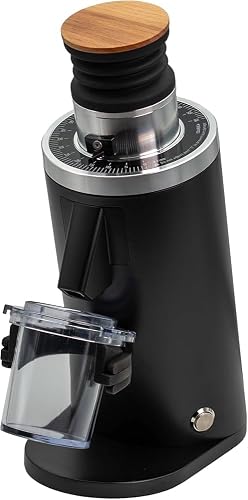
DF54 Single Dose Coffee Grinder
by DF64 Coffee
The enthusiast's answer to the dual-purpose question -- 54mm flat burrs and stepless adjustment at a mid price, held back only by a young review pool.
Pros
- This is the grinder the enthusiast forums actually name when someone asks for one machine that does espresso and filter properly, and the reason is its 54mm flat burr set at a price that historically bought a conical -- flat-burr uniformity is what makes a single grinder credible at both ends of the range
- It single doses with a bellows and a tilted grind path, so retention is small enough that swapping from a dark espresso blend to a light filter roast takes one throwaway dose rather than a strip-down
- Stepless adjustment gives it the same fine-end resolution as grinders costing considerably more, which is exactly where a dual-purpose grinder usually falls down
- It is physically small for a flat-burr grinder, which matters more than it sounds -- the reason people give up on single dosing is usually a machine that dominates the counter
Cons
- Fifty reviews is a thin evidence base next to the thousands behind the Breville, and at 4.1 stars the feedback is good rather than glowing -- this is a specialist purchase, not a safe default
- Like every single-dose grinder it needs a scale and a few extra seconds per brew, so it suits someone who enjoys the ritual rather than someone rushing out the door
- Support runs through a small importer rather than a large brand's service network, so parts and help are slower to reach than with Breville or Baratza
Baratza Encore ESP Coffee Grinder
The Encore ESP is the only grinder here designed around the dual-purpose problem itself rather than adapted to it. Baratza re-geared the classic Encore so the dial does two different jobs: the lower half of the range steps in fine espresso increments and the upper half steps in coarser brew increments. That is the most literal answer anyone has built to the question this page asks, and in practice it means moving from a shot to a pour-over is one turn of one dial, with no attachment to swap and no menu to navigate.
The long-term argument is stronger still. Baratza’s US service network is the best in coffee, the burrs and internals are user-replaceable, and the company routinely ships parts years past warranty. That is why an Encore often outlives grinders that outspec it, and it is a genuine value consideration rather than a brand-loyalty talking point.
Two things keep it from the top spot. At 4.0 stars it carries the lowest rating on this page, and the recurring owner complaints are static and grounds clinging in the bin rather than anything structural — annoying rather than disqualifying, but worth knowing before you buy on reputation. And it is hopper-fed with no bellows, so switching beans leaves a few grams of the last coffee behind. If your household brews one bean two ways, that is irrelevant and this is arguably the smartest design here. If you keep two coffees on the shelf, look at the single-dose grinders instead.

Baratza Encore ESP Coffee Grinder
by Baratza
The grinder built around the dual-purpose problem itself -- one dial with espresso steps at the bottom and brew steps at the top, backed by the best repair network in coffee.
Pros
- Baratza re-geared the classic Encore specifically so its dial does two jobs: the lower half of the range steps in fine espresso increments and the upper half steps in coarser brew increments, which is the most literal answer to dual-purpose grinding anyone has built at this price
- That split matters in practice because it puts espresso resolution where you need it without wasting settings, so moving between a shot and a pour-over is a single turn of one dial with no attachments to swap
- Baratza's US service network is the best in the category and the parts are user-replaceable, so this is a grinder people keep for a decade rather than replace -- the strongest long-term value argument on this page
- It is genuinely simple to live with: a hopper, a dial, and a button, with none of the menu-diving that makes some dual-purpose grinders annoying to switch on
Cons
- At 4.0 stars it carries the lowest rating on this list, and the recurring owner complaints are static and grounds clinging in the bin rather than anything structural -- worth knowing before you buy on the brand's reputation alone
- It is hopper-fed with no single-dose bellows, so a few grams of the last coffee stay behind whenever you switch beans
- The espresso half of the dial is fine but stepped, so a light roast that wants a setting between two clicks will not get one
1Zpresso J-Ultra Manual Coffee Grinder
The J-Ultra is here because it posts a number no electric grinder on this page approaches: eight microns per click. That is the finest adjustment step in this roundup by a wide margin, and it costs the same as electric grinders that step several times coarser. If precision at the espresso end is what you care about most, no motorised grinder at this price buys as much of it, for the structural reason that a hand grinder spends nearly its whole budget on the burr set and the adjustment mechanism.
It also happens to solve the switching problem twice over. The external numbered ring means your espresso setting and your filter setting are two numbers you write down and return to exactly. And a hand grinder retains essentially nothing — no chute, no hopper, burrs you can dismantle with your fingers — so changing beans between brews is genuinely clean without any bellows or single-dose engineering.
The limit is obvious and worth stating plainly: you supply the power. An 18g espresso dose is thirty to ninety seconds of real cranking, and a full pot of drip coffee is a great deal more beans than that. This is a grinder for someone brewing single cups both ways, not for batch brewing. The espresso-coated burr also leans toward the fine end, so filter brews are good rather than exceptional next to a flat-burr grinder. If hand grinding appeals, our best hand espresso grinder guide compares the manual options in far more depth than this page can.

1Zpresso J-Ultra Manual Coffee Grinder
by 1Zpresso
The most precise espresso adjustment on this page and near-zero retention, for someone who brews single cups both ways and does not mind grinding by hand.
Pros
- Eight microns per click is the finest adjustment step anywhere on this list, and it costs the same as electric grinders that step several times coarser -- if grind precision at the espresso end is what you care about, no motor here buys as much of it per dollar
- The external numbered ring means your espresso setting and your pour-over setting are two numbers you write down and return to exactly, which is the whole workflow problem a dual-purpose grinder has to solve
- Hand grinders retain almost nothing by design -- no chute, no hopper, burrs you can take apart with your fingers -- so switching between an espresso bean and a filter bean is genuinely clean
- Grinding by hand turns at roughly a hundred revolutions per minute against several hundred for an electric, and slower grinding produces fewer of the fines that make a shot channel
Cons
- You supply the power, and an 18g espresso dose is thirty to ninety seconds of real cranking -- a bad trade if you also want to grind a full pot of drip coffee, which is a great deal more beans
- The espresso-coated burr is tuned toward the fine end, so filter brews are good rather than exceptional next to a flat-burr grinder
- There is no timer, dose memory, or hopper, so everything convenient about an electric grinder is absent by design
KINGrinder K6 Manual Coffee Grinder
The K6 posts the best resolution-per-dollar figure on this page and it is not close: sixteen microns per click from an external adjustment nut, at roughly half the J-Ultra’s price. Fine-end resolution is the spec that decides whether a grinder can serve a portafilter at all, so getting it this cheaply reshapes what a hundred-dollar budget can buy — provided you are willing to crank.
Its coarse range is the other reason it belongs on a dual-purpose page. Sixty clicks per rotation across four full rotations is unusually wide usable travel, so the same grinder that pulls a ristretto also reaches a genuine cold brew coarse without fighting the mechanism at either extreme. A lot of espresso-focused grinders run out of adjustment before they get properly coarse, and that is precisely the failure that ruins a French press.
What gives me the most confidence recommending it is the review depth. With 944 owner reviews it has the deepest feedback pool of any manual grinder here, and volume matters on a mechanical product, because burr wobble and stripped threads only surface at scale. The tradeoffs are modest: the straight handle does not fold, so it packs awkwardly, and KINGrinder has no real service network, so a worn part usually means a new grinder. And as with any hand grinder, batch brewing is impractical — grinding for a full drip pot is several minutes of work you will not repeat.

KINGrinder K6 Manual Coffee Grinder
by KINGrinder
The cheapest way to get external-dial espresso resolution and a genuinely wide coarse range in one grinder, if you are willing to crank it.
Pros
- Sixteen microns per click from an external adjustment nut, at roughly half the price of the J-Ultra, is the best grind-resolution-per-dollar figure on this page -- and resolution at the fine end is the spec that decides whether one grinder can serve a portafilter at all
- Sixty clicks per rotation across four full rotations is an unusually wide usable range, so the same grinder that pulls a ristretto also grinds coarse enough for cold brew without fighting the mechanism at either extreme
- With 944 owner reviews it has the deepest feedback pool of any manual grinder here, and on a mechanical product that volume is what reveals burr wobble and stripped threads if they exist -- and owners are not reporting them
- The 48mm stainless burr set and dual bearings sit in an all-aluminium body, so the parts that decide grind quality are the same ones you would find in a grinder costing twice as much
Cons
- It is a hand grinder, so batch brewing is impractical -- grinding enough for a full drip pot is several minutes of work you will not do twice
- The straight handle does not fold, so it packs awkwardly compared with folding-crank grinders
- KINGrinder has no real service network, so a worn part usually means a new grinder rather than a repair
Turin SK40 Single Dose Grinder
Stepless adjustment on an electric grinder at this price is genuinely rare, and it is the feature that earns the SK40 its place. Steps are what stop a grinder from sitting exactly where espresso wants, and removing them entirely means one machine can be precise at the fine end and still travel out to French press without a click getting in the way.
It is a proper single-dose design too, not a hopper grinder with the hopper taken off. The tilted base and the bellows keep retention low enough that switching coffees between brews is clean, and the 40mm eight-point conical burrs in an aluminium body put the money into the grinding path rather than the housing. It also occupies far less counter space than the flat-burr single-dose grinders above, which is a real consideration in a small kitchen.
The reservation is evidence. Thirty-seven reviews is the thinnest record on this page, so you are buying on the spec sheet and the seller’s reputation rather than on a proven owner base, and it is sold by a specialist retailer rather than the manufacturer. There is also a performance boundary worth naming: 40mm conical burrs do not match the filter clarity of the 54mm and 64mm flats here, so this is the dual-purpose pick that leans espresso. Buy it if shots are your priority and filter is the secondary duty.

Turin SK40 Single Dose Grinder
by Turin
Stepless electric adjustment and a real single-dose design in a small footprint, with a review pool too young to call it a safe default.
Pros
- Stepless adjustment on an electric grinder at this price is rare, and it is the feature that lets one machine sit exactly where espresso wants and then travel out to French press without a click getting in the way
- The tilted base and bellows are a proper single-dose design rather than a hopper grinder with the hopper removed, so retention stays low enough to switch coffees between brews
- 40mm conical burrs with an eight-point cut and an aluminium body put the money into the grinding path rather than the housing
- It occupies far less counter space than the flat-burr single-dose grinders above while offering the same weigh-in workflow
Cons
- Thirty-seven reviews is the thinnest evidence base on this page, so you are buying on the spec sheet and the seller's reputation rather than on a proven owner record
- Conical burrs at 40mm do not match the filter clarity of the 54mm and 64mm flat burr grinders here, so this is the dual-purpose pick that leans espresso
- It is sold by a specialist retailer rather than the manufacturer, so support depends on that shop staying in the business
AMZCHEF Burr Coffee Grinder with 48 Settings
The AMZCHEF is the pick when drip volume is the bigger half of your routine and espresso is the occasional treat. Forty-eight settings spanning fine espresso through cold brew is a wide range for the money, and the cup-count selector is a small but genuinely useful touch: you set a drip batch by the number of cups rather than translating it into seconds and hoping.
The anti-static treatment addresses the specific thing that makes cheap grinders miserable at the fine end, where espresso grounds cling to every surface and scatter across the counter. And with over thirteen hundred reviews at 4.5 stars, it is among the best-proven budget grinders on Amazon, which is the reassurance that matters most in a price band full of unproven brands.
Where it gives ground is on the espresso side. There is no portafilter cradle, so shots mean grinding into a cup and transferring, which spills fines unless you are careful. The steps at the fine end are fairly coarse, so it suits a pressurised basket better than chasing a two-second shot correction on a proper machine. And the 40mm burrs with a modest motor are slower through a large coarse batch than a purpose-built drip grinder. As the espresso-capable grinder for a household that mostly brews filter, it is well judged.

AMZCHEF Burr Coffee Grinder with 48 Settings
by AMZCHEF
A wide-range budget grinder with an unusually deep review pool -- the pick when drip volume matters more than the last increment of espresso precision.
Pros
- Forty-eight settings spanning fine espresso through cold brew is a genuinely wide range for the money, and the cup-count selector means you can set a drip batch by the number of cups instead of translating it into seconds
- The anti-static treatment addresses the specific failure that makes cheap grinders miserable at the espresso end, where fine grounds cling to everything and scatter across the counter
- Over thirteen hundred reviews at 4.5 stars puts it among the best-proven budget grinders on Amazon, which is the reassurance that matters most at this price
- The touchscreen and LED display make switching between a fine setting and a coarse one a deliberate, readable action rather than a guess at a collar position
Cons
- There is no portafilter cradle, so espresso means grinding into a cup and transferring, which spills fine grounds unless you are careful
- The 40mm conical burrs and a modest motor make it slower through a large coarse batch than a purpose-built drip grinder
- The espresso end is stepped and fairly coarse between settings, so it is better suited to a pressurised basket than to chasing a two-second shot correction
Aromaster Conical Coffee Bean Grinder with 48 Settings
The Aromaster earns its spot on capacity. Its chamber holds nearly four ounces of beans, the largest published capacity on this page, which makes it the sensible choice for a household or an office where somebody grinds a full pot in the morning and somebody else wants a shot afterwards. Most grinders on this page would need two or three fills to do the first job.
The range covers both ends properly — forty-eight settings from fine espresso to coarse French press — and the timer lets you fix a dose for each so nobody is eyeballing the amount. The upgraded anti-static handling keeps fine grounds from flying, which is the daily annoyance that quietly ends most budget grinders’ espresso careers. Over a thousand reviews at 4.5 stars back it up.
The catch is the direct consequence of what makes it good: a large chamber means more places for the last coffee to hide, so this is the worst grinder here for switching between two different beans. There is no portafilter holder either, so espresso involves a transfer step, and the fine end is stepped rather than stepless, which limits precise shot correction. Buy it for volume and shared use, not for a two-coffee household chasing precise shots.

Aromaster Conical Coffee Bean Grinder with 48 Settings
by Aromaster
The highest-capacity grinder here -- the right call when a full pot for the household matters as much as the occasional shot.
Pros
- The grind chamber holds nearly four ounces of beans, the largest published capacity on this page, and that is the reason this is the pick for a household or an office -- it grinds enough for a full pot in one go and still reaches a fine setting for a shot afterwards
- Forty-eight settings from fine espresso to coarse French press cover both ends of the range, and the timer lets you fix a dose for each so you are not eyeballing the amount every morning
- Upgraded anti-static handling keeps fine grounds from flying, which is the daily annoyance that makes people stop using a budget grinder for espresso
- More than a thousand reviews at 4.5 stars is a solid, proven record for a grinder in this price band
Cons
- The large chamber is exactly what makes it worse at single-dose switching -- more volume means more places for the last coffee to hide when you change beans
- There is no portafilter holder, so espresso grinding involves a transfer step
- The espresso end is stepped rather than stepless, so precise shot correction is limited compared with the single-dose grinders on this page
Best Coffee Grinder for Espresso and Pour-Over
Pour-over is the filter method that punishes an uneven grind most, because you are tasting clarity and separation rather than a concentrated shot. So when one grinder has to serve a portafilter and a V60, burr uniformity matters more than it does for drip, and retention matters more still — pour-over drinkers tend to be the people who keep a light single-origin next to their espresso blend. These three handle both, in different ways and at different prices.
| Product | Price | Buy |
|---|---|---|
| MiiCoffee DF64 II Single Dosing Coffee GrinderBest overall for espresso and pour-over 64mm flat burrs give pour-over the clarity a conical blurs, and near-zero retention keeps a light single-origin clean after an espresso dose | $399.00 | View on Amazon |
| DF54 Single Dose Coffee GrinderBest value flat burr The same flat-burr, stepless, single-dose architecture for well under the DF64 II, if a young review pool does not put you off | $260.00 | View on Amazon |
| 1Zpresso J-Ultra Manual Coffee GrinderBest manual option Eight-micron clicks and an external numbered ring make espresso precise and switching to filter a written-down number, provided you are grinding one cup at a time | $199.00 | View on Amazon |
Best Coffee Grinder for Espresso and Drip Coffee
Drip and filter brewing ask a different question than pour-over does. Batch volume becomes the constraint: you are grinding sixty grams or more at a coarse setting, several times a week, and a grinder that is precise but slow becomes a chore. What you want is a machine that batches comfortably and still has real resolution left at the espresso end. All three of these grind a full pot without complaint.
| Product | Price | Buy |
|---|---|---|
| Breville BCG820BSS Smart Grinder ProBest overall for espresso and drip Sixty settings across the full range plus both a portafilter cradle and a grounds container, so the switch between the two jobs is designed for rather than improvised | $199.95 | View on Amazon |
| SHARDOR Conical Burr Espresso Coffee Grinder with Precision Timer 2.0Best budget pick A portafilter holder and a tenth-of-a-second timer for under a hundred dollars, at the cost of a slower motor on big batches | $71.99 | View on Amazon |
| AMZCHEF Burr Coffee Grinder with 48 SettingsBest for large batches A cup-count selector sets a drip batch directly, and 48 settings still reach the espresso end for the occasional shot | $99.99 | View on Amazon |
Best Coffee Grinder for Espresso and French Press
French press is where dual-purpose grinders most often disappoint, and the reason is structural. Grinders tuned for espresso frequently compress their whole usable range into the fine end, so the coarsest setting is still too fine for immersion — and an immersion brew at a drip grind gives you a muddy, over-extracted cup with silt at the bottom. What you need is honest travel at the coarse end, and these three have it.
| Product | Price | Buy |
|---|---|---|
| KINGrinder K6 Manual Coffee GrinderWidest usable coarse range Four full rotations of external adjustment reach a genuine cold brew coarse without the mechanism fighting you, and still step at sixteen microns for espresso | $109.00 | View on Amazon |
| Breville BCG820BSS Smart Grinder ProBest electric all-rounder Sixty settings run all the way out to French press, and the included grounds container catches a full immersion dose cleanly | $199.95 | View on Amazon |
| Aromaster Conical Coffee Bean Grinder with 48 SettingsBest for big French press batches A 3.9 ounce chamber grinds enough for a large press in one go, with 48 settings covering espresso through coarse | $132.99 | View on Amazon |
More Dual-Duty Pairings
A few more combinations come up often enough to answer directly. If you are switching between two different coffees rather than two brew methods, retention is the spec that decides it, and these are the grinders I would point you at.
| Product | Price | Buy |
|---|---|---|
| Baratza Encore ESP Coffee GrinderBest one-dial dual-range grinder Espresso steps on the lower half of the dial and brew steps on the upper half, backed by the best repair network in coffee | $199.95 | View on Amazon |
| Turin SK40 Single Dose GrinderBest compact stepless electric Stepless electric adjustment and a real bellows single-dose design in the smallest footprint here | $199.00 | View on Amazon |
| DF54 Single Dose Coffee GrinderBest for switching between two beans A bellows and a tilted grind path clear the chamber, so a dark espresso blend and a light filter roast never mix | $260.00 | View on Amazon |
Do You Actually Need Two Grinders?
This is the question underneath the whole page and it deserves a direct answer rather than a hedge: almost certainly not. Two grinders is the right call in exactly one situation, which is when you are dialling shots on a serious machine with a light roast and simultaneously brewing filter with a different coffee every day, at which point the switching cost genuinely exceeds the price of a second grinder. That describes very few home setups.
For everyone else, one well-chosen grinder is better than two compromised ones, because the money concentrates where it does the most good. What decides which grinder is not your budget but your habits. If you brew one bean both ways, buy on adjustment resolution and range and ignore retention entirely — a hopper grinder is fine and you will get more grinder for the money. If you keep two coffees on the shelf, retention becomes the deciding factor and you should be shopping single-dose grinders even if it means a smaller burr. And if you brew filter far more than espresso, our best coffee grinder roundup covers grinders that are better at that job than anything here, while the espresso grinder guide does the same for shots.
How to Dial In One Grinder for Two Brew Methods
Find your two numbers once and write them down. Start with espresso, because it is the harder target: pull a shot at roughly a 1:2 ratio in 25 to 30 seconds, and adjust finer if it runs fast and tastes sour and thin, coarser if it crawls and tastes harsh and drying. Once that setting works, note it. Then move to your filter setting and do the same. On a numbered grinder those two figures are all you need forever. On a stepless grinder, establish a zero point by closing the burrs until they just touch and record each setting as a count from there.
Purge after every large adjustment. The grounds sitting in the chute were ground at the old setting, so the first few grams after a big move are the wrong size — throw them away rather than letting them into a shot. And expect your espresso number to drift as beans age: coffee grinds coarser as it degasses over the first two weeks, so a setting that was perfect last Monday may want a click finer this Monday. That is the coffee changing, not the grinder slipping. Our free coffee grind size chart shows the micron ranges each brew method targets, which is the fastest way to sanity-check whether you are in the right neighbourhood before you start chasing taste.
One last habit worth adopting on any grinder that does espresso: stir a single drop of water into the beans before grinding. Fine grounds carry static, cling to the catch cup, and puff across the counter when you tip them out. The Ross Droplet Technique costs nothing and largely stops it.
How to Choose the Best Coffee and Espresso Grinder
Buying one grinder for two opposite jobs means weighing the factors in a different order than you would for either job alone. Below are the six that decide it, ranked the way they actually matter for dual duty.
Buyer's Guide
The dual-purpose grinder is the hardest buying question in home coffee, because espresso and filter want opposite things from the same machine. Espresso wants a narrow band of very fine grind with tiny, correctable adjustments. Filter wants a broad, coarse, uniform grind. Most grinders are honest about serving one and vague about the other. Below are the six factors I weigh when a single grinder has to do both, ordered the way they actually matter, and the one most buyers lead with -- burr size -- is not at the top.
Adjustment Resolution at the Fine End
This is the factor that decides whether a grinder can do espresso at all, and it is the first thing I check. Espresso lives in a band only a few dozen microns wide, and inside that band a small change swings a shot from sour to bitter. What matters is not how fine the grinder goes but how many usable steps sit inside that band. A grinder with sixty settings spread evenly from espresso to French press has far fewer steps in the espresso range than the number suggests, which is exactly why Baratza built the Encore ESP with fine steps on the lower half of the dial and coarse steps on the upper. Stepless adjustment sidesteps the problem entirely by letting you sit anywhere. Be sceptical of an unbranded grinder advertising a large settings count without saying how they are distributed, because evenly-spread settings are the least useful arrangement for a grinder that has to do espresso.
Retention and Whether It Single Doses
Retention is the grams of coffee a grinder keeps inside itself between doses, and it is the factor that separates a grinder that technically does both from one that is pleasant to use for both. A hopper grinder holds a few grams in the chute. If you brew the same bean for espresso and filter, that is harmless. If you keep two coffees, those grams are the wrong coffee in the first part of every dose, and on an 18g espresso shot a couple of stale grams is a meaningful fraction. Single-dose grinders have no hopper: you weigh in what you want, a bellows pushes the last of it out, and switching beans is clean. The cost is a scale and a few seconds per brew. Decide honestly whether you switch coffees or just brew methods, because the answer changes which half of this page you should be shopping from.
Burr Geometry and Size
Flat burrs push every particle through one identical gap, producing a tighter distribution that reads as clarity in a filter cup. Conical burrs give a slightly broader spread that reads as body and makes espresso more forgiving. For dual duty, flat burrs have the advantage because the filter side gains more than the espresso side loses -- which is why the enthusiast recommendation for one-grinder-does-both is almost always a 54mm or 64mm flat. Size matters mostly for speed and heat: a bigger burr gets through a dose in less time and with less thermal load on the coffee, which matters when you are grinding a full drip batch. Below about two hundred dollars this factor is largely settled for you, because everything credible in that range is a 40mm conical, and at that point resolution and retention are what you should be choosing on.
Range at the Coarse End
Espresso capability gets all the attention, and then people discover their new grinder runs out of adjustment before it reaches a proper French press coarse. This is a genuine failure mode: grinders optimised for espresso often have their whole usable range compressed at the fine end, so the coarsest setting is still too fine for immersion brewing and you get a muddy, over-extracted cup with sediment in it. Check that the grinder's advertised range explicitly names the coarse methods you brew -- French press, cold brew, percolator -- rather than stopping at drip. Grinders with many rotations of adjustment travel, like the manual grinders here with four full turns, tend to have the most honest coarse end. It is also worth knowing that a grinder can be fine at both extremes and mediocre in the middle, so if pour-over is your main filter method, look for reviews from pour-over drinkers specifically.
Dosing and Switching Workflow
This factor decides whether you use both halves of the grinder you paid for. Switching between espresso and drip means changing the grind setting and the dose, and if either is fiddly you will quietly stop doing one of them. A numbered collar you can write down beats a stepless dial you have to recount. A timer with saved presets beats a hold-to-grind button. An included portafilter cradle and grounds container beats improvising with a jar, and this is the specific reason the Breville leads this page: the switch is designed for rather than tolerated. If you are looking at a grinder with no portafilter support, be realistic about grinding into a cup and transferring fine grounds every morning, because that spill adds up to a genuine daily irritation.
Motor, Build, and Service
A dual-purpose grinder works harder than a single-purpose one: fine espresso grinding is high-load, and coarse batch grinding is high-volume, and the same motor does both. That makes build quality and service more important here than in a grinder that only ever does one job. Look for a deep owner review pool rather than a high average from a handful of ratings, because motor and gearbox failures only surface at scale and after time. Repairability is the other half of it. Baratza is the standout on this page for user-replaceable parts and a US service network that ships components years past warranty, which is why an Encore ESP often outlives grinders that outspec it. At the budget end, accept that you are buying a disposable appliance and choose the one with the most reviews behind it rather than the best spec sheet.
The Verdict: Which Coffee and Espresso Grinder Should You Buy?
After weighing all ten on the specs that decide whether one grinder can genuinely serve two brew methods, the Breville Smart Grinder Pro is my best overall pick for 2026. It covers the full espresso-to-French-press range across sixty settings, it is the only grinder here that ships with both the portafilter cradle and the grounds container so switching is designed for rather than improvised, and its owner review pool is deeper than everything else on this page combined. If your budget is tighter, the SHARDOR is the budget pick and a genuine dual-duty grinder rather than a drip grinder with espresso in the title, portafilter holder included. And if you brew both methods seriously with two different coffees on the shelf, the MiiCoffee DF64 II is the upgrade that solves the problem properly, with 64mm flat burrs, stepless adjustment, and near-zero retention.
Whichever you pick, be honest about which half of your routine matters more, because that single answer settles most of the decision. Pair the grinder with the right espresso machine and a pour-over brewer you enjoy using, and use our free brewing tools and calculators to lock in your ratios. The full coffee grinders category has more, but the short version is this: the best coffee and espresso grinder is the one whose fine-end resolution matches how precisely you want to chase a shot, and whose retention matches how often you change beans.
Frequently Asked Questions
Can I really use one grinder for both espresso and regular coffee?
What is the difference between an espresso grinder and a coffee grinder?
Do I need a single-dose grinder to switch between espresso and filter?
Are flat or conical burrs better for a grinder that does both?
How do I switch my grinder between espresso and drip without losing my settings?
Related Articles
About the Reviewer

Clara Bennett, CQI Q Grader, SCA Roaster
B.S. Food Science, UC Davis
Clara Bennett is a Coffee Quality Institute (CQI) licensed Q Grader and SCA-certified roaster with over a decade in specialty coffee — from competition barista to production roaster and green-coffee buyer. She has cupped thousands of coffees to CQI protocol and dialed in espresso on everything from $90 entry machines to commercial three-group setups. She founded Brew Gazette in 2026 to turn cupping-table standards into plain-English buying advice.