Best Instant Espresso Powder of 2026
Q Grader Clara Bennett ranks the 13 best instant espresso powders of 2026 for baking and for drinking, plus which ones are actually espresso and which are not.
Updated
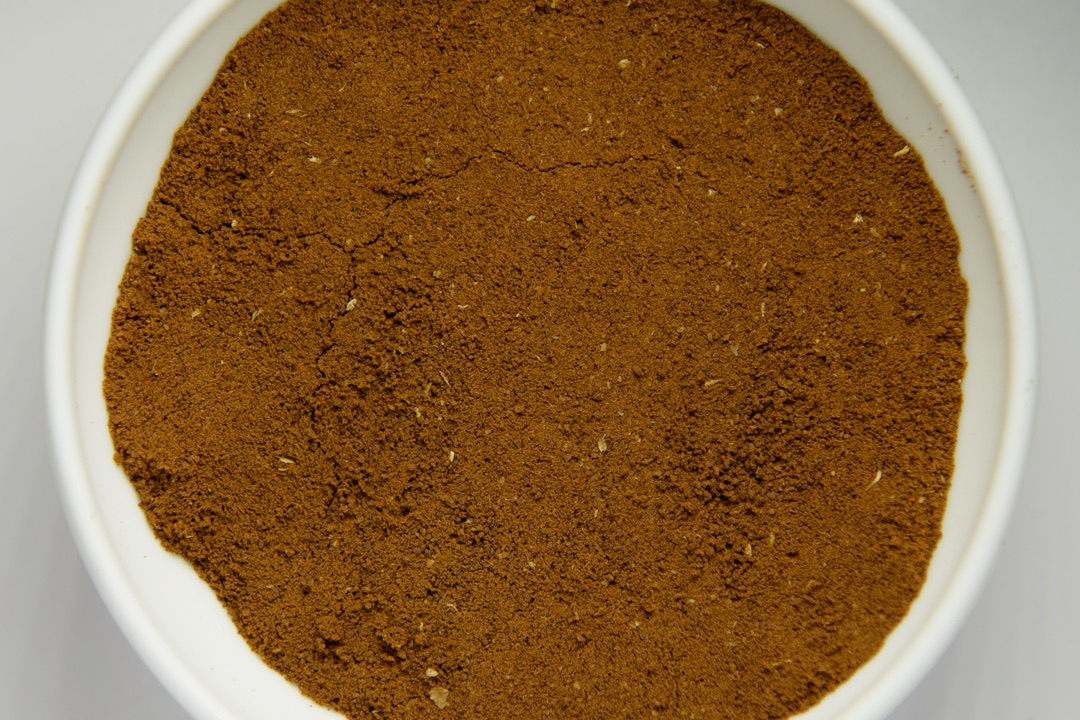
Two entirely different people search for instant espresso powder, and almost nobody writing about it acknowledges that. One is standing in a kitchen with a brownie recipe open, holding a bag of cocoa, wanting to know which small jar of dark powder will deepen the chocolate. The other wants something to drink that tastes like a cafe order and does not require a machine on the counter. Those are opposite specifications, they lead to opposite purchases, and buying on a ranking written for the other person is how you end up with a jar that disappoints you for reasons you cannot name.
There is a second thing nobody says out loud, so I will. Almost none of these products are espresso. Espresso is a brewing method, not an ingredient: roughly nine bars of pressure forced through a compacted puck of ground coffee. A powder that dissolves in water was never brewed under pressure, and what is actually in most of these jars is spray-dried or freeze-dried soluble coffee, roasted dark and milled fine, wearing the word espresso as a description of flavor. Only two products in this roundup contain real ground roasted coffee: Anthony’s, which is micro-milled beans, and Starbucks Premium, which blends microground coffee into a soluble base. That is not a scandal and it does not make the rest bad, but it should change what you expect from the jar, and it certainly changes which one you should buy.
I am a CQI-licensed Q Grader and an SCA-certified roaster, which means I cup coffee professionally against a standardised scoring form, and I put every jar here through that protocol as well as through a set of kitchen tests the drinking-focused roundups never run: dissolution at recipe dose, dissolution in a cooled soak, and what each powder actually does to a chocolate batter. Below are the thirteen instant espresso powders I would recommend in 2026, organised so that the baking half and the drinking half are clearly separated. If your interest is in jars made to be drunk rather than baked with, our roundup of the best instant coffee covers that shelf in full and deliberately does not overlap with this one.
Find the Best Instant Espresso Powder for How You Use It
The right jar depends entirely on the job. Jump to yours:
- Best instant espresso powders overall
- Best instant espresso powder for baking
- Best decaf instant espresso powder
- Best instant espresso powder for brownies
- Best instant espresso powder for tiramisu
- More use cases
How I Cupped and Chose These Espresso Powders
Every product was tasted blind against the Specialty Coffee Association cupping form, which scores ten attributes including fragrance and aroma, flavor, aftertaste, body, balance, clean cup and sweetness. That form was designed for brewed specialty coffee and applying it to solubles is unusual, but it is the only way I know to separate a product that is genuinely well made from one that is merely familiar. Clean cup and uniformity matter enormously in this category in particular, because a poorly made soluble shows sediment, off-notes and cup-to-cup variation that a scored blind tasting exposes immediately and a casual sip does not. Strength was held constant at 2 grams of powder per 200 mL of water, weighed rather than scooped, because a dense freeze-dried crystal and a fluffy spray-dried granule weigh very different amounts per spoon and an unstandardised dose turns a flavor comparison into a strength comparison.
The kitchen tests are the part that matters for the larger half of this audience, and they are the part nobody else runs. Each powder was whisked dry into a cocoa-and-flour mixture at a half-teaspoon dose and again at a two-teaspoon dose, then baked, to see whether it dispersed invisibly or left specks and gritty pockets in the crumb. Each was also dissolved into a cooled liquid at the far heavier concentration a tiramisu soak requires, held for five minutes, and checked for sediment, because a powder that behaves beautifully in a batter can still turn a soak muddy. Those two tests reorder the field substantially against the drinking ranking, which is exactly why the use-case sections further down do not simply repeat the overall list.
I want to be explicit about two limits. I have not set a minimum review count for inclusion, because two of the products here sit at 41 and 103 reviews and a stated floor would be contradicted by my own page. Instead I have said in each review how thin or deep the evidence is, and you should weight that alongside the rating rather than treating a 4.8 on forty ratings as equivalent to a 4.8 on eleven thousand. And no brand on this page publishes a caffeine figure for its caffeinated products, which is why every caffeine cell reads Not disclosed rather than carrying a number I would have had to invent. Where you need real numbers on the drinking side, our explainer on how much caffeine is in espresso works from measured shot data instead.
Best Instant Espresso Powders Overall
These are the thirteen I would recommend in 2026, each reviewed once below. The best overall pick leads because it suits the most people, but read the buying question at the top of the guide first: baking and drinking pull in opposite directions here.
Best Overall: King Arthur Espresso Powder
King Arthur wins this roundup on a combination that nothing else manages: it is milled specifically for baking, and it carries by far the deepest owner-review record in the category. Nearly twelve thousand reviews at a 4.8 average is not a number any other espresso powder on Amazon comes close to, and the next most-reviewed baking-specific product here holds roughly a fifth of that. At that scale you are not gambling on whether a jar behaves in your kitchen, you are joining a settled consensus of home bakers who have used it in every recipe you are likely to be attempting.
The grind is the technical reason it works. It is milled far finer than an ordinary soluble granule, which means it disappears into a dry cocoa-and-flour mixture with no visible specks and no gritty pockets, where a coarse instant coffee granule will sit in the crumb and read as a defect. It is also formulated by a baking company rather than a coffee company, and that shows in how little you need: half a teaspoon in a chocolate batter deepens the cocoa and lengthens the finish without the bake tasting of coffee at all. That invisible-amplifier effect is what most recipes calling for espresso powder are actually asking for, and the King Arthur delivers it more reliably than anything else here.
The honest limitation is the one that applies to almost everything on this page. It is not espresso. It is a soluble instant coffee, milled fine and roasted dark, and if you make a cup of it expecting a shot you will find it perfectly ordinary. As an ingredient it is excellent and as a drink it is unremarkable, which is exactly the trade a baker should want. The jar is also genuinely small, and it costs several times as much per ounce as the large mass-market jars, so a household that bakes with espresso powder weekly should look hard at the Clasico jar instead.

King Arthur Espresso Powder, 3 oz Jar
by King Arthur Baking Company
The espresso powder I keep next to the flour -- milled fine enough to vanish into a batter, formulated by a baking company rather than a coffee one, and carrying by far the deepest owner-review record in the category.
Pros
- Nearly twelve thousand owner reviews at a 4.8 average is the deepest verified record of any espresso powder sold on Amazon, and it is not close -- the next most-reviewed baking-specific powder here carries roughly a fifth of that, so this is the one product in the category where you are joining a settled consensus rather than gambling on a jar
- It is milled far finer than an ordinary soluble granule, which is the entire point for a baker: it disappears into a cocoa-and-flour mixture with no visible specks and no gritty pockets, where a coarse instant coffee granule will sit in the crumb and read as a defect
- It is formulated by a baking company for baking rather than by a coffee company for drinking, and that shows in how little you need -- half a teaspoon in a chocolate batter deepens the cocoa without the finished bake tasting of coffee at all, which is exactly the effect most recipes are actually asking for
- Certified Kosher and packed in a small screw-top jar that seals properly, which matters more than it sounds because soluble coffee is hygroscopic and a bag left open in a warm kitchen will clump into a brick
Cons
- It is not espresso, whatever the jar says. This is a soluble instant coffee milled fine and darkened, not ground espresso-roast beans, and if you brew a cup of it expecting a shot you will be disappointed -- as a baking ingredient it is excellent, as a drink it is ordinary
- The jar is genuinely small, and a baker who uses espresso powder in every chocolate recipe will get through it faster than the sticker suggests
- It costs several times as much per ounce as the large-jar mass-market powders here, which is a fair trade for the grind and the consistency but is worth knowing before you buy
Best for Iced Lattes: NESCAFÉ Gold Espresso Blonde
The Blonde is the drinking half of this page at its most useful, and the reason is process rather than marketing. It is freeze-dried, which means the brewed base was frozen solid and the ice drawn off under vacuum at low temperature, so the volatile aromatic compounds that a hot spray-drying tower burns away stay locked inside the crystal. That is the whole difference between a soluble that smells of coffee when the jar opens and one that smells faintly of burnt caramel, and aroma is most of what people mean by flavor.
What makes it the jar I reach for over ice is that it dissolves completely in cold water and in cold milk. Almost nothing spray-dried manages that: mass-market granules clump on contact with cold liquid and leave grit at the bottom of the glass. Stir this into a glass straight from the fridge and an iced latte takes about twenty seconds with no kettle, no machine and nothing settling out. The blonde roast is genuinely unusual in an espresso-style soluble and it is why this jar drinks lighter and sweeter than the Intense version of the same bottle, with a soft citric lift through the middle instead of the roasty bitterness the format normally leads with.
Two things to be clear about. There is no crema and there never will be, because nothing that dissolves in water was brewed under pressure, so the foam you can whip up on top is not the emulsified oil layer a machine produces and it will not hold latte art. If that is what you want, a real espresso machine is the only answer. And the light roast that makes this so pleasant iced is the wrong choice if you want a dark, bittersweet backbone in a hot milk drink, in which case the Intense jar further down is the same bottle done the other way.
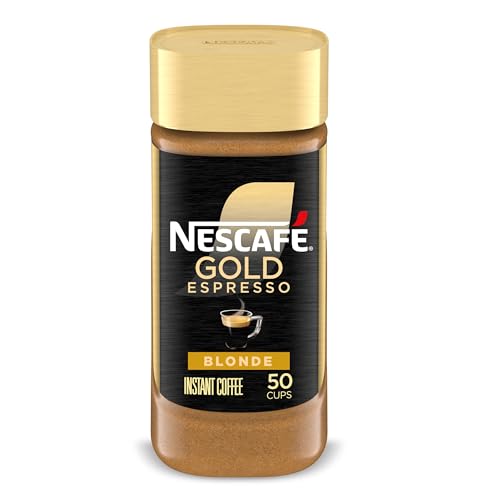
NESCAFÉ Gold Espresso Blonde Instant Coffee, 3.5 oz Jar
by Nescafé Gold
The espresso-style instant I reach for over ice -- freeze-dried, unusually light for the format, and the cleanest dissolver here in cold milk.
Pros
- It is freeze-dried rather than spray-dried, and the difference is the whole reason it tastes like coffee -- the brewed base is frozen solid and the ice drawn off under vacuum at low temperature, so the volatile aromatics that a hot drying tower burns away stay locked inside the crystal
- It dissolves completely in cold water and in cold milk, which almost nothing spray-dried manages, so an iced latte takes about twenty seconds with no kettle, no clumping and nothing settling to the bottom of the glass
- A blonde roast in an espresso-style soluble is genuinely unusual, and it is the reason this jar drinks lighter and sweeter than the Intense version of the same bottle -- there is a soft citric lift through the middle instead of the roasty bitterness the format normally leads with
- Roughly fifty cups from a small jar at a 4.8 average across more than seven thousand reviews, which ties the highest rating on this page
Cons
- It is instant coffee formulated to taste espresso-like, not espresso, and it makes no crema at all -- the foam you can whip up on top is not the emulsified oil layer a machine produces and it will not hold latte art
- The blonde roast is deliberately light, so a drinker who wants the dark, bittersweet backbone that makes a milk drink taste like a cafe order should buy the Intense version instead
- The jar is small and empties quickly if this becomes an all-day coffee rather than an iced-latte jar
Best Budget: NESCAFÉ Clasico Dark Roast
The Clasico jar is the cheapest per ounce on this page by a wide margin, clear of the next-cheapest option by a distance, and at ten and a half ounces it is comfortably the largest single container in a category that otherwise sells you three-ounce jars and one-ounce spice tins. That combination is the reason it is the budget pick: the saving is not a few cents on a sticker, it is a structural difference in how much powder you get, and it changes how freely you can use the stuff. Note that it is not the lowest sticker price here, because it is several times the size of the jars that are.
That freedom matters more than it sounds. Espresso powder is an ingredient people ration because the jar is small, and rationing it is why so many chocolate bakes come out flatter than they should. NESCAFÉ rates this jar at up to a hundred and fifty cups, which is enough to carry a household through a great many recipes without the flinch that comes from spooning out a specialty jar. That is why it is what I recommend to anyone baking in quantity, running a bake sale, or making the same brownie recipe every fortnight. The dark roast is also the flavor direction chocolate wants, and it is punchy enough that the standard recipe dose still reads clearly.
Understand what you are buying, because this one comes with a caveat the others do not. Clasico is not sold as espresso and does not claim to be: it is dark-roast instant coffee, and it earns its place here by doing the job of espresso powder at a fraction of the cost rather than by carrying the word on the label. In practice that is what most of this category already is, since almost nothing sold as espresso powder was ever brewed as espresso, but the honest framing matters. The blend also runs Robusta alongside Arabica, which is part of why it is this cheap and why it cups harsher than the specialty jars if you drink it straight. And NESCAFÉ does not disclose a drying process for Clasico the way it labels the Gold jars freeze-dried. Those are fair trades for the volume, but they are trades.

NESCAFÉ Clasico Dark Roast Instant Coffee, 10.5 oz Jar
by Nescafé Clasico
The value jar -- the lowest price per ounce on this page by a distance and by far the largest container, a plain dark roast that does the baking job without pretending to be espresso.
Pros
- It is the cheapest per ounce on this page by a wide margin, clear of the next-cheapest option by a distance, and at ten and a half ounces it is comfortably the largest single container in a category that otherwise sells you three-ounce jars
- Volume is the reason to buy it and volume is what it delivers: NESCAFÉ rates the jar at up to a hundred and fifty cups, which is enough powder to bake freely without the flinch that comes from spooning out of a small specialty jar
- The dark roast carries the bittersweet direction chocolate wants, and it is punchy enough that a standard recipe dose still reads clearly in a brownie or a chocolate cake
- It ships and sells from Amazon directly rather than through a third-party reseller, which in a category where listings quietly go unbuyable is the difference between a jar you can reorder next month and one you cannot
Cons
- It is not sold as espresso and makes no claim to be. This is dark-roast instant coffee doing the job of espresso powder, which is what most of this category actually is, but the other jars here at least put the word on the label
- The blend runs Robusta alongside Arabica, which is part of why it is this cheap and part of why it cups harsher than the specialty jars when you drink it straight rather than bake with it
- NESCAFÉ does not state a drying process for Clasico the way it labels the Gold jars freeze-dried, so you are buying on roast, size, and price rather than on a disclosed spec
Best Upgrade: illy Instant Coffee Classico
The illy is the upgrade pick on the drinking side, and it is the only product on this page that reads as a considered blend rather than as an ingredient. It is roasted in Italy by a house that has spent ninety years refining a single blend, and the difference from a commodity soluble is audible in the cup: smooth through the middle, rounded, with a cocoa-and-toasted-nut character rather than the sharp roasty edge most espresso-labelled solubles lead with.
Low perceived acidity is the property that earns it the pick. It is noticeably easier to drink black on an empty stomach than the dark Latin-style powders here, and it does not turn sour in the mug as it cools, which is the failure most solubles show within about ten minutes. It also dissolves cleanly and completely in hot water with no sediment, and for a coffee you intend to drink rather than bake with, that matters far more than it does for a powder that is going to vanish into a batter anyway.
The caveats are the honest ones. illy does not claim this is espresso and neither will I: it will not stand in for a shot, and anyone buying it hoping for illy’s espresso experience in soluble form will be disappointed. It is also expensive per ounce for a jar carrying no certifications at all, so you are paying for the blend and the name rather than for organic sourcing or a specialty process. And it is precisely the wrong instinct for baking, because the smoothness that makes it a good cup is the opposite of the aggressive roasty intensity a batter needs. If you want the real thing rather than a soluble approximation, our guide to making espresso at home is the better starting point.

illy Instant Coffee Classico, 3.3 oz Jar
by illy
The best cup on this page if you intend to drink it -- an Italian-roasted blend that is smooth and genuinely low in acidity, and exactly the wrong instinct for baking.
Pros
- It is roasted in Italy by a house that has spent ninety years building a single blend, and the difference from a commodity soluble is audible in the cup: smooth, low in acidity, with a rounded cocoa-and-toasted-nut middle rather than the sharp roasty edge most instant espresso leads with
- This is the jar I would buy if the coffee is going to be drunk rather than baked into something, because it is the only product on this page that reads as a considered blend rather than as an ingredient
- Low perceived acidity makes it noticeably easier to drink black on an empty stomach than the dark Latin-style powders here, and it does not turn sour in the mug as it cools
- It dissolves cleanly and completely in hot water with no sediment, which for a drinking coffee matters more than it does for a baking powder
Cons
- It is instant coffee, and illy does not pretend otherwise on the label -- it will not stand in for a shot from an espresso machine, and anyone buying it expecting illy's espresso experience in soluble form will be disappointed
- It is expensive per ounce for a jar with no certifications on it, and you are paying for the blend and the brand rather than for organic sourcing or a specialty process
- It is deliberately smooth, which means it is the wrong choice for baking: the whole point of a baking powder is aggressive roasty intensity, and this blend is built to be the opposite
Best Organic for Baking: Anthony’s Organic Espresso Baking Powder
Anthony’s is one of only two products on this page that contains actual roasted coffee, and that makes it a fundamentally different ingredient from everything around it. It is espresso-roast beans micro-milled to a powder rather than brewed coffee with the water taken out, which means it brings real coffee oils and a fuller roasted aroma into a bake. At the same dose, the flavor it adds to chocolate is deeper and rounder than any soluble here manages, and in a brownie or a dense chocolate cake that difference is genuinely noticeable side by side.
The certification stack is the other reason it earns a place. USDA Organic, certified gluten-free and non-GMO is a combination nothing else in this category carries, and the gluten-free certification is more meaningful than it looks: the risk with a coffee product is shared-facility cross-contact rather than the coffee itself, so certification is the only way to know. This is the powder I hand to anyone baking for a restricted kitchen. The five-ounce bag is also a genuinely useful size and works out cheaper per ounce than the small specialty jars despite the organic premium.
The limitation is structural and you must plan around it. Micro-milled coffee does not dissolve the way a soluble does, it disperses. In a cake or a brownie that is invisible and desirable; in a clear liquid, a glaze or a thin frosting it can leave a faint sediment. And it will not make you a cup: stirring it into hot water gives you something muddy and gritty, and the reviewers who bought it expecting instant coffee say exactly that. Treat it as a baking ingredient and it is superb. Treat it as coffee and it fails.

Anthony's Organic Espresso Baking Powder, 5 oz
by Anthony's
The only certified-organic product here that is genuinely ground coffee rather than a soluble -- a deeper, rounder baking ingredient, and emphatically not something to drink.
Pros
- This is one of only two products on the page that contains actual roasted coffee rather than a soluble instant: it is espresso-roast beans micro-milled to a powder, which is a fundamentally different ingredient and the reason it behaves differently in a batter
- Because it is ground coffee rather than dissolved solids, it brings real coffee oils and a fuller roasted aroma to a bake, and the flavor it adds to chocolate is deeper and rounder than anything a soluble delivers at the same dose
- USDA Organic, certified gluten-free and non-GMO, which is a combination nothing else in this category carries and is the reason it is the powder I hand to anyone baking for a restricted kitchen
- The five-ounce bag is a genuinely useful size for a home baker and it costs less per ounce than the small specialty jars here despite the organic certification
Cons
- Micro-milled coffee does not fully dissolve the way a soluble does -- it disperses. In a cake or a brownie that is invisible and desirable, but in a clear liquid, a glaze or a thin frosting it can leave a faint sediment, so this is a baking ingredient rather than a drinking one
- It is not instant coffee and will not make you a cup: stirring it into hot water produces a muddy, gritty drink, and reviewers who bought it expecting instant say so
- A resealable bag is less airtight than a screw-top jar, so decant it or roll the top down hard if your kitchen runs humid
Best Decaf: NESCAFÉ Gold Decaf Espresso
Decaf is the thinnest shelf in this entire category, and I mean that literally: search it and you find a handful of obscure listings carrying a few dozen ratings each. The NESCAFÉ Gold Decaf is the only mainstream option with a real review base behind it, and that fact matters more than its rating does, because it means this is the one decaf choice you can make on actual evidence rather than on hope.
It also happens to be well made. Decaffeination strips flavor compounds along with the caffeine, and spray-drying a decaf on top of that is what produces the thin, papery cup the category is known for. This one is freeze-dried, which is unusual at this price, and the result is that the jar smells of roasted coffee when you open it and the cup arrives with body rather than as a decaffeinated approximation of one. The roast is dark enough to carry that body, and like its caffeinated siblings it dissolves cleanly in cold liquid, so it is the one product here that will make you a decaf iced latte late in the evening with no kettle involved.
Two honest notes. Decaffeination is never total, so expect a few milligrams per cup rather than zero, which matters if you are extremely caffeine-sensitive or drinking it immediately before bed. And it is not a baking powder. Using decaf in a brownie gives you the flavor without the point, and since a recipe dose spread over twelve servings delivers only a trace of caffeine anyway, there is very little to avoid. Buy this jar to drink, not to bake with.

NESCAFÉ Gold Decaf Espresso Instant Coffee, 3.17 oz Jar
by Nescafé Gold
The only credible decaf instant espresso on the shelf -- freeze-dried, dark enough to have body, and the single honest answer in a category with almost nothing else in it.
Pros
- It is the only mainstream decaf instant espresso in this category with a real review base behind it, and that matters more than a rating does: the decaf shelf here is otherwise made up of obscure listings with a few dozen ratings, so this is the one decaf choice you can make with actual evidence
- Freeze-dried rather than spray-dried, which is unusual for a decaf at this price and is the reason it smells like coffee when the jar opens -- decaffeination already strips flavor compounds, and spray-drying a decaf on top of that is what produces the thin, papery cup the category is known for
- It dissolves cleanly in cold liquid like its caffeinated siblings, so it is the one product here that will make you a decaf iced latte late in the evening with no kettle involved
- The roast is dark enough to carry body, so it reads as a real coffee rather than as a decaffeinated approximation of one, which is the failure mode of nearly every instant decaf
Cons
- Decaffeination is never total. Expect a few milligrams per cup rather than zero, which is worth knowing if you are extremely caffeine-sensitive or drinking it right before bed
- It is not built for baking. A decaf powder in a brownie gives you the flavor without the point, and since the recipe dose is small the caffeine you avoid is negligible anyway
- The jar is the smallest of the three NESCAFÉ Gold bottles here and empties correspondingly fast
Best for Tiramisu: DeLallo Instant Espresso Powder
DeLallo is the one brand here that markets its powder explicitly for tiramisu rather than for generic baking, and the formulation matches the claim rather than merely decorating it. Tiramisu is an unusual application: the coffee is not an amplifier hiding inside a batter, it is the flavor of the dish, and it goes in at many times a baking dose, dissolved into a liquid that has to be cool before the ladyfingers touch it. Powders that behave perfectly at half a teaspoon in a hot batter can turn that soak muddy, and this one does not.
Ground very fine, it goes into a cooled liquid without the sludge a coarser granule leaves in the bottom of the dish, and it stays clean at concentration rather than going gritty. The certification set is broader than any other Italian-style powder here at Kosher, vegan and non-GMO. And there is a practical argument for the three-jar format that is easy to miss: soluble coffee stales quickly once a seal is broken, so for an ingredient used a few times a year, two jars sitting factory-sealed while the third is in use is genuinely better than one large container going flat on a shelf.
Now the caveats, and they are real. Forty-three reviews is a thin evidence base. Every other product on this page has at least twice that and most have hundreds of times more, so treat the 4.8 as a promising early signal rather than a proven record. The buy box is currently held by a third-party seller rather than by Amazon, which means availability and shipping can move without warning in a way they do not on the mainstream jars. And three small jars at once is a real commitment per ounce for something many households reach for twice a year.

DeLallo Instant Espresso Powder, 1.94 oz Jar (3 Pack)
by DeLallo
The powder built for tiramisu -- fine enough to dissolve cleanly into a cooled soak at a heavy dose, sold as three sealed jars, and carried by a review base that is still very thin.
Pros
- DeLallo markets this powder explicitly for tiramisu rather than for a generic bake, and the formulation matches the claim: it is ground very fine and dissolves into a cooled liquid without the sludge that a coarser granule leaves in the bottom of a soaking dish
- Tiramisu asks for a much heavier dose of coffee than a brownie does, and this is one of the few powders here that stays clean and non-gritty at that concentration rather than turning muddy
- Certified Kosher, vegan and non-GMO, which is a broader set of certifications than any other Italian-style powder on this page carries
- Buying it as three sealed jars rather than one large container is genuinely better for an ingredient used occasionally, because two jars stay factory-sealed while the third is in use and soluble coffee stales quickly once opened
Cons
- Forty-three reviews is a thin evidence base and I want to be direct about it -- every other product on this page has at least twice that and most have hundreds of times more, so the 4.8 average here is a promising early signal rather than a proven track record
- The buy box is currently held by a third-party seller rather than by Amazon, so availability and the shipping experience can move without warning in a way they do not on the mainstream jars
- It is among the most expensive options here per ounce, and buying three small jars at once is a real commitment for an ingredient many households use a few times a year
Best Organic for Drinking: Mount Hagen Organic Instant Espresso
Mount Hagen has been making freeze-dried specialty instant since 1986, a longer run at this specific craft than anyone else selling on Amazon, and it shows in the only way that counts: open a jar and a genuine roasted-coffee aroma comes off it, rather than the faint burnt-caramel note cheap soluble gives. Since aroma carries most of what we perceive as flavor, that first impression turns out to be predictive, and in the cup it is round, notably low in harshness, and it holds up black without sugar covering anything.
It is also the only product on this page certified USDA Organic, Fairtrade and Kosher at once, which is why it is the answer for a drinker who cares how the coffee was farmed and what the grower was paid rather than only how it tastes. Freeze-drying means it dissolves fully in cold water as well as hot, so it works for iced drinks, and the three-jar format keeps the last jar as fresh as the first. If you like this profile in whole-bean form, our roundup of the best coffee beans for espresso covers the same sourcing philosophy at the grinder.
The complaints in its review base are consistent and I think fair: buyers say it is pricy and that the jars are too small, and the single most common request is simply for a bigger container. It is the most expensive product here per ounce outside the tiny specialty tins, and at 4.5 it carries a lower average than the mainstream jars, with value sentiment being where most of those points come off. Freeze-dried crystals are also hygroscopic, so a lid left loose in a humid kitchen will cake a jar solid within weeks.

Mount Hagen Organic Instant Espresso, 3 Pack (3 x 1.76 oz)
by Mount Hagen
The organic drinking option -- freeze-dried, triple-certified, from a house that has made specialty instant since 1986, at a price and a jar size its own reviewers grumble about.
Pros
- USDA Organic, Fairtrade and Kosher certified all at once, which nothing else on this page manages, from a German house that has been making freeze-dried specialty instant since 1986 and has a longer run at this specific craft than anyone else selling on Amazon
- Freeze-dried Arabica, and it announces itself before you have made anything -- open a jar and a genuine roasted-coffee aroma comes off it rather than the faint burnt-caramel note cheap soluble gives, and aroma is most of what people mean by flavor
- In the cup it is round and notably low in harshness, and it holds up black without sugar, which is not something I would say about most espresso-labelled solubles
- It dissolves fully in cold water, so it works for iced drinks as well as hot, and three sealed jars means the last one is as fresh as the first
Cons
- Reviewers say plainly that it is pricy and that the jars are too small, and both complaints are fair: this is the most expensive product on the page per ounce after the tiny specialty tins, and the recurring request in the review base is simply for a bigger container
- At 4.5 it carries a lower average than the mainstream jars here, and value sentiment is where the ratings come off
- Freeze-dried crystals are hygroscopic, so a lid left loose in a humid kitchen will cake a jar into a solid block within weeks
Best for Bulk and Travel: Starbucks Premium Instant Dark Roast
This is the second of the two products here that contains real roasted coffee. Starbucks mills coffee down to a micro-particle and blends it into the soluble base, so part of what lands in your cup is genuinely suspended coffee rather than dissolved solids. That is a structurally different drink from a pure spray-dried granule, and it is why this has a body and a mouthfeel that mass-market soluble simply cannot produce. On the cupping form it scored near the top of this page for body, and the dark roast carries the roasty bittersweet backbone that makes a milk drink taste like a cafe order.
Value and format are the other half of the case. Three sealed tins at roughly nine and a half ounces total is the most coffee per purchase here after the Clasico jar, and it works out cheaper per ounce than the small specialty jars and tins on the page. Screw-top tins also travel far better than glass, seal properly between uses, and survive a suitcase, which is why this is the one I keep in a desk drawer and a hotel room. Two tins stay sealed while the third is open, which is the same freshness logic that makes multi-packs sensible for solubles generally.
It is sold as premium instant coffee rather than as espresso powder, and the grind reflects that: it is coarser than the dedicated baking powders, so in a delicate batter it wants dissolving into warm liquid first rather than whisking in dry. The microground fraction also leaves a faint sediment at the bottom of a mug, which some drinkers read as pleasant body and a real minority read as grit. And three tins is more coffee than an occasional baker will get through before an open one goes flat.

Starbucks Premium Instant Coffee Dark Roast, 3 Tins (3 x 3.17 oz)
by Starbucks
The bulk and travel pick -- real microground coffee blended into the soluble base, three sealed tins, and better value per ounce than any specialty jar on this page.
Pros
- This is the second of only two products here that contains real roasted coffee: it blends micro-milled coffee into a soluble base, so part of what lands in your cup is genuinely suspended coffee rather than dissolved solids, and that is why it has a body and mouthfeel pure solubles cannot produce
- Three sealed tins at roughly nine and a half ounces total is the most coffee per purchase on this page after the Clasico jar, and it works out cheaper per ounce than the small specialty jars and tins here
- Screw-top tins travel far better than glass jars and seal properly between uses, which is why this is the one I put in a suitcase, a desk drawer or an office kitchen
- More than five thousand reviews at a 4.7 average is a deep, stable record, and the dark roast has the roasty bittersweet backbone that makes a milk drink taste like a cafe order
Cons
- It is sold as premium instant coffee rather than as espresso powder, and it is coarser than the dedicated baking powders here, so in a delicate batter it wants dissolving into warm liquid first rather than being whisked in dry
- The microground fraction leaves a faint sediment at the bottom of a mug, which some drinkers read as body and a real minority read as grit
- Buying three tins at once is more coffee than an occasional baker needs, and soluble coffee does not improve with age once a tin is open
Best for Milk Drinks: NESCAFÉ Gold Espresso Intense
The Intense is the same bottle as the Blonde with a much darker roast inside, and the difference is not cosmetic. Concentration is what lets a soluble stand up in milk instead of vanishing into it, and this is the most concentrated, most roasted, most bittersweet of the NESCAFÉ Gold jars. Pour it into hot milk and you get something that reads as a cafe order rather than as coffee-flavoured dairy, which is the specific failure mode of using ordinary instant coffee in a latte.
More than six thousand reviews at a 4.7 average is a deep record, and the sentiment profile is unusually clean for soluble coffee, where taste complaints normally cluster heavily even on well-liked products. Like the Blonde it dissolves straight into cold milk, so an iced latte takes about twenty seconds with no kettle and no shot to pull. It is also the best jar here for dalgona, where the dense dark roast whips to a stiff foam with sugar and hot water while a lighter roast simply tastes thin under all that sweetness.
The limitations are the ones that apply to the whole format plus one of its own. There is no crema and there will never be crema, because nothing here is brewed under pressure. It is dark and intense by design, so drinking it black at full strength is a great deal of coffee for most palates and it wants either milk or a lighter hand with the spoon. And at roughly fifty cups the jar empties fast if this becomes a daily driver rather than the jar you reach for when you want a milk drink.

NESCAFÉ Gold Espresso Intense Instant Coffee, 3.5 oz Jar
by Nescafé Gold
The dark counterpart to the Blonde -- concentrated enough to hold its own against dairy hot or cold, and the best jar here for lattes and dalgona.
Pros
- It is the same bottle as the Blonde with a much darker roast inside, and that concentration is precisely what lets it stand up in milk instead of vanishing into it the way ordinary instant coffee does
- More than six thousand reviews at a 4.7 average with an unusually clean sentiment profile, which is rare in soluble coffee where taste complaints normally cluster heavily even on well-liked products
- It dissolves straight into cold milk, so a genuinely passable iced latte takes about twenty seconds with no kettle, no machine and no shot to pull
- The dark, bittersweet backbone also makes it the best of the NESCAFÉ jars for whipping into dalgona, where a lighter roast simply tastes thin under all that sugar
Cons
- There is no crema and there will never be crema, because nothing here is brewed under pressure -- the foam you can whip on the surface is a different thing entirely
- It is dark and intense by design, so drinking it black at full strength is a great deal of coffee for most palates
- At roughly fifty cups the jar empties fast if it becomes your daily driver rather than your milk-drink jar
Budget Baking Alternative: Civilized Coffee Espresso Powder
Civilized Coffee sells a finely ground Colombian powder specifically as a baking ingredient, and at the standard recipe dose it does the job the category exists for: it deepens chocolate and lengthens the finish without the bake tasting of coffee. Its single-origin Colombian character is cleaner and less ashy than the dark Latin-style powders, which suits the lighter applications where the coffee is meant to be tasted rather than hidden, such as a coffee buttercream or a tiramisu cream. More than two and a half thousand reviews is the second-deepest record among the baking-specific powders here, which for a small brand is a strong signal that people rebuy it.
The reason it is an alternative rather than a top pick is texture, and the complaint is recurring enough that you should plan around it rather than be surprised by it. Buyers repeatedly describe the powder clumping, and a meaningful number report a jar arriving set hard as a rock. Broken up with a fork it still bakes fine, so this is an annoyance rather than a failure, but at 4.5 it carries the joint-lowest rating among the baking powders on this page and the texture reports are most of the reason why.
One more thing worth flagging, because it appears prominently on the packaging and in a lot of search results. The line describing it as the best espresso powder according to America’s Test Kitchen is the brand’s own marketing claim. I have not been able to verify it independently, so treat it as advertising rather than as a third-party verdict, and judge the jar on the review base and the grind instead, both of which are genuinely good.

Civilized Coffee Espresso Powder for Baking, 1.75 oz
by Civilized Coffee
A finely ground Colombian baking powder with a deep review base and a real, recurring clumping problem you should plan around rather than be surprised by.
Pros
- It is a finely ground Colombian powder sold specifically as a baking ingredient, and at the standard recipe dose it does the job the category exists for: it deepens chocolate without making the finished bake taste of coffee
- More than two and a half thousand reviews is the second-deepest record among the baking-specific powders here, which for a small brand is a genuinely strong signal that people rebuy it
- The small jar is the right size for a household that bakes with espresso powder occasionally rather than weekly, and it is the least expensive way onto this page after the large mass-market jars
- Single-origin Colombian gives it a cleaner, less ashy character than the dark Latin-style powders, which suits lighter bakes such as coffee buttercream or a tiramisu cream where the coffee is meant to be tasted rather than hidden
Cons
- Texture is the recurring complaint in its review base and it is a real one: buyers repeatedly describe the powder clumping, and a meaningful number report a jar arriving set hard as a rock. Break it up and it still works, but you should expect to have to
- The Best Espresso Powder by America's Test Kitchen line that appears on the packaging is the brand's own marketing claim rather than something I can independently verify, so treat it as advertising and not as a third-party verdict
- At 4.5 it carries the joint-lowest rating among the baking powders on this page, and the texture reports are most of the reason
Cleanest Dissolving: Savory Spice Pure Espresso Powder
This is the cleanest-dissolving powder I have used, and clean dissolution is the single property it is built around. Reviewers consistently report no grit and no clumps, and in my own testing it went into both hot and cooled liquid and left nothing at the bottom of the glass after five minutes. That is a narrow virtue in a brownie, where everything is opaque and nobody will ever know, and it is a decisive one anywhere the texture is exposed: a glaze, a thin frosting, an ice cream base, or a tiramisu soak that has to stay clean.
It is spray-dried Brazilian Robusta, and the Robusta is the point rather than a cost saving. Robusta carries a heavier, more bitter, more cocoa-leaning intensity than Arabica, which is exactly what you want amplifying chocolate at a half-teaspoon dose, and it is why this punches above the size of its jar. It also comes from a spice merchant rather than a coffee brand, and that shows in how the product is treated: sold in a spice jar, measured in fractions of a teaspoon, shelved with the cinnamon rather than the coffee.
Two limits. The jar is tiny and it is by a distance the most expensive product here per ounce, which is entirely defensible for a seasoning used a teaspoon at a time and indefensible if you were planning to bake with it in volume, where the Clasico jar is the sane choice. And one hundred and four reviews is a thin base next to the mainstream jars, so the 4.8 rests on far less evidence than the King Arthur’s identical score does. As a drink it is flat and one-dimensional, which is what spray-drying does. This is an ingredient.

Savory Spice Pure Espresso Powder, 1.05 oz Jar
by Savory Spice
The powder to buy when texture is exposed -- a spray-dried Brazilian Robusta that dissolves with no grit and no clumps, sold as a spice and priced like one.
Pros
- This is the cleanest-dissolving powder I have used, and that is the single property it is built around: reviewers consistently report no grit and no clumps, and in my own testing it went into both hot and cooled liquid without leaving anything at the bottom of the glass
- It is spray-dried Brazilian Robusta, and Robusta is the right bean for this job rather than a cost saving -- it carries a heavier, more bitter, more cocoa-leaning intensity than Arabica, which is exactly what you want amplifying chocolate at a half-teaspoon dose
- The 4.8 average is the joint-highest on this page, and it comes from a spice merchant rather than a coffee brand, which shows in how the product is treated: it is sold as a seasoning, in a spice jar, to be measured in fractions of a teaspoon
- Because it dissolves so completely, it is the safest choice for anything where texture is exposed -- a glaze, a frosting, an ice cream base, or a tiramisu soak that has to stay clear
Cons
- One ounce is a very small jar and it is by a distance the most expensive product here per ounce, which is defensible for a seasoning used a teaspoon at a time and indefensible if you were planning to bake with it in volume
- One hundred and four reviews is a thin base next to the mainstream jars, so the 4.8 rests on far less evidence than the King Arthur's does
- It is a spray-dried soluble, so cupped as a drink it is flat and one-dimensional -- this is an ingredient, not a coffee
The Classic Name: Medaglia D’Oro Instant Espresso
Medaglia D’Oro is the name every other roundup of this category puts in its top three, and I am including it for a narrower reason than they do: it appears by name in a great many older tiramisu and coffee-cake recipes, so if you are following one of those to the letter, this is the ingredient the recipe meant. The double-roasted profile is genuinely dark and bitter in the traditional Italian-American style, which is the flavor direction those recipes were written around, and at a heavy soak dose that intensity is exactly what stops the coffee disappearing under mascarpone and sugar.
Now the part the other roundups leave out. The SKU that can actually be bought and linked today carries a 4.1 average on only 307 reviews. That is the lowest rating on this page by a clear margin, on a thin base, and it is not a number I can dress up. It also costs several times per ounce what the NESCAFÉ Clasico jar costs, for a far smaller container of a soluble that did not, on my cupping form, come out ahead of it. On value alone that is difficult to defend.
There is a further pattern in the review base worth knowing before you order: a recurring complaint that what arrives does not match how the listing describes it, with buyers reporting a different size or presentation than they expected. Check what turns up against what you ordered. I would not make this a first purchase for a general-purpose kitchen. Buy it when a specific recipe names it, or when the traditional double-roasted bitterness is precisely the profile you are after, and buy the King Arthur or the Clasico jar for everything else.

Medaglia D'Oro Instant Espresso Coffee, 2 oz Jar
by Rowland Coffee Roasters
The famous name in the category, included for the recipes that call for it by name rather than on merit -- the current listing is the lowest-rated product on this page and expensive for what it is.
Pros
- It is the name that every other roundup of this category puts in its top three, and there is a reason for the familiarity: Medaglia D'Oro has been the default Italian-American instant espresso in US kitchens for decades and it appears by name in a great many older tiramisu and coffee-cake recipes
- The double-roasted profile is genuinely dark and bitter in the traditional style, which is the flavor direction those recipes were written around, so if you are following an old recipe to the letter this is the ingredient it meant
- It is spray-dried and dissolves quickly in hot liquid, and the small jar with a proper screw top keeps well between occasional uses
- For a heavy-dose application such as a tiramisu soak, the intensity that makes it hard to drink is exactly what stops the coffee flavor disappearing under mascarpone and sugar
Cons
- The SKU we can actually link carries a 4.1 average on only 307 reviews, which is the lowest rating on this page by a clear margin and a thin base to go with it. I am including it because it is the category's classic name, not because the current listing has earned a top spot
- It costs several times what the NESCAFÉ Clasico jar costs per ounce for a far smaller container and a soluble that is not, on my cupping form, better coffee
- A recurring complaint in the review base is that the jar does not match its advertised description, and buyers report receiving something other than what the listing led them to expect, so check what arrives against what you ordered
Best Instant Espresso Powder for Baking
Baking is the biggest half of this keyword and the half none of the competing articles addresses at all, so here is the whole method in one place. The working range in a standard chocolate recipe is half a teaspoon to two teaspoons. Half a teaspoon is the invisible dose: the cocoa reads deeper and the finish lasts longer, and nobody at the table identifies coffee. One teaspoon is the standard, which is what most recipes mean when they call for espresso powder without specifying. Two teaspoons is where the bake tips into reading as mocha rather than as chocolate, which is sometimes exactly what you want and sometimes a mistake you cannot undo.
Technique matters as much as quantity, and the rule is simple. Whisk the powder into the dry ingredients when the batter carries plenty of liquid and will be thoroughly mixed, as in a cake, a brownie or a cookie dough, and it will hydrate and disperse on its own. Dissolve it into a paste with a teaspoon of hot water or hot cream first whenever it might not fully hydrate: buttercreams, frostings, ganaches, whipped cream, no-bake fillings and anything cold. A dry powder stirred into a stiff buttercream will stay as specks, and those specks are the single most common way an otherwise good frosting is spoiled.
| Product | Price | Buy |
|---|---|---|
| King Arthur Espresso Powder, 3 oz JarBest for baking overall Milled fine enough to vanish into a dry cocoa mixture with no specks, and carrying nearly twelve thousand owner reviews, which is many times any rival here | $9.95 | View on Amazon |
| Anthony's Organic Espresso Baking Powder, 5 ozBest organic for baking Genuinely micro-milled roasted beans rather than a soluble, so it brings real coffee oils and a deeper roasted flavor, and it is the only USDA Organic and gluten-free certified option | $13.19 | View on Amazon |
| Civilized Coffee Espresso Powder for Baking, 1.75 ozBudget baking alternative A finely ground Colombian at the lowest entry point among the baking-specific powders, with a real clumping complaint in its review base you should expect to work around | $8.95 | View on Amazon |
Best Decaf Instant Espresso Powder
This is a one-answer category and I would rather say so than pad a table to look thorough. The decaf instant espresso shelf consists of the NESCAFÉ Gold Decaf and a scattering of obscure listings carrying a few dozen ratings between them, so there is genuinely nothing else here I would put my name to. It is freeze-dried, which is unusual for a decaf at this price and is why it smells and drinks like coffee rather than like the thin, papery cup decaf instant is known for, and it dissolves in cold liquid like its caffeinated siblings.
If you want an alternative, the honest options are outside this format rather than inside it. Buy decaffeinated espresso-roast beans and grind them for a machine or a moka pot, which gives you far better coffee at the cost of equipment and time, or use a decaffeinated instant coffee from the wider soluble shelf and accept a lighter, less concentrated result in milk. And one thing every decaf buyer should hear plainly: decaffeination is never total. Expect a few milligrams a cup rather than zero, which is irrelevant for most people and matters if you are unusually sensitive.
| Product | Price | Buy |
|---|---|---|
| NESCAFÉ Gold Decaf Espresso Instant Coffee, 3.17 oz JarBest decaf instant espresso The only mainstream decaf in this category with a real review base behind it: freeze-dried, dark enough to carry body, and clean enough to dissolve into cold milk for an evening iced latte | $9.97 | View on Amazon |
Best Instant Espresso Powder for Brownies
Brownies are the most demanding baking application for a different reason than tiramisu is. A brownie batter is thick, comparatively dry and barely mixed by design, because overworking it ruins the texture, so a powder gets far less opportunity to hydrate than it does in a loose cake batter. That is why a coarse granule that behaves perfectly in a sponge can leave visible dark specks and small bitter pockets in a brownie, and why grind fineness matters here more than anywhere else in the general baking section.
The practical answer is to use a finely milled powder and to whisk it into the cocoa and flour thoroughly before any wet ingredients go near the bowl, so it is evenly distributed while there is still something dry to distribute it through. One teaspoon in a standard pan is the dose I would start from: enough that the chocolate reads noticeably deeper and fudgier, not enough that anyone tastes coffee. If you are baking brownies in quantity rather than a single pan, the large jar is the sane choice, because rationing a small specialty jar is how people end up under-dosing and wondering why the recipe did nothing.
| Product | Price | Buy |
|---|---|---|
| King Arthur Espresso Powder, 3 oz JarBest for brownies The finest mill among the baking powders, which is exactly what a thick barely-mixed brownie batter needs, plus the deepest review record in the category | $9.95 | View on Amazon |
| Savory Spice Pure Espresso Powder, 1.05 oz JarDissolves cleanest A spray-dried Brazilian Robusta that leaves no grit and no clumps anywhere, and the heaviest cocoa-leaning intensity per half teaspoon here | $11.95 | View on Amazon |
| NESCAFÉ Clasico Dark Roast Instant Coffee, 10.5 oz JarBest for baking in volume The largest jar here and the lowest price per ounce on the page, so you can dose a batch properly without rationing | $13.97 | View on Amazon |
Best Instant Espresso Powder for Tiramisu
Tiramisu inverts every assumption the baking sections make. The coffee is not a hidden amplifier, it is the dominant flavor of the dish; the dose is many times what a brownie takes; and critically the soak has to be cooled before the ladyfingers go in, because hot liquid turns them to mush. That combination is hard on a powder. High concentration exaggerates any tendency to clump, and cool liquid removes the heat that would normally help a granule dissolve, so a powder that disappears beautifully into a hot batter can still leave sludge at the bottom of a soaking dish.
The method that works is to dissolve the powder in a small volume of hot water first, stir until there is nothing visible at all, then dilute to full volume and cool the soak to room temperature before you start dipping. Do not attempt to dissolve the powder into an already-cold liquid unless it is one of the freeze-dried jars, which handle cold. Taste the soak before it goes anywhere near the mascarpone: it should read too strong on its own, because the cream and the sugar will pull it back a long way, and a soak that tastes balanced by itself will taste of nothing in the finished dish.
| Product | Price | Buy |
|---|---|---|
| DeLallo Instant Espresso Powder, 1.94 oz Jar (3 Pack)Best for tiramisu Marketed for tiramisu specifically and ground fine enough to stay clean in a cooled soak at heavy dose, though its review base is only forty-three ratings deep and a third-party seller holds the buy box | $29.68 | View on Amazon |
| Savory Spice Pure Espresso Powder, 1.05 oz JarCleanest dissolving alternative The most reliably grit-free powder on this page, which is the property a soak needs most, in a very small and correspondingly expensive jar | $11.95 | View on Amazon |
| Medaglia D'Oro Instant Espresso Coffee, 2 oz JarThe traditional name The Italian-American name older tiramisu recipes call for by title, though the listing available today is the lowest-rated product on this page at 4.1 on 307 reviews | $9.20 | View on Amazon |
Best Instant Espresso Powder by Use Case
A few more specific jobs, each with the jar I would actually buy for it.
| Product | Price | Buy |
|---|---|---|
| King Arthur Espresso Powder, 3 oz JarBest for chocolate cake A loose cake batter gives a powder plenty of liquid to hydrate in, and this one dissolves invisibly at the one-teaspoon dose a standard chocolate cake wants | $9.95 | View on Amazon |
| Anthony's Organic Espresso Baking Powder, 5 ozBest organic espresso powder The only USDA Organic option that is genuinely micro-milled roasted coffee rather than a soluble, and the only one certified gluten-free as well | $13.19 | View on Amazon |
| NESCAFÉ Gold Espresso Blonde Instant Coffee, 3.5 oz JarBest for drinking straight A freeze-dried blonde roast that is light and sweet enough to drink black without milk covering anything, and dissolves cold for iced | $10.18 | View on Amazon |
| Mount Hagen Organic Instant Espresso, 3 Pack (3 x 1.76 oz)Best organic for drinking USDA Organic, Fairtrade and Kosher freeze-dried Arabica with a real roasted aroma, from a house making specialty instant since 1986 | $27.99 | View on Amazon |
| Starbucks Premium Instant Coffee Dark Roast, 3 Tins (3 x 3.17 oz)Best for bulk and travel Three sealed screw-top tins of instant blended with microground coffee, cheaper per ounce than any specialty jar and built to survive a suitcase | $30.66 | View on Amazon |
Buyer's Guide
This keyword hides two completely different shoppers: one is standing in a kitchen with a brownie recipe open, and the other wants something to drink. Almost nothing that is good for one is ideal for the other, so the six factors below are ordered to sort you into the right half of the page as quickly as possible.
Baking or drinking: the question that decides everything else
Answer this before you compare a single label, because it eliminates most of the page immediately. A baking powder needs to be milled fine, roasted dark, and intense enough that half a teaspoon changes a whole pan of brownies -- it does not need to taste pleasant on its own, and the best of them frankly do not. A drinking powder needs balance, smoothness and low harshness, which is the opposite specification: illy's Classico is the most enjoyable cup here and is exactly the wrong instinct for a batter, while Anthony's is a superb baking ingredient that makes a muddy, gritty drink. A few products cross over honestly. The King Arthur is a baking powder that is inoffensive in a mug, and the NESCAFÉ Gold jars are drinking coffees dark enough to bake with at a pinch. But if you buy on someone else's overall ranking without asking which of the two jobs they were ranking for, you will end up with the wrong jar, and this is the single most common mistake in the category.
What the powder actually is: spray-dried, freeze-dried, or genuinely microground
Here is the thing no competing article will tell you: almost none of these products are espresso. Espresso is a brewing method, not an ingredient, and a powder that dissolves in water was never brewed under pressure. What you are actually buying falls into three groups. Spray-dried soluble is brewed coffee atomised into a tower of hot air, which is fast and cheap and makes a granule that dissolves beautifully, but the same heat that removes the water drives off the volatile aromatics -- which is the unglamorous reason cheap soluble smells flat. Freeze-dried soluble freezes the brewed coffee solid and draws the ice off under vacuum at low temperature, so those aromatics stay locked in the crystal, and it is why the NESCAFÉ Gold jars and the Mount Hagen taste like coffee rather than like instant. The third group is the small one: Anthony's is micro-milled roasted beans and Starbucks Premium blends micro-milled coffee into a soluble base, so those two alone contain actual ground coffee. For baking, soluble is usually the better tool because it disappears completely. For drinking, freeze-dried and microground win every time.
Jar size and cost per ounce
The spread on this page is roughly ten-fold from the cheapest ounce to the dearest, and nothing about the product photography tells you that, because a one-ounce spice jar and a seven-ounce coffee jar are photographed at the same size on the same white background. This is the factor buyers get burned on most often. The large mass-market jar is by far the cheapest per ounce here and it is the sensible buy for a household that bakes with espresso powder regularly, while the small specialty tins cost many times that per ounce and only make sense if you use the powder a half-teaspoon at a time a few times a year. Multi-packs need reading carefully too: three small jars at one price can look like a bulk saving and work out dearer per ounce than a single mid-size jar. My rule is to divide the price by the total ounces before comparing anything else, and then to ask honestly how fast the jar will actually empty, because an opened jar stales in months and a bargain you cannot finish is not a bargain.
Dose and how to use it
Recipe dose and drinking dose are separated by roughly an order of magnitude, and mixing them up is how people end up with a batter that tastes bitter or a mug that tastes of nothing. For chocolate baking the working range is half a teaspoon to two teaspoons in a standard recipe: half a teaspoon is the invisible dose that deepens cocoa without any coffee flavor registering, one teaspoon is the standard, and two is where the bake starts to read as mocha rather than chocolate. Technique matters as much as quantity. Whisk the powder into the dry ingredients when the batter contains plenty of liquid and will be well mixed, as in a cake or a brownie, and it will dissolve on its own. Dissolve it into a paste with a teaspoon of hot water or hot cream first for anything where it may not fully hydrate: buttercreams, frostings, ganaches, whipped cream and cold applications. A tiramisu soak is its own case entirely, wanting many times the baking dose dissolved into a cooled liquid, which is why powders that dissolve cleanly at high concentration matter for that one recipe and barely matter elsewhere.
Caffeine, and why nobody publishes a number
Not one of the caffeinated products on this page states a milligram figure on its listing, and I would rather say that plainly than print an invented number in a table. The reason is regulatory and commercial rather than sinister: caffeine content is not a required nutrition-panel field in the US, it varies with bean, roast and blend batch to batch, and a soluble sold as an ingredient has no fixed serving size to declare it against. What you can reason about is dose. Drink a teaspoon and you are in the region of a mug of ordinary instant coffee, not a double shot, because a teaspoon of soluble is less coffee than the grounds a machine uses for a shot. Bake with a teaspoon spread over twelve servings and the caffeine per portion is a trace. The place it becomes a real consideration is a heavy-dose soak such as tiramisu, or an evening cup, and that is precisely why the decaf jar on this page exists. Note also that decaf is never caffeine-free, only nearly so.
Certifications: organic, Fairtrade, kosher, and when the premium is worth paying
Each of these labels means something specific and each carries a price, so the useful question is whether it touches the thing you care about. Organic certification governs how the coffee was farmed, and on this page it is carried by Anthony's for baking and Mount Hagen for drinking. Fairtrade governs what the grower was paid, which is an ethical choice rather than a flavor one. Kosher certification appears on the King Arthur and the DeLallo and matters enormously to some kitchens and not at all to others. Gluten-free labelling on a coffee product is more meaningful than it looks, because the risk is shared-facility cross-contact rather than the coffee itself, and Anthony's is the only product here that certifies against it. My honest view on the premium: if the powder is going into a chocolate bake at a half-teaspoon dose, you are buying the certification for its own sake and not for anything you will taste, so buy it if it matters to you ethically or medically and do not feel obliged otherwise. If you are drinking the coffee black, the freeze-dried organic jars genuinely do taste better, and there the premium buys you something in the cup as well as on the label.
How to Use Instant Espresso Powder
Start with the dose, because it is where most disappointment originates. For chocolate baking, half a teaspoon to two teaspoons in a standard recipe covers essentially every use: half for an invisible deepening of the cocoa, one for the standard effect most recipes intend, two when you actively want the finished bake to read as mocha. For a coffee-forward application such as a buttercream, a glaze or an espresso icing, go higher and taste as you go, since those are the recipes where the coffee is supposed to announce itself. For a tiramisu soak the dose is higher again by a considerable margin, and it should taste too strong on its own before it meets the cream.
If what you want is a drink rather than a bake, the question becomes how much instant espresso powder goes into a shot, and the honest answer is that a shot is a brewing outcome rather than a quantity you can measure with a spoon. A real single pulls about an ounce of liquid from seven to nine grams of finely ground coffee under pressure, so with a soluble powder you are rebuilding the concentration rather than the extraction. Work to strength instead. One rounded teaspoon, which is close to two grams in most of the jars here, stirred into one to two ounces of water just off the boil gives you roughly the intensity and the volume of a single shot, and two teaspoons in the same water is a double. Use the lower end of that range for the freeze-dried jars, which read stronger per gram than the spray-dried ones, and taste the cup before it meets milk: a shot that tastes right on its own will vanish under eight ounces of steamed milk, which is why milk drinks want the double.
Then choose between the two ways of getting the powder into the recipe, because this is the technique that separates a smooth result from a speckled one. Whisk it into the dry ingredients when the batter contains plenty of liquid and will be well mixed: cakes, brownies, cookie doughs and quick breads all fall here, and dry-whisking distributes the powder evenly while there is still flour and cocoa to carry it. Dissolve it into a paste first, using about a teaspoon of hot water or hot cream per teaspoon of powder, for anything where hydration is uncertain or the texture is exposed: buttercreams, ganaches, frostings, whipped cream, no-bake fillings, ice cream bases and cold soaks. Stir the paste until nothing is visible before it joins the main mixture.
A few practical notes that come up repeatedly. Espresso powder does not make a bake taste of coffee at the standard dose, it makes chocolate taste more like chocolate, which is why it appears in recipes that never mention coffee in the title. It is not interchangeable with finely ground espresso beans, which do not dissolve and will read as grit in anything smooth. Use it in savoury cooking too, where a teaspoon in a chilli, a beef braise or a barbecue rub adds depth in the same way it does to chocolate. And store the jar sealed, dry and away from the stove, because soluble coffee is hygroscopic: it pulls moisture from the air, and moisture is what cakes it into a brick and carries off the aromatics you paid for. If you want to understand why a powder behaves so differently from a shot, our explainer on espresso versus coffee covers the underlying chemistry.
How to Choose the Best Instant Espresso Powder
Work the six factors above in order and the field narrows fast. Answer the baking-or-drinking question first, because it eliminates most of this page immediately and it is the mistake that costs people the most money: the smoothest cup here is the worst baking ingredient, and the best baking ingredient makes a genuinely unpleasant drink. Then look at what the powder actually is. Spray-dried and freeze-dried are both soluble coffee with the water removed, and the difference between them is aromatics, which matters enormously for drinking and much less for baking. Microground is a different ingredient entirely and only two products here are it.
Then do the arithmetic that the photography hides. Divide the price by total ounces before comparing anything, because the spread on this page runs roughly ten-fold and a one-ounce spice jar and a seven-ounce coffee jar look identical in a listing thumbnail. Ask honestly how fast you will finish it, since an opened jar stales in months and an unfinished bargain is not one. After that, dose and technique decide your results more than brand does, caffeine is largely a non-issue at baking doses and undocumented at drinking ones, and certifications are worth paying for when they matter to you ethically or medically rather than because they will change how a brownie tastes.
For most people the answer is the King Arthur Espresso Powder: milled fine enough to disappear into a batter, formulated by a baking company for exactly this job, and backed by a review record many times deeper than anything else in the category. If you bake in quantity or simply want the most powder for the money, the NESCAFÉ Clasico jar costs the least per ounce of anything here by a clear margin, it is the largest container on the page, and its dark roast is the right direction for chocolate even though it is sold as plain instant coffee rather than as espresso. If the coffee is going to be drunk rather than baked with, the illy Classico is the most pleasant cup on this page and the NESCAFÉ Gold jars are the ones that behave in milk. And if it is jars made for drinking that you actually want rather than an ingredient for the pantry, our roundup of the best instant coffee is the companion to this page and covers a completely different shelf.
Frequently Asked Questions
What can I substitute for instant espresso powder?
Does instant espresso powder have caffeine, and how much?
Does instant espresso powder go bad?
Is instant espresso powder actually espresso?
Is instant espresso as good as real espresso?
Is espresso powder the same thing as instant coffee?
Related Articles
Best Instant Coffee of 2026
coffee-beans
7 Best Espresso Machines of 2026
espresso-machines
How Much Caffeine Is in Espresso? A Q Grader Settles the Numbers
espresso-machines
Espresso vs. Coffee: A Q Grader Explains the Difference Everyone Gets Wrong
espresso-machines
How to Make Espresso at Home: A Q Grader's Complete Guide
espresso-machines
About the Reviewer

Clara Bennett, CQI Q Grader, SCA Roaster
B.S. Food Science, UC Davis
Clara Bennett is a Coffee Quality Institute (CQI) licensed Q Grader and SCA-certified roaster with over a decade in specialty coffee — from competition barista to production roaster and green-coffee buyer. She has cupped thousands of coffees to CQI protocol and dialed in espresso on everything from $90 entry machines to commercial three-group setups. She founded Brew Gazette in 2026 to turn cupping-table standards into plain-English buying advice.