Arabica vs. Robusta: A Q Grader's Honest Guide to the Two Beans in Your Cup
CQI Q Grader Clara Bennett breaks down arabica vs. robusta with real numbers — caffeine, sugars, lipids, chlorogenic acids, altitude, and price — explains why robusta makes thicker crema (and why that isn't better), and shows how to read a blend label.
Updated
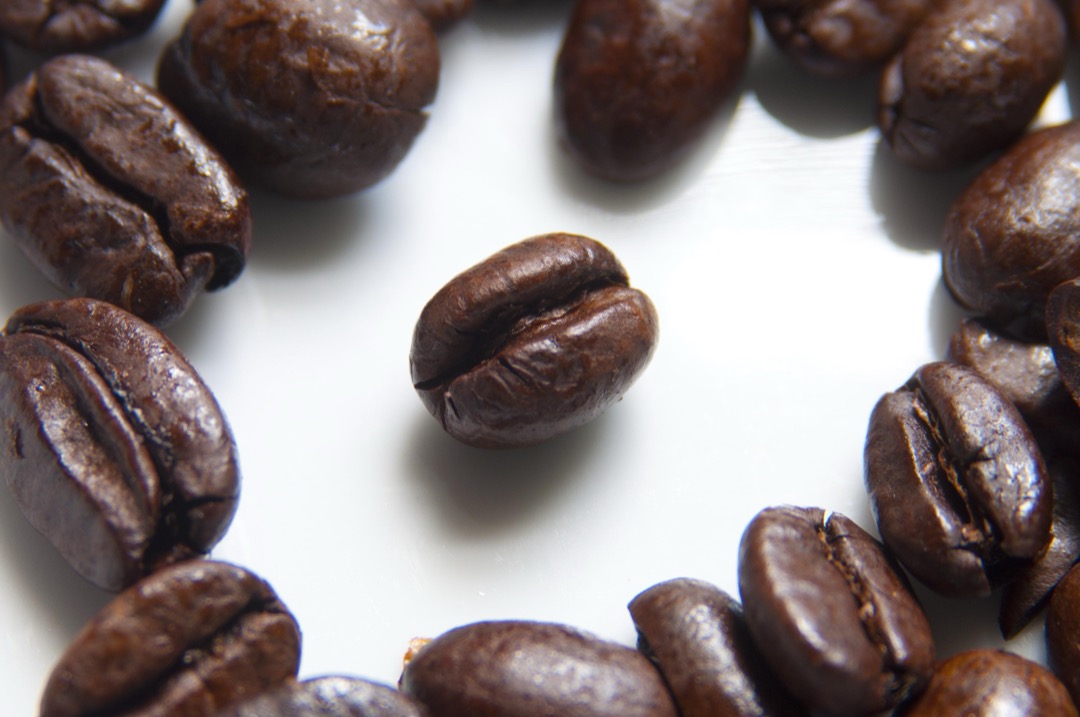
Almost every coffee bag in a supermarket says exactly one thing about what is inside it: 100% Arabica. It is printed like a certification, positioned like a promise, and most people buy it without ever asking what the alternative is or why anyone would use it. The alternative is robusta, it makes up somewhere around 40 percent of the world’s coffee, and the story of why it is the cheaper bean is far more interesting than “arabica good, robusta bad.”
I spend my working weeks on a cupping table scoring coffee under the SCA protocol, and I hold a CQI Q Grader credential specifically because tasting coffee accurately is a skill that has to be calibrated and re-certified. So when someone asks me arabica vs. robusta, I do not answer with a vibe. I answer with the chemistry, because the differences in your cup trace directly back to measurable differences inside the bean — how much sugar, how much caffeine, how much oil, how much chlorogenic acid. Get those four numbers and everything else, including the price gap and the crema, falls into place.
Here is the whole picture, with the numbers, and with the parts the brand blogs leave out.
The Quick Answer
If you read nothing else, read this.
- They are two different species, not two roast levels or two grades. Arabica is Coffea arabica; robusta is Coffea canephora.
- Arabica tastes sweeter and more complex because it carries roughly twice the sugar and about 60% more lipids than robusta.
- Robusta has roughly double the caffeine — about 2.2–2.7% by dry weight versus about 1.2–1.5% for arabica.
- Robusta tastes more bitter because of that caffeine plus substantially higher chlorogenic acid, and because it has less sugar to balance it.
- Arabica is the fussier plant. It wants high altitude and mild temperatures and is vulnerable to coffee leaf rust. Robusta thrives in hot lowlands and shrugs the rust off.
- Robusta is cheaper because it yields more per hectare, needs less land quality, and loses fewer crops — not because it is inherently a defective bean.
- Robusta makes thicker crema, which is a foam-chemistry effect, not a quality signal.
- Almost all specialty coffee is arabica, but a graded fine robusta is a real and genuinely good category that most drinkers have never tasted.
- For your kitchen: buy arabica for filter brewing; consider a blend with some robusta only if you want a heavier, higher-caffeine, crema-forward espresso.
Arabica vs. Robusta at a Glance
| Factor | Arabica | Robusta |
|---|---|---|
| Species | Coffea arabica | Coffea canephora |
| Share of world production | ~58–60% | ~40–42% |
| Caffeine (dry weight) | ~1.2–1.5% | ~2.2–2.7% |
| Sugars | ~6–9% | ~3–5% |
| Lipids (oils) | ~15–17% | ~10–11.5% |
| Chlorogenic acids | Lower | Meaningfully higher |
| Growing altitude | ~600–2,000 m | ~0–800 m |
| Ideal temperature | ~59–75°F | ~75–86°F |
| Chromosomes | 44 (tetraploid), self-pollinating | 22 (diploid), cross-pollinating |
| Leaf rust resistance | Poor | Excellent |
| Yield per hectare | Lower | Higher |
| Bean shape | Oval, flatter, S-shaped center crease | Rounder, smaller, straight center crease |
| Typical flavor | Sweet, fruity, floral, bright acidity | Heavy, woody, grainy, low acidity |
| Crema in espresso | Thinner, lighter | Thicker, darker, more persistent |
| Main producers | Brazil, Colombia, Ethiopia | Vietnam, Brazil, Indonesia |
| Relative green price | Higher | Roughly half of arabica, historically |
Two rows in that table do most of the explaining. The sugar and lipid rows explain why arabica tastes better. The altitude and rust rows explain why robusta is cheaper. Everything else is downstream.
What Is Arabica Coffee?
Coffea arabica originated in the highland forests of southwestern Ethiopia, and it is genetically unusual: it is a tetraploid, carrying 44 chromosomes instead of the 22 that every other coffee species has, because it arose as a natural hybrid of Coffea canephora and Coffea eugenioides several hundred thousand years ago. That makes robusta arabica’s ancestor as well as its rival, which is my favorite piece of trivia in this entire debate.
Arabica is also self-pollinating, so a plant can set fruit on its own. That is convenient for farmers but it narrows the gene pool badly, and the cultivated arabica population is famously low in genetic diversity. That narrowness is precisely why arabica is so vulnerable to disease.
It wants specific conditions: roughly 600 to 2,000 metres of elevation, mild temperatures around 59 to 75°F, and reliable rainfall. Those conditions slow the cherry’s development, and slow development is what builds sugar and aromatic precursors in the seed. This is the entire logic behind “high grown” and “strictly hard bean” labels — altitude is a proxy for slow maturation, and slow maturation is a proxy for sweetness and density.
Arabica accounts for a bit under 60 percent of global production, and virtually all coffee sold as specialty is arabica. When you read tasting notes about blueberry, jasmine, or stone fruit, you are reading about arabica. Our best coffee beans roundup is arabica top to bottom for exactly that reason.
What Is Robusta Coffee?
Coffea canephora — sold commercially as robusta — comes from the lowland forests of West and Central Africa. It is a diploid with 22 chromosomes and it is self-incompatible, meaning a plant must be pollinated by a genetically different plant. That is inconvenient agronomically, but it keeps the gene pool wide, and a wide gene pool is a large part of why robusta is so much tougher.
Robusta thrives from sea level to about 800 metres, in hot, humid conditions around 75 to 86°F that would kill an arabica plant. It resists nearly every race of coffee leaf rust (Hemileia vastatrix), the fungal disease that has repeatedly gutted arabica-growing regions since the 1860s. Its high caffeine content is a natural insecticide, so it also fends off pests like the coffee berry borer better than arabica does. And it yields more cherry per hectare.
Add those up and you get the price gap. Robusta is not cheap because it is a low-grade version of arabica; it is cheap because the plant is easier to grow, harder to kill, and more productive on land nobody could grow arabica on in the first place. Vietnam alone produces something like 40 percent of the world’s robusta, which is why the entire Vietnamese coffee tradition — dark roasted, brewed through a phin, cut with condensed milk — is built around the bean’s intensity rather than fighting it.
Inside the Bean: the Chemistry That Explains Everything
This is the section the brand blogs skip, and it is the one that actually answers the question. Four compound families do nearly all the work.
Sugars. Arabica carries roughly 6 to 9 percent sucrose by dry weight; robusta carries roughly 3 to 5 percent. That is about a twofold difference, and it is the single most important number in this whole comparison. Sugars are the fuel for the Maillard reaction and caramelization during roasting, which is where nearly all of coffee’s sweetness, browning, and aromatic complexity is generated. Less sugar going into the roaster means less sweetness and fewer aromatic compounds coming out. Robusta does not taste flatter because it is a lesser bean in some moral sense; it taste flatter because there is less raw material for the roast to work with.
Lipids. Arabica runs about 15 to 17 percent oils, robusta about 10 to 11.5 percent — roughly 60 percent more in arabica. Lipids carry fat-soluble aromatics and contribute to mouthfeel and to the emulsion that forms crema. Higher lipid content is a large part of why a good arabica espresso tastes rounder and more aromatic.
Caffeine. Arabica about 1.2 to 1.5 percent, robusta about 2.2 to 2.7 percent. Roughly double. Caffeine is intensely bitter on its own, so this is a flavor variable as much as a stimulant one.
Chlorogenic acids. This is where published sources disagree most violently — I have seen arabica quoted anywhere from 4 to 8.4 percent and robusta from 7 to over 14 percent, because different laboratories measure different subsets of the compound family with different methods. Do not trust any single number you read, including in this article. Trust the relationship, which is consistent everywhere: robusta is substantially higher. That matters because during roasting chlorogenic acids degrade into chlorogenic acid lactones and then into phenylindanes, and those degradation products are the dominant source of the harsh, lingering, roasty bitterness people describe as rubbery, burnt-tyre, or medicinal. More chlorogenic acid going in means more bitter degradation products coming out, and the darker you roast, the more pronounced that becomes.
Put the four together and robusta’s sensory profile stops being mysterious: twice the caffeine and more chlorogenic acid pushing bitterness up, half the sugar and a third less oil failing to push sweetness and body back. That is the whole story of why arabica tastes better, expressed in grams rather than adjectives.
Caffeine: Robusta Roughly Doubles Arabica
Caffeine is the difference people most want quantified, so let me be precise about what the doubling does and does not mean.
In the green bean, the roughly 2:1 ratio is reliable. In your cup, species is only one of several variables and rarely the biggest. Your dose in grams, your brew ratio, your grind fineness, and your extraction time all move the final caffeine number substantially. A generously dosed arabica pour-over can easily out-caffeinate a stingy robusta espresso.
Where the species difference genuinely shows is when everything else is held constant. Pull two shots at the same dose, same grind, same ratio, one from a straight arabica and one from a blend with meaningful robusta content, and the robusta shot will hit noticeably harder. That is not folklore — it is one of the real reasons traditional Italian espresso blends include robusta, alongside body and crema.
One myth worth killing while we are here: roast level does not meaningfully change caffeine. Caffeine is heat-stable, so darkening a roast does not burn it away. Dark roasts lose moisture and expand, so they weigh slightly less per scoop, but dosed by weight the difference is negligible. Species moves caffeine; roast does not. If caffeine numbers are your real question, our full espresso caffeine breakdown works through singles, doubles, lattes, and decaf with the actual figures.
How to Tell Them Apart by Looking
You can identify these beans by eye once you know what to look for, and it takes about ten seconds.
Look at the center crease. This is the reliable tell. Arabica has a pronounced S-shaped, wavy crease running down the flat face of the bean. Robusta’s crease is comparatively straight. Tip a handful of green beans onto a white tray and the difference is obvious.
Look at shape and size. Arabica beans are generally larger, more oval, and flatter. Robusta beans are smaller and rounder, closer to circular in outline and often thicker in profile.
Look at colour, if green. Unroasted arabica tends toward blue-green; unroasted robusta tends toward a browner, more yellowish-grey green.
On roasted beans this gets harder, because a dark roast swells the bean, smooths the crease, and coats everything in oil. That is not accidental — dark roasting is a traditional way to make lower-grade coffee taste consistent, and it also makes the beans harder to identify. This is one of several reasons I steer people toward lighter and medium roasts from transparent roasters: you can see what you bought.
The plants differ too. Robusta grows considerably taller, up to about 10 metres untended versus roughly 3 to 4 for arabica, with noticeably larger leaves.
Taste: What Each One Does on the Cupping Table
When I cup these side by side, four attributes separate them consistently.
Acidity. Arabica presents clear, structured acidity — citric, malic, sometimes tartaric — which reads as brightness, juiciness, and liveliness. Robusta is markedly low in acidity. Some people prefer that; a low-acid cup is easier on some stomachs and reads as smoother to palates that find bright coffee sour.
Sweetness. Arabica’s advantage here is decisive and traces straight back to that sugar content. Robusta rarely develops the caramel-and-fruit sweetness that a good arabica gives you.
Body. Robusta wins this one. It brews heavier and thicker, with a grainy, cereal-like weight. In an espresso blend that heaviness is a feature, giving the shot a substantial base that survives being cut with milk.
Finish. Arabica’s finish tends to be clean and evolving. Robusta’s is longer but coarser, with the drying, woody, sometimes rubbery quality that comes from those chlorogenic acid degradation products.
The vocabulary I would use: arabica is articulate, robusta is loud. Neither is a criticism until you put it in the wrong cup. If you brew filter coffee and want to taste origin character, the articulate bean is what you want, and our best coffee beans picks are chosen on exactly those cupping attributes. But you will not taste any of it through a bad grind — inconsistent particle size flattens a great coffee into a muddy one, which is why a burr coffee grinder does more for your cup than almost any other purchase.
The Crema Myth
Here is a belief I correct constantly: robusta makes more crema, therefore robusta makes better espresso. The first half is true. The second half does not follow.
The mechanism is foam chemistry. Robusta carries higher levels of soluble polysaccharides and proteins, which behave as surfactants — they lower surface tension and stabilize bubbles. It also tends to hold and release more carbon dioxide. Under nine bars of pressure, more gas plus better stabilizers equals a thicker, darker, longer-lasting crema. Traditional Italian blends often run 10 to 20 percent robusta partly to buy exactly that effect, along with body and caffeine.
But crema is foam. It is a reliable indicator of freshness — stale beans have outgassed and produce thin crema — and of pressure, since no gravity method makes it at all. It is not an indicator of flavor. I have pulled robusta-blend shots with a gorgeous tiger-striped crema that tasted harsh and rubbery, and light-roast arabica shots with disappointingly pale crema that were among the best coffees I have tasted all year.
So use crema diagnostically, not as a score. If your shots have thin crema across the board, your beans are probably stale or your grind is off, and the fix is fresher beans and a grinder with genuinely fine adjustment — the espresso grind window is small enough that a general-purpose grinder will fight you every morning, which is why a dedicated espresso grinder matters more than most people expect. If you are choosing beans specifically for the portafilter, our best coffee beans for espresso guide covers which roasts and blends actually behave under pressure, and the best espresso machine roundup walks through what kind of machine each tier of home barista actually needs.
Why Robusta Is Cheaper — and Why That Gap Is Narrowing
Robusta has historically traded at roughly half the price of arabica on the commodity markets, and the two are quoted on entirely separate contracts: arabica on the ICE exchange in New York, robusta on ICE in London. The discount reflects real agronomics — higher yields per hectare, lower-value land, greater disease resistance, fewer catastrophic crop losses.
What is changing is the relationship. Arabica is the more climate-sensitive crop, and consecutive years of drought and heat in Brazil have repeatedly damaged arabica output while robusta production in Vietnam, Indonesia, and Brazil has expanded. In the 2025/26 crop year, arabica’s share of global green coffee exports fell to roughly 60 percent from 64 percent a year earlier, its lowest level on a twelve-month basis in about a decade. Roasters have responded exactly as you would expect: by quietly increasing robusta content in commodity blends to hold retail prices down.
That is the real reason blend-label literacy matters right now, and it is the next section.
Fine Robusta: the Part Nobody Tells You
The specialty industry spent decades treating robusta as beneath discussion, and then in 2010 the Coffee Quality Institute established a formal Fine Robusta cupping protocol with its own standards and its own certified graders. It exists because when robusta is grown at the top of its range, picked selectively, processed carefully, and roasted with intent, it produces a cup that scores well on a real protocol — chocolatey, nutty, heavy-bodied, low-acid, without the rubbery harshness.
Almost nobody has tasted that coffee. The robusta in a supermarket blend is commodity material: strip-picked, dried on bare ground, full of defects. Those defects — sour ferments, moulds, insect damage — taste far worse than the species ever does, and they are what most people are actually reacting to when they say they hate robusta.
So the accurate statement is not “robusta is bad.” It is: most robusta is grown and processed badly, because it is priced as a commodity, and quality processing costs money nobody was paying for. Fine robusta is niche, it costs more than commodity arabica, and it is genuinely worth trying once if you want to understand what you have been dismissing.
Reading the Bag: Blend-Label Literacy
Practical skills, in the order I would use them at a shelf.
“100% Arabica” is a real claim, but a low bar. It tells you the species. It tells you nothing about grade, altitude, defect count, freshness, or processing. A stale, defect-ridden, two-year-old 100% arabica is worse coffee than a fresh, carefully-made blend containing robusta. Species is the floor, not the ceiling.
Silence about species usually means robusta. If a bag advertises no species at all, the safe assumption is that it contains robusta and the brand did not consider it a selling point. That is not automatically disqualifying — Italian espresso blends do this deliberately — but you should know.
“Espresso blend” often means some robusta. Traditionally and legitimately so, for body and crema.
A roast date beats every other signal on the bag. A specific roast date, rather than a best-before date twelve months out, tells you the roaster expects you to care about freshness, which tells you far more about quality than the species line does.
Origin transparency is the strongest signal. A named farm, region, altitude, varietal, and processing method is a roaster showing its work. Nobody prints that on commodity coffee.
Which Should You Buy?
Match the bean to the brew, and you will get this right.
- Filter, drip, and pour-over: arabica, without hesitation. These methods are transparent, dilute, and built to show origin character, so a bean with sugar and aromatics is exactly what you want. Pair it with a drip coffee maker and a burr grinder and you are set.
- French press and immersion brewing: arabica, and lean toward medium roast. Immersion already gives you body, so you do not need robusta to supply weight; our best French press picks explain what the filter design does to the cup.
- Cold brew: arabica for flavor, though this is the one place a little robusta is defensible — the long, cool, low-acid extraction mutes robusta’s harshness while keeping its body and caffeine, and a cold brew coffee maker makes it easy to test the difference yourself with two side-by-side batches.
- Espresso, straight: high-quality arabica, or an arabica-dominant blend. Modern specialty espresso is overwhelmingly arabica, and if you want clarity and sweetness in the cup, that is your bean.
- Espresso with milk, traditional Italian style: this is robusta’s legitimate home. Ten to twenty percent robusta gives you body that survives steamed milk, a thick persistent crema, and more caffeine. If your cappuccino tastes thin and disappears into the milk, a blend with some robusta is the traditional fix.
- You want maximum caffeine: robusta, straightforwardly. Roughly double, and it works.
- You have a sensitive stomach or dislike bright, acidic coffee: a robusta-containing blend or a low-acid arabica from a lower-altitude origin. Low acidity is robusta’s genuine sensory advantage.
Whatever you choose, the two decisions that determine your cup are freshness and grind, not the species line on the bag. Fresh beans ground correctly on a decent burr grinder will beat a prestigious 100% arabica label that has been sitting on a shelf since spring, every single time.
The Honest Verdict
Arabica is the better-tasting bean, and the numbers explain why rather than merely asserting it: about twice the sugar, roughly 60 percent more oils, less caffeine and less chlorogenic acid pushing bitterness. If you drink your coffee black and you care about flavor, buy arabica and stop thinking about it.
But robusta is not the villain the marketing has made it. It is the tougher plant, the more productive plant, and the one that keeps growing in a warming climate where arabica increasingly struggles. It brings real, useful things to an espresso blend. Graded properly under the fine robusta protocol, it makes a cup worth respecting. And its reputation is built mostly on the taste of careless processing rather than on the taste of the species.
The version of this debate worth having is not arabica versus robusta. It is careful versus careless — good farming, selective picking, clean processing, honest roasting, and a recent roast date. Get those right and either species will treat you better than a badly-made cup of the other one ever will.
Frequently Asked Questions
Is arabica better than robusta?
Does robusta have more caffeine than arabica?
Why does robusta taste more bitter than arabica?
Is instant coffee arabica or robusta?
Does robusta make better crema on espresso?
Related Articles
About the Reviewer

Clara Bennett, CQI Q Grader, SCA Roaster
B.S. Food Science, UC Davis
Clara Bennett is a Coffee Quality Institute (CQI) licensed Q Grader and SCA-certified roaster with over a decade in specialty coffee — from competition barista to production roaster and green-coffee buyer. She has cupped thousands of coffees to CQI protocol and dialed in espresso on everything from $90 entry machines to commercial three-group setups. She founded Brew Gazette in 2026 to turn cupping-table standards into plain-English buying advice.