How to Store Coffee Beans: What the Research Actually Says About Freshness
CQI Q Grader Clara Bennett explains how to store coffee beans using the published staling research — why oxygen matters roughly 20 times more than anything else, why the fridge is the one genuinely wrong choice, and what the freezer studies really found.
Updated
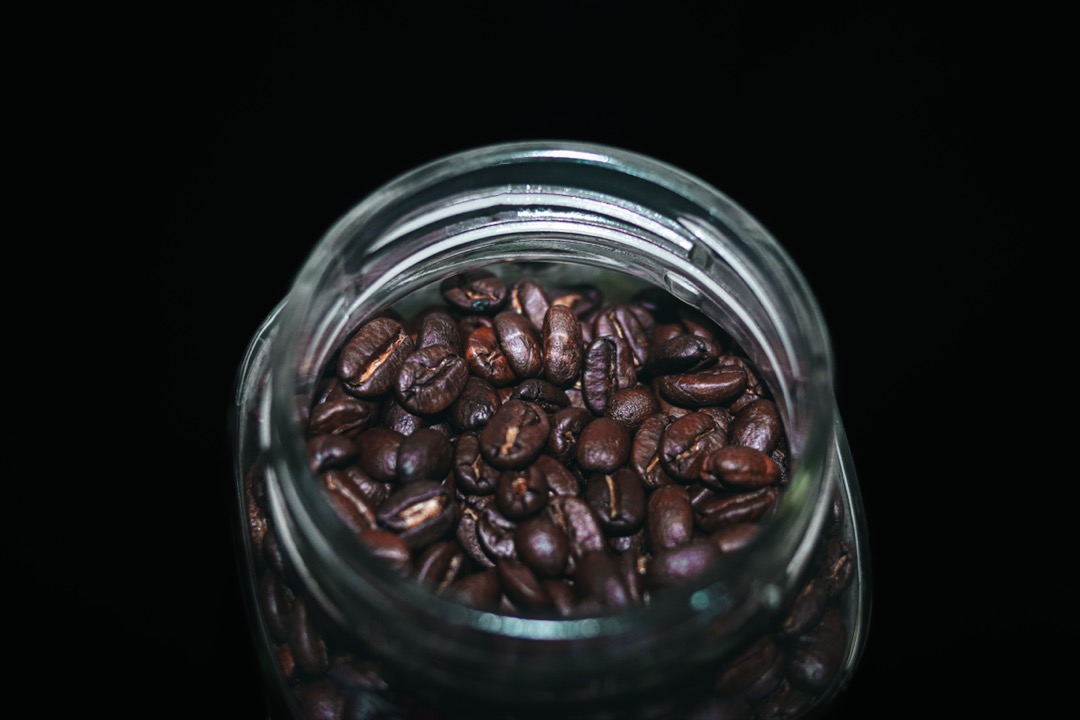
There is a jar of coffee beans sitting on a kitchen counter somewhere right now, in clear glass, next to a stove, holding a full kilo that will take two months to drink. It looks wonderful. It is also, more or less, a small machine for destroying coffee.
I spend my working weeks scoring coffee on a cupping table under the SCA protocol, and I hold a CQI Q Grader credential because tasting accurately is a calibrated skill rather than an opinion. Storage is the part of home coffee where I see the widest gap between what people believe and what the published research shows. The folklore is confident and mostly wrong, the science is boring and mostly settled, and the single biggest factor is not the one anyone worries about.
So here is the whole thing, with the numbers, including the parts that contradict what your roaster’s blog told you.
The Quick Answer
If you read nothing else, read this.
- Oxygen is the dominant enemy, not heat, not light, not moisture. Research found that dropping oxygen to 0.5% extended shelf life roughly twentyfold, and that every 1% increase in oxygen speeds degradation by about 10%.
- Airtight and opaque beats everything else. A sealed, light-proof container in a dark cupboard is 90% of good storage.
- The counter is fine. The fridge is not. Refrigeration gives you humidity, odours, and condensation without enough cold to matter.
- The freezer genuinely works, and the studies say so, but only with pre-portioned single doses that come out once and never go back.
- Whole beans, always. Grinding releases up to 75% of the coffee’s protective carbon dioxide within about 90 seconds.
- Buy less, more often. Expect 1 to 3 weeks of real freshness from whole beans, 1 to 2 weeks from ground.
- Read the roast date, not the best-by date. One tells you about the coffee, the other tells you about the packaging.
- Nothing here makes old coffee unsafe. Stale coffee is a flavour problem, not a health one.
What Actually Makes Coffee Go Stale
Four things degrade roasted coffee: oxygen, heat, moisture, and light. They are usually listed as though they carry equal weight. They do not, and the difference is the most useful thing in this article.
Oxygen is the primary driver, by a wide margin. Labuza and colleagues, in work summarised in the Specialty Coffee Association’s literature review on coffee staling, concluded that oxygen was the single most important factor controlling coffee’s shelf life, and found that reducing oxygen inside a container to 0.5% increased shelf life roughly twenty times over. A separate finding put it in linear terms: each 1% increase in oxygen concentration raises the rate of degradation by about 10%. The commercial packaging data says the same thing from another angle. Vacuum-packed coffee has been measured staling around five times slower than coffee packed in air, and nitrogen-flushed coffee held a six-month sensory shelf life against three months for the unflushed equivalent. Oxidation both destroys the delicate aroma compounds that make good coffee memorable and creates new ones that taste bad, chiefly the rancid, cardboard notes that come from lipid breakdown. Roasted arabica is about 15% lipid by dry weight, and those oils are what turn.
How fast does that start? Faster than is comfortable. Trained assessors in one study detected outright rancidity in air-packed coffee after four months. Long before that, the good stuff is already leaving: measurements of methanethiol, one of the sulphur compounds responsible for the smell of fresh coffee, showed it falling to roughly 30% of its original level after eight days of storage.
Heat accelerates everything else. Chemical reaction rates rise with temperature, and coffee is no exception. Published work measured a Q10 of about 1.5 for whole-bean degassing, meaning that for every 10°C warmer the storage environment, gas and volatile loss runs roughly 1.5 times faster. That is why the cupboard above the oven is a bad cupboard.
Moisture works two ways. Coffee is hygroscopic, so in a humid environment it pulls water out of the air, and higher water activity is consistently correlated with faster staling and faster loss of volatiles. Properly stored roasted coffee sits at a low water activity, well under the roughly 0.6 threshold where moulds become viable, which is why it keeps almost indefinitely from a safety standpoint. Push it up with damp storage and you eventually get the one failure mode that makes coffee genuinely unsafe rather than merely dull.
Light is real but modest. It contributes to oxidative degradation, which is why opaque containers are standard advice, but if you had to rank the four, light is the one you can afford to worry about least. It just happens to be free to fix.
Underneath all of this is the clock that starts at the roaster. Freshly roasted beans are saturated with carbon dioxide and release it over the following weeks, a process called degassing. That CO2 is useful: while it is escaping outward, it acts as a blanket that keeps oxygen from getting in. Storage, in a sense, is the work of preserving that blanket for as long as possible. Aroma research has found that the steepest loss of the compounds correlated with perceived freshness happens in the first month, and assessors in another study described coffee as distinctly less aromatic just one week off roast. The decline is front-loaded, which is precisely why buying small and often beats storing well.
The Container: What to Actually Buy
The specification is short. Airtight, opaque, and no bigger than what you will drink in a few weeks.
Airtight is the one that matters, for the reason above. A gasketed clamp-lid canister or a screw-top with a silicone seal is enough; the vacuum canisters and CO2-valve canisters sold to coffee people work well and are a genuine upgrade, though they are solving the last 10% of a problem the basic version already handles.
Opaque matters because light contributes to oxidation. The clear glass jar is the single most common mistake in home coffee storage, and it is entirely an aesthetic decision. The National Coffee Association’s guidance is blunt about this: use attractive jars of beans as decor only.
Size matters more than people expect. A half-empty container is a container full of air, and that air is full of oxygen. If you buy a kilo, decant a week at a time into a small working jar and leave the rest sealed in its original bag rather than pouring the whole thing into one large canister with a growing headspace.
One thing you do not need is anything exotic. Good storage is unglamorous. The money is better spent on the coffee itself, and on a burr grinder if you do not already own one, because grind quality does more for a cup than any canister will.
Where to Put It
A dark, cool, dry cupboard. That is the whole answer.
The specific places to avoid are the ones that are warm for reasons people forget to notice: the cabinet directly above or beside the oven, the one next to the dishwasher that gets a blast of hot steam on every cycle, the shelf that catches direct afternoon sun, and the top of the fridge, which is warmer than the room because of the compressor. Any of these can run five to ten degrees above ambient, and by the Q10 figure above, that is a measurable tax on freshness for no benefit at all.
Room temperature in a dark cupboard is not a compromise. For coffee you will drink within two or three weeks, it is the correct answer.
Leave It in the Bag, or Move It?
It depends entirely on the bag, and the test takes two seconds.
If the bag has a one-way valve, keep it. That little plastic disc is a degassing valve, engineered to let carbon dioxide out without letting oxygen in, and the bag around it is usually a multi-layer foil laminate that blocks light and gas better than most kitchen canisters. If it also has a resealable zip or a tin tie, you already own good storage. Press the air out, roll the top down tight, clip it, and put it in the cupboard.
If the bag has no valve, no reseal, or you can see light through it, move the coffee. Supermarket bags in particular are designed for the shelf rather than for your cupboard, and once slit open they are just paper. This is why the National Coffee Association recommends transferring out of retail packaging as a default rule, and why the advice sounds contradictory until you know which bag you have.
A word of honest caution on valve bags: the only published test of them I know of examined six, found that half had leaking top seals, and consequently could not conclude much of anything. The intact ones held essentially 0% oxygen and above 40% carbon dioxide, which is excellent. So a valve bag is very good when it is sealed properly, and no better than any other bag when it is not. Squeeze it closed properly.
How Long Coffee Beans Actually Last
The National Coffee Association’s freshness guidance, assuming coffee has been transferred to airtight containers, runs like this.
| Form and storage | Retains freshness |
|---|---|
| Unopened roasted beans or ground coffee | Until the best-by date |
| Coffee pods and instant coffee | Until the best-by date |
| Whole beans, room temperature | 1–3 weeks |
| Whole beans, refrigerated | 2 weeks |
| Whole beans, frozen | 3–4 months |
| Ground coffee, room temperature | 1–2 weeks |
Two readings of that table are worth having.
The first is the refrigerator line. It is the only storage method on the list that performs worse than doing nothing, and I will come back to why.
The second is that “retains freshness” is not “goes bad.” Roasted coffee is remarkably stable from a safety standpoint, and month-old beans are perfectly fine to drink. What you lose is the top of the cup, in order: the volatile aromatics first, then perceived sweetness, leaving body and bitterness behind. That is exactly the profile people describe as flat or dull. If your beans are three months old and you enjoy the coffee, nothing is wrong with you or with them. But if you have ever wondered why a bag that was extraordinary at the roastery tasted ordinary at home, this is usually the reason, and it is not the brewer’s fault.
Check the roast date on the bag. A best-by date is typically set a year out and reflects packaging, not flavour. Any roaster worth buying from prints a roast date, and its presence is itself a useful quality signal when you are choosing beans.
What the “15-15-15 Rule” Gets Right and Wrong
You will run into this one, so it is worth knowing what it is and how much weight to put on it.
The 15-15-15 rule, sometimes called the rule of 15s, is a trade mnemonic with two circulating versions. The standard one is 15 months, 15 days, 15 minutes: green unroasted coffee stays viable for about 15 months, roasted beans are at their best for about 15 days, and ground coffee should be brewed within about 15 minutes. A less common variant replaces the first number with a storage temperature of 15°C, which muddles a decay timeline with a storage condition and is best ignored.
Here is my honest assessment as someone who scores coffee for a living. The numbers are not measurements and should not be treated as thresholds. No study establishes 15 days as a cliff edge, roast level moves that window substantially, and plenty of light roasts taste excellent at three and four weeks. If you throw out day-16 beans you are wasting good coffee.
But the ratios are close to right, and that is the useful part. The rule encodes the correct claim that each stage of coffee’s life decays roughly an order of magnitude faster than the one before it, and the literature supports that ordering strongly. Green coffee is genuinely stable for many months. Roasted beans genuinely decline over weeks, with aroma losses steepest in the first month. And ground coffee genuinely falls apart in minutes, for the mechanical reason in the next section.
So use it the way a rule of thumb should be used: as a reminder that grinding fresh is the highest-leverage habit you have, worth more than the container, the cupboard, or the freezer. Do not use it as an expiry date.
Whole Bean Versus Ground: A Bigger Gap Than It Looks
Grinding is the moment a bean stops being protected.
The obvious mechanism is surface area. A whole bean exposes a small, hard, oily exterior to the air; ground coffee exposes an enormous internal surface, and oxidation scales with it. The less obvious and more dramatic mechanism is the loss of the CO2 blanket. A time-resolved gravimetric study of degassing found that up to 75% of the gas trapped inside a bean is released during and immediately after grinding, within roughly 90 seconds. Three quarters of the coffee’s built-in oxygen shield vanishes in a minute and a half. Ground coffee is also more temperature-sensitive, with its degassing rate accelerating about twice as fast per degree as whole beans.
That is the entire case for grinding fresh, and it is a stronger case than most equipment upgrades. If you are choosing between a nicer brewer and a better burr grinder, buy the grinder. If you brew espresso, the argument is sharper still, because espresso’s short, high-pressure extraction is unforgiving of both stale coffee and inconsistent particle size, which is why an espresso-capable grinder matters more than the machine it feeds. And if counter space is the constraint, a coffee maker with a built-in grinder gets you most of the benefit in one footprint.
If you genuinely cannot grind fresh, buy ground coffee in the smallest bags available and treat the one-to-two-week window as real rather than conservative.
Should You Freeze Coffee Beans?
This is the question everyone actually arrives with, the advice is wildly contradictory, and the research is clearer than the folklore.
The short version: yes, freezing works, and the anti-freezing advice is largely unsupported. When the Penn State researchers behind one of the better consumer studies went looking for published evidence that condensation ruins frozen beans, they could not find any. What they found instead, in their own work, was the opposite of the warning.
Here is what the studies actually show.
Nine weeks, frozen versus countertop. A Penn State study roasted six samples spanning light City roast to dark Vienna, stored half in a freezer and half at room temperature for nine weeks, then had 48 consumers smell them alongside a freshly roasted batch and sort them by similarity. The frozen dark roasts grouped with the fresh coffee. The room-temperature dark roasts were consistently placed apart from everything else as smelling different. The light roasts showed little difference either way, meaning they had lost less aroma over nine weeks to begin with. The chemical analysis agreed with the noses. In short: freezing helps most where staling hurts most, which is dark roasts.
Fifteen months, frozen. Barista Hustle’s panel of four coffee professionals and a wine expert compared the same Panamanian Geisha microlot from two consecutive harvests, both vacuum-sealed and frozen 14 days after roasting, one at 3 months in the freezer and one at 15 months. Across ten pairwise pour-over comparisons, no taster scored any cup above 2 on a 15-point scale for aged flavour, which is “barely detectable.” The differences in body and overall liking favoured the younger coffee but were not statistically significant. A year in the freezer did very little harm.
But it is not a pause button. The same panel could correctly identify which coffee was older nine times out of ten, so something was detectably different even though nothing was detectably stale. And a study cited in that work sealed coffee in laminate pouches under less than 1% oxygen and froze it, and it still lost volatile aroma compounds across a year. Freezing slows the clock a great deal. It does not stop it.
The condensation worry is mostly a handling problem, not a physics problem. Uman and colleagues, publishing in Scientific Reports in 2016 (doi:10.1038/srep24483), equilibrated beans on a countertop, in a freezer, on dry ice, and in liquid nitrogen at -196°C, and reported no visible condensation on any sample cooled below 0°C. More usefully still, they ran duplicate samples deliberately exposed to atmospheric moisture as they warmed back to room temperature, and found no difference from samples sealed immediately after grinding. That does not mean condensation never matters. It means the danger is not in the cold itself. It is in taking a large container out of the freezer, opening it in a warm kitchen, scooping, and putting it back, over and over. Each cycle deposits a little moisture on beans that then sit in it until the next time.
So the protocol is about portioning, not about temperature.
- Portion before freezing. Divide beans into single-use amounts, roughly what you brew in a day or a week. Small vacuum-sealed bags are ideal; a set of small jars filled to the brim works.
- Get the air out. Vacuum-sealing is the meaningful upgrade here, since you are fighting oxygen even at freezer temperatures. If you are freezing coffee in its original valve bag, put a strip of tape over the valve first. The valve is a one-way membrane designed to vent gas outward at room temperature; there is no guarantee it seals reliably when it is cold and the pressure differential collapses, and an unsealed hole is the one thing you cannot afford in long-term storage.
- Freeze after the initial degas. Let very fresh beans rest a few days first, the way the Barista Hustle samples were frozen at day 14, so you are not trapping a bag full of expanding CO2.
- One portion out, and it never goes back. This is the rule that makes the whole thing work.
- Grind straight from frozen. No thawing required, and there is a bonus for doing it this way.
That bonus is worth its own note, and it is the point the rest of the internet gets closest to and still fumbles. The Uman study measured particle size distributions from a commercial grinder at those four bean temperatures and found that colder beans produce smaller particles with a narrower size distribution. The mechanism is ordinary materials science: at room temperature a coffee bean deforms somewhat before it breaks, and that plastic deformation is what smears out a broad spread of particle sizes and generates excess fines. Chilled, the bean becomes brittle and fractures cleanly instead, so the pieces come out more uniform. A tighter grind distribution extracts more evenly, which generally means a sweeter, clearer cup.
The distinction matters because these are two separate questions that get conflated constantly. “Does freezing preserve beans?” is a storage question, answered by the Penn State and Barista Hustle work above. “Do cold beans grind better?” is an extraction question, answered by Uman. Both happen to come out in favour of the freezer, but neither is evidence for the other. Grinding from frozen is not a compromise you accept for the sake of storage; on its own evidence, it is slightly better grinding. Anyone using a hand grinder for espresso will also notice frozen beans fracture with less effort, which is a real quality-of-life gain on a manual grinder.
Freeze the coffee you are not drinking this month. Keep this week’s bag in the cupboard. That is the system.
The Refrigerator Is the One Genuinely Wrong Answer
It deserves its own section because it is the instinct almost everyone has, and it is the only common option that actively makes things worse.
Three problems compound, and the mechanism is more specific than the usual “fridges are humid” hand-wave.
Water activity goes the wrong way. Coffee is hygroscopic and a refrigerator is a high-humidity box, so the beans pull water out of the air and their water activity climbs. Higher water activity is one of the confirmed accelerants of staling in the literature, so refrigeration actively feeds the thing it was supposed to slow. The temperature cycling makes it worse rather than better: every time the door opens, warm room air meets cold beans and condenses on them, and unlike a freezer portion that comes out once, a fridge container gets that treatment daily.
Odour transfer is not a myth here. Coffee is such an effective odour absorber that people deliberately put open containers of it near litter trays and fresh paint to deodorise them. Your beans will do that job enthusiastically, on last night’s curry.
And the cold is not buying you anything. Fridge temperatures are nowhere near cold enough to meaningfully slow the oxidation chemistry, so you pay both costs above and collect almost no benefit.
That is why the NCA’s own table gives refrigerated beans two weeks against one to three weeks for a plain airtight jar at room temperature. Cold storage only pays off when you commit to it. Half-cold is worse than not cold.
How to Tell Your Beans Have Gone Stale
You do not need equipment for this. You need to pay attention for about thirty seconds.
- The grounds smell like almost nothing. Fresh coffee announces itself when you open the container. If you have to lean in, the volatiles are gone.
- No bloom. Pour hot water on fresh grounds in a pour-over or French press and they swell and foam as trapped CO2 escapes. Flat, static grounds that just sit there are the clearest freshness test in a home kitchen, and it costs nothing to check.
- Thin, papery crema on espresso. Crema is largely a CO2 phenomenon, so stale beans produce pale, fast-collapsing crema regardless of how good the espresso machine is.
- The cup is flat and bitter rather than bad. Stale coffee rarely tastes actively wrong. It tastes like the interesting parts were removed and the bitterness was left, and that specific hollowness is the signature.
- A dull, oily sheen and a faintly cardboard or crayon smell. That is lipid oxidation, and it is the point at which I would compost them.
One caveat on the oily-surface question, since it causes confusion: dark roasts are oily when they are perfectly fresh, because roasting drives oils to the surface. Oil alone is not a staleness signal. Oil plus no aroma is.
A Routine That Takes Ten Seconds a Day
Nothing above requires effort, and I want to be clear about how little is actually being asked.
Buy whole beans in amounts you will finish in two to three weeks, from a roaster who prints a roast date. Keep the working bag in a dark cupboard, sealed properly, either in its own valve bag or in an airtight opaque jar. Freeze anything beyond that horizon in pre-portioned, vacuum-sealed doses, and take portions out one at a time without ever returning them. Grind immediately before brewing, straight from frozen if that is where the beans came from. Never use the fridge.
That is it. It costs nothing, it requires no special equipment, and it protects the money you already spent on the coffee.
The Bottom Line
Coffee storage is a single-variable problem wearing a four-variable costume. Oxygen does most of the damage, by something like a factor of twenty over the alternative, and every piece of good advice here traces back to reducing the coffee’s contact with air: an airtight container, a container sized to its contents, a bag squeezed shut, a bean left whole so it keeps its own CO2 shield, a freezer portion that gets opened exactly once.
The rest is secondary and cheap to fix. Dark cupboard, away from the oven. Opaque rather than clear. Small batches bought often, because the freshness curve is steepest in the first month and no container beats a recent roast date.
And the two claims most worth un-learning: the freezer is good if you portion properly, with the studies showing frozen beans holding up remarkably well over 9 weeks and even 15 months, and the fridge is bad, full stop, because it delivers humidity, odours, and condensation without enough cold to be worth them.
Get that right and you will taste the difference in every cup, which for most home setups is a bigger improvement than the next piece of gear. If you want to put it to work, our roundups of the best coffee beans and the best espresso beans are where a good storage habit starts paying you back, and knowing what actually separates arabica from robusta will tell you what you are preserving in the first place. Once the beans are sorted, a clean machine is the other half of not sabotaging them.
Frequently Asked Questions
Should you store coffee beans in the freezer?
Can you store coffee beans in the fridge?
What is the 15-15-15 rule for coffee?
How long do coffee beans last, and can you still use two-year-old beans?
Should I keep coffee in the original bag or move it to a container?
Is it better to store whole beans or ground coffee?
Related Articles
10 Best Coffee Beans of 2026
coffee-beans
Best Coffee Beans for Espresso in 2026 (Q Grader Tested)
coffee-beans
Arabica vs. Robusta: A Q Grader's Honest Guide to the Two Beans in Your Cup
coffee-beans
How to Clean a Coffee Maker: A Q Grader's Complete Guide
maintenance-cleaning
8 Best Coffee Grinders of 2026
coffee-grinders
About the Reviewer

Clara Bennett, CQI Q Grader, SCA Roaster
B.S. Food Science, UC Davis
Clara Bennett is a Coffee Quality Institute (CQI) licensed Q Grader and SCA-certified roaster with over a decade in specialty coffee — from competition barista to production roaster and green-coffee buyer. She has cupped thousands of coffees to CQI protocol and dialed in espresso on everything from $90 entry machines to commercial three-group setups. She founded Brew Gazette in 2026 to turn cupping-table standards into plain-English buying advice.